

When a harness assembly engineer in Bangkok followed a drawing revision for a compact EV sub-harness, the new plug mated quickly on the bench, then released under a light retention check. The fictional, composite incident looked at first like a bad batch. A review of the drawing, terminal family and cavity coding showed a different cause: the selected interface did not match the terminal and retention specification.
Summary: A wiring harness connector is a specified electrical interface, not simply a plug that fits. SAE/USCAR-2 and IEC 60512 distinguish defined connector test methods and performance requirements from casual mating checks; the recommended action is to lock the circuit, terminal, sealing and validation requirements before approving a part number.
For vehicle programs, connector selection joins mechanical retention, electrical continuity, environmental exposure and service access. The right decision starts with the circuit and its intended duty, then confirms that the housing, terminal, wire preparation and assembly process form one compatible system. This prevents an apparently inexpensive interface from generating rework, diagnostic time or field returns later in the program.
Specify the interface before the harness is built
Begin with the electrical and mechanical circuit definition
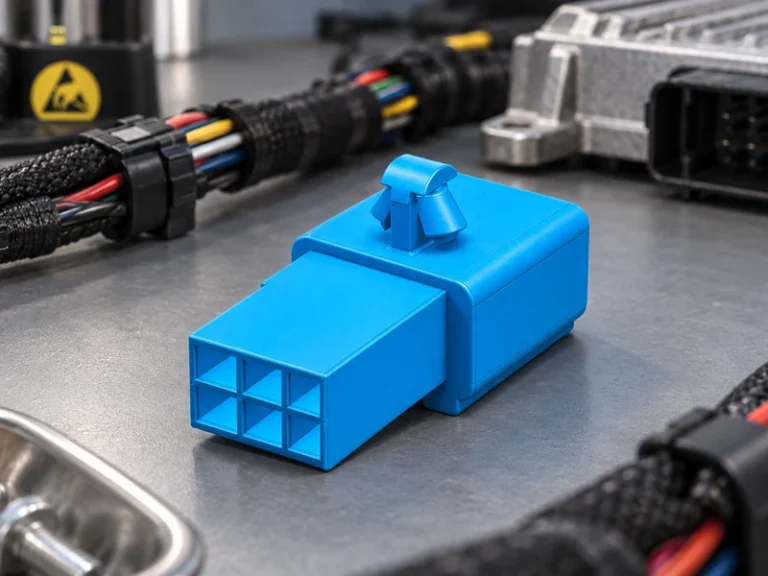
The useful way to compare types of automotive connectors is by circuit function and installation environment, rather than by housing shape alone. Signal circuits, sensor circuits, power distribution and high-current loads call for different terminal geometries, wire ranges, keying, sealing and secondary-lock approaches. A two-piece interface can appear compatible while its terminal retention, polarization or allowable conductor range is not.
Engineers should record nominal and peak current, voltage class, conductor size, allowable temperature, vibration exposure, mating cycles, ingress exposure, package space and diagnostic-service requirement. These inputs create an auditable specification; they also keep a prototype fit check from becoming an unsupported production decision. A wiring harness connector should be selected against those documented inputs, not assumed suitable because it fits. IEC 60512 provides test methods for electromechanical components, including tests relevant to contact resistance, mechanical operation and environmental performance.
Match terminals, wire preparation and retention
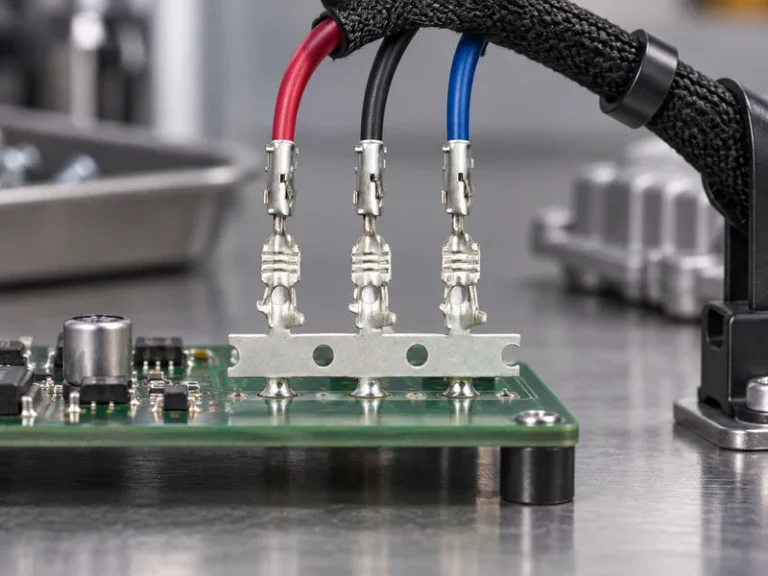
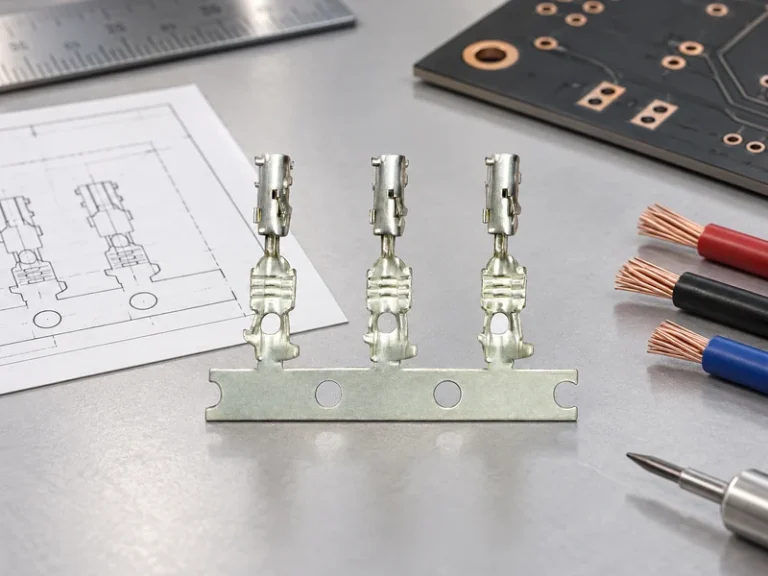
Among types of automotive electrical connectors, terminal design is often the decisive variable. The contact system must match the approved wire cross-section, insulation diameter, strip length, crimp tooling and cavity. A housing may accept a terminal physically yet still fail to provide the intended primary lock or terminal position assurance. SAE/USCAR-2 is commonly used as a vehicle-connector performance specification reference and should be read alongside the applicable customer drawing and validation plan.
For types of auto electrical connectors, polarity protection comes from the complete interface: keying, cavity map, terminal orientation, wire identification and inspection. Color alone is not a reliable control. A controlled build process verifies the terminal is fully seated, secondary locks are in the required position and the mating half is the specified counterpart.
Plan wiring as a controlled assembly operation
A wiring guide should translate the released drawing into repeatable work instructions. It should define cut length, strip length, approved crimp applicator, terminal insertion sequence, seal placement where used, lock status, torque requirements for any separate fastener and final continuity or pin-map check. Crimp-height monitoring and pull-force verification are process controls only when the applicable terminal documentation defines their acceptance criteria; a generic target cannot be substituted.
The total-cost question is therefore broader than unit price. A connector choice that simplifies orientation, terminal insertion and inspection can reduce assembly escapes and service diagnosis. Conversely, a low initial component cost may be outweighed by tooling changes, training, rework, warranty analysis or the need to replace an inaccessible branch of a harness. Any cost model should use the buyer’s own volumes, labor assumptions and quality data.
Compare value and application fit
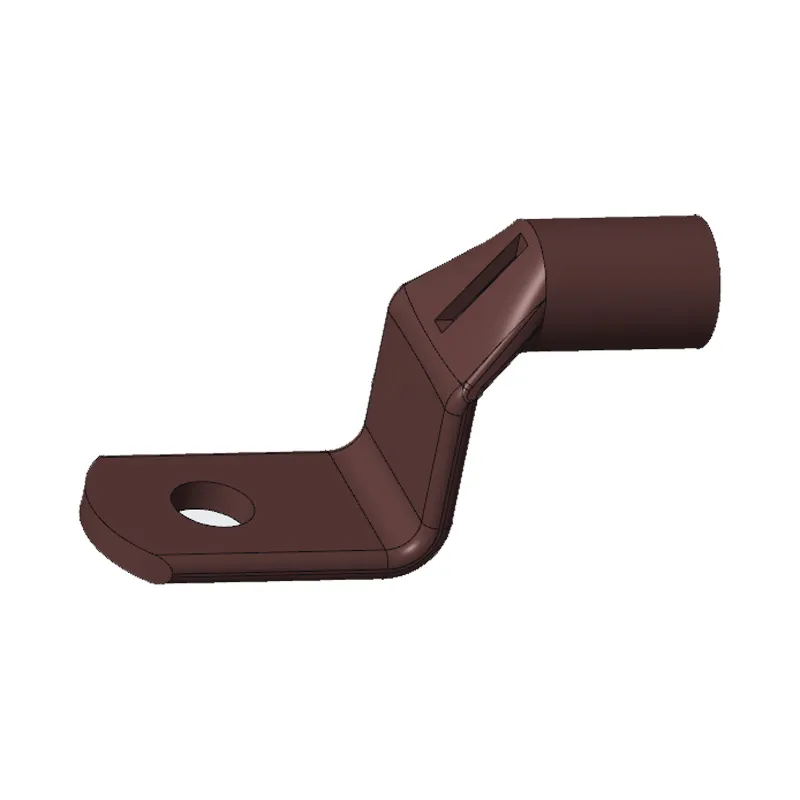
Value comparison by decision factor
| Decision factor | Open, general-purpose interface | Sealed, keyed interface | High-current or power interface |
|---|---|---|---|
| Typical fit | Protected interior circuits | Areas exposed to moisture or contaminants | Power distribution or traction-adjacent auxiliary circuits |
| Compatibility focus | Terminal family and service access | Seal, keying and mating confirmation | Conductor, terminal and thermal design as one system |
| Assembly efficiency | May favor access and simple inspection | Requires controlled seal and lock steps | May require dedicated tooling and fastening controls |
| Maintenance consideration | Accessible depinning can be practical | Service procedure must preserve sealing | Isolation and safe-service process may govern |
| TCO risk | Mis-keying or terminal mismatch | Incomplete seating or damaged seal | Heat, resistance rise or incorrect torque where applicable |
This comparison does not rank one construction as universally better. The practical comparison of types of automotive electrical connectors asks whether the interface controls the failure modes present in the location, while preserving manufacturability and service access. The relevant validation method should be selected from the program specification, such as the applicable IEC 60512 method or SAE/USCAR-2 requirement.
Application and specification dimension table
| Application | Key specification dimensions | Build and inspection emphasis |
|---|---|---|
| Cabin switch or display harness | Pin count, polarization, low-level signal integrity, service access | Pin map, terminal seating and connector orientation |
| Under-hood sensor branch | Temperature, vibration, contaminants, sealing and strain relief | Seal placement, secondary lock and mating confirmation |
| Body or lighting harness | Package space, moisture exposure, branch routing and repair approach | Keying, clip engagement and visual lock check |
| Power distribution branch | Current duty, wire range, contact system, temperature and safe service | Approved crimp process, retention and fastener control where used |
Procurement teams can use this table to ask suppliers for the correct drawing, terminal data, mating-part definition and validation evidence. It also keeps types of auto electrical connectors tied to an application rather than to a catalogue label.
Use standards accurately in sourcing and validation
IATF 16949 is a quality-management-system standard for the automotive production and relevant service-parts supply chain; it is not a blanket declaration that every connector is certified for every use. IEC 60512 and SAE/USCAR-2 are connector test and specification references, not automatic product certifications. A buyer should ask which edition, tests, samples, acceptance criteria and configuration apply to the proposed assembly.
For a program that uses environmental or laboratory statements in supplier evaluation, the claim should match its actual scope. ISO 14001 concerns environmental management systems, while laboratory capability needs to be reviewed against the work required. Unsupported performance claims can lead to rejected PPAP or customer documentation, delayed sourcing approval and avoidable liability. Regulatory and customer requirements also vary by destination market, vehicle system and intended use.
Build a defensible connector selection file
- Freeze the mating-pair definition, terminal family, wire range and cavity map before requesting samples.
- Classify the installation environment, service method and foreseeable abuse conditions, then select applicable validation references.
- Review assembly work instructions, tooling compatibility and inspection controls with the harness manufacturer.
- Keep drawings, revisions, test evidence and change-control records together so purchasing and engineering approve the same configuration.
For buyers evaluating configurable component options, Wenzhou Shenji can be considered as a sourcing contact after the engineering file defines the interface. The company supplies the stated credentials of IATF 16949, ISO 14001, ISO 45001 and an ISO 17025 CNAS-compliant laboratory; procurement teams should confirm their applicability to the requested product, project scope and documentation package.
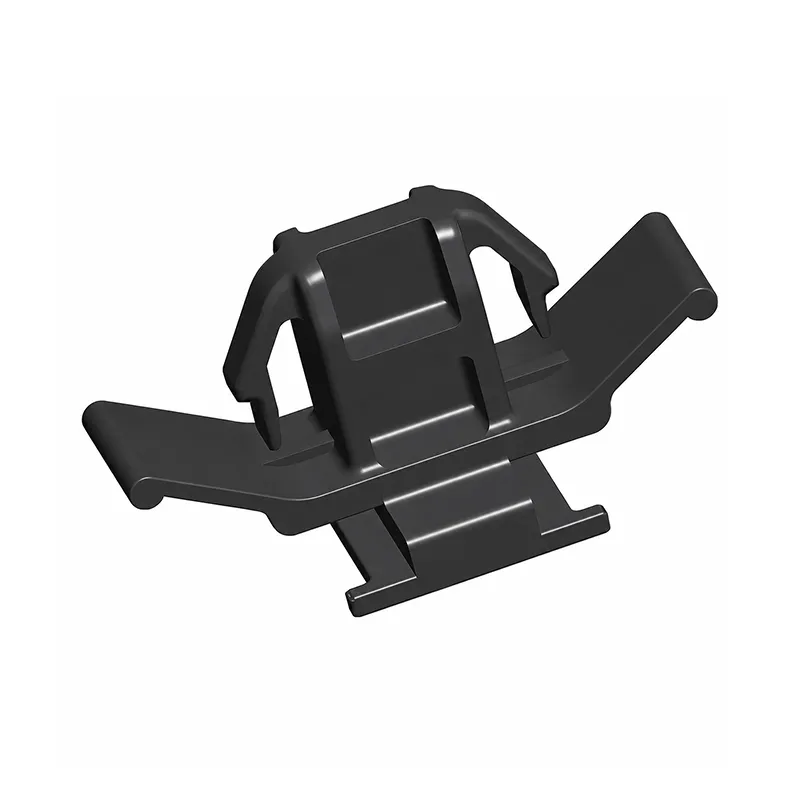
The selection file should identify the applicable types of automotive connectors, types of automotive electrical connectors and types of auto electrical connectors by approved terminal family and mating part. That discipline makes each wiring harness connector decision traceable through sourcing, assembly and service.
Relevant product examples may help a team identify the right interface family after its drawing is established: Auto Connector 336 YX, Auto Connector SJZ70-10 E and Auto Connector SJZ XK 27. They should be compared only against the approved mating, terminal and environmental requirements.
Frequently asked questions
Can an automotive connector be used for high-current circuits?
Yes, when the complete connector system is specified for that circuit’s current duty, conductor range, thermal environment and termination method. The decision cannot be made from housing size alone; confirm the approved terminal, wire, mating half and validation requirements for the exact configuration.
How do you verify automotive connector polarity?
Verify polarity against the released cavity map and mating-view drawing, then confirm terminal orientation, keying and wire identification before final assembly. A continuity or pin-map check can support the inspection process, but it does not replace visual confirmation that terminals and locks are fully seated.
How does types of automotive connectors compare for serviceability?
Types of automotive connectors differ in access to locks, terminal-release tools, sealing features and replacement procedures. A serviceable design permits safe inspection and repair without compromising retention or environmental protection; the approved service process should define the tools and any parts that must be renewed.
What inspection checks protect automotive connector connections?
Useful checks include correct part and revision, terminal seating, secondary-lock position, seal placement where applicable, connector keying, wire identification and the required electrical verification. Inspection criteria must come from the released drawing, process plan and agreed validation standard, not from a generic visual checklist.
References
- SAE/USCAR-2: Performance Specification for Automotive Electrical Connector Systems
- IEC 60512: Connectors for electrical and electronic equipment—Tests and measurements
- IATF 16949 overview
- ISO 14001 environmental management
Specify the interface first, because a connector that merely mates is not necessarily a connector that performs.
When the engineering file is ready, contact Wenzhou Shenji to discuss the applicable product, documentation and sourcing requirements.