

Connector housing chemical resistance must be evaluated against the actual fluid, concentration, temperature, contact duration and mechanical condition of the housing. A resin name or a general compatibility chart cannot establish whether a finished connector will remain functional after exposure. Begin by identifying the fluids that can reach the installed location, then compare material screening data with tests on the relevant assembly. This guide explains how buyers can define exposure conditions, distinguish immersion results from stress cracking evidence, and request a report that addresses fit, retention and electrical function without assuming an unsupported chemical rating.
List the fluids that can actually reach the connector
Start with the installed location rather than an unrestricted list of automotive chemicals. A connection near a service fill point faces a different exposure route from one inside a protected passenger compartment. Record where leaks, splashes, cleaning residues and handling contamination could originate. Include maintenance products if they can contact the connector during normal service.
Identify the commercial fluid and its relevant formulation, not only a broad name such as coolant or cleaner. Different products under the same description can have different compositions. Concentration, dilution water and changes during service can also matter. Ask the customer which fluids and conditions the project specification requires instead of choosing a convenient laboratory substitute without agreement.
Next describe the contact pattern. A brief splash followed by drainage differs from persistent wetting in a recess. Wiping, spraying and complete immersion expose different areas and can leave different residues. Record whether the connector is mated, unmated or partly assembled when exposure occurs. The state that is easiest to test may not be the state that experiences the fluid.
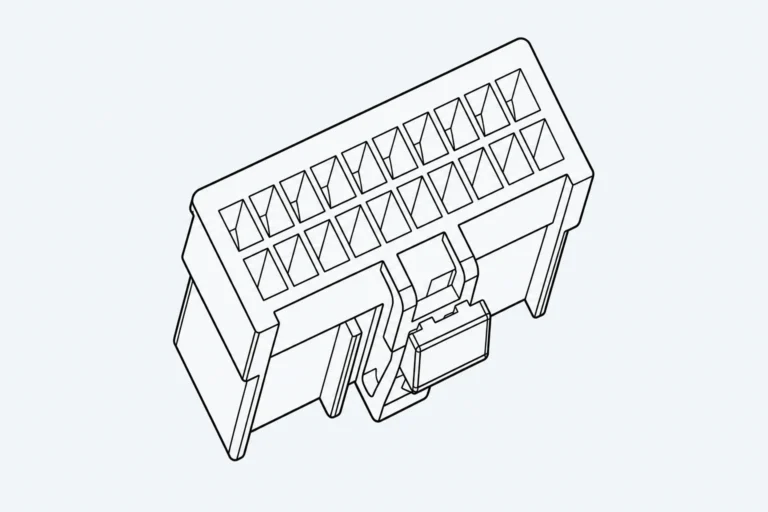
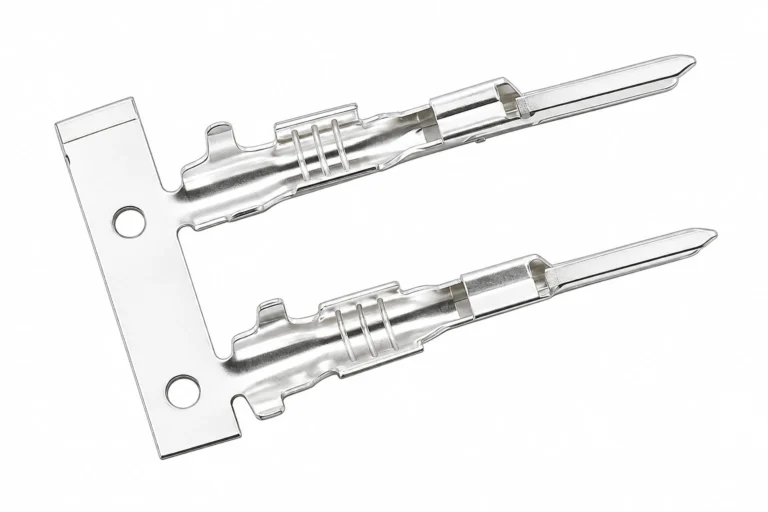
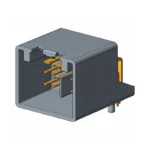
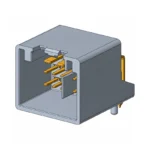
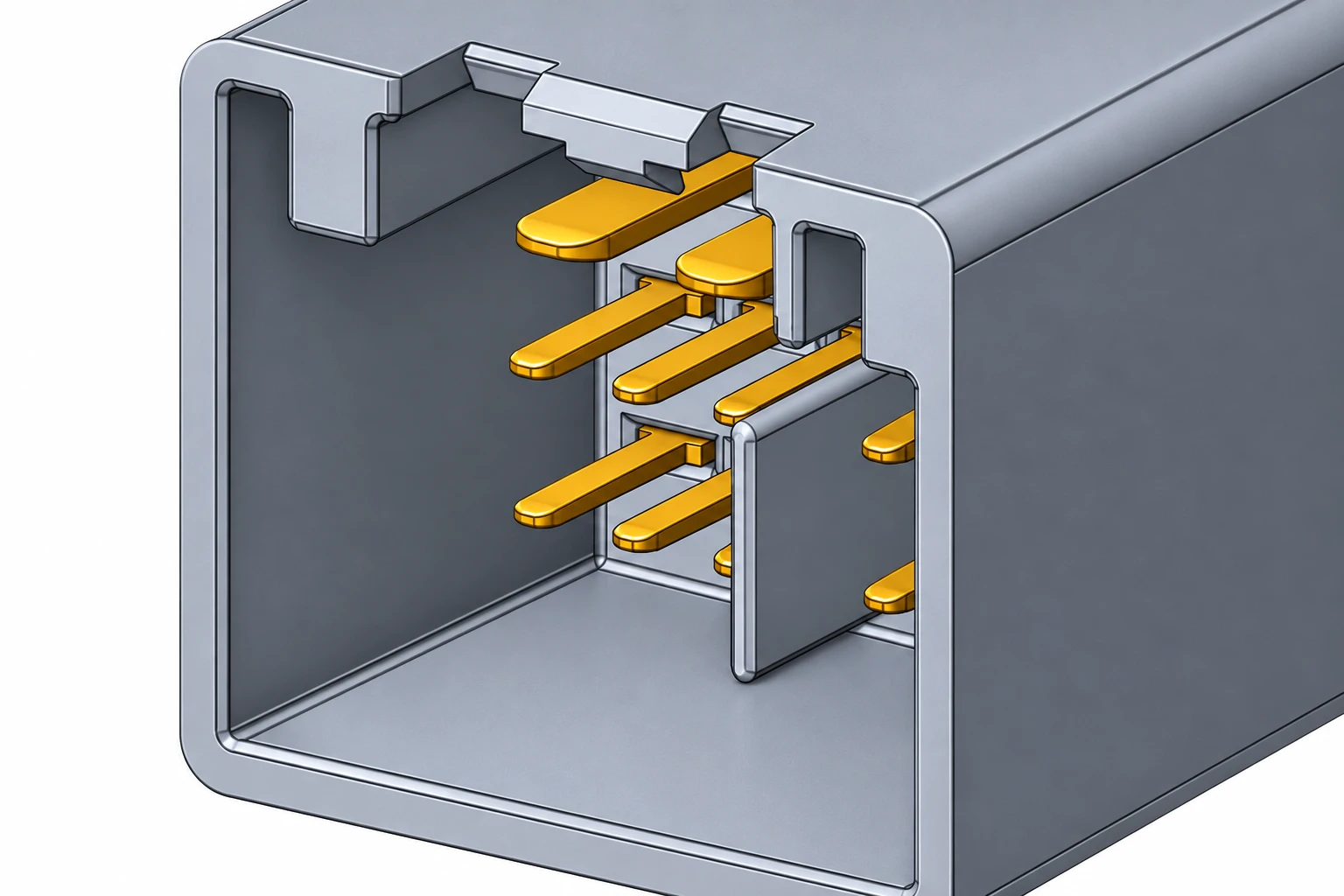
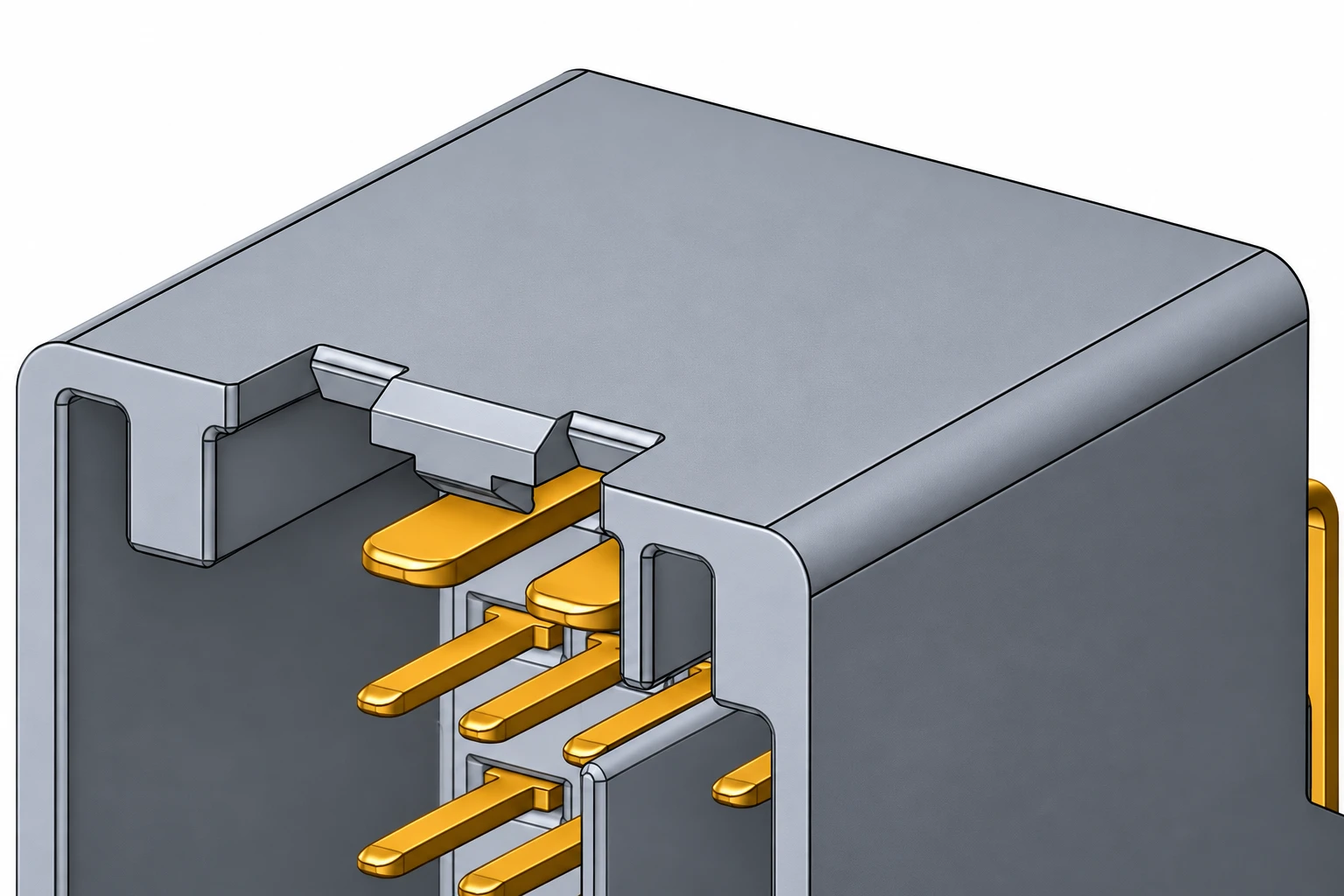
The 2BK01-161228W-B housing and contact assembly illustrates the surfaces a review may need to distinguish: cavity walls, front rim, latch and adjacent conductors. The product record lists PBT+GF35&H65; its image does not identify a precise resin grade, elastomer formulation or approved exposure list. Confirm those details for the exact revision being purchased. Our automotive connector overview provides broader selection context.
A material family is a starting point for screening
Request the specified resin grade and relevant material documentation for the housing. A family description such as polyamide does not fully describe a molded component. Reinforcement, additives, pigmentation and processing conditions may be relevant to the evidence package. Keep the material identification linked to the drawing revision and production sample so that a report can be traced to the purchased part.
Separate the housing from the other assembly materials. A seal, cavity plug, wire jacket, marking and terminal finish may each require a different review. A satisfactory housing coupon result does not establish the behavior of all these components. If the supplier reports an assembly result, ask which components were present and whether they match the intended configuration.
Mechanical loading also needs attention. A molded latch may be held deflected, a housing may be constrained by its mounting, and wires may load the rear interface. Material screening on an unstressed specimen does not reproduce those conditions. Define the installed mechanical state before deciding whether the available data answer the application question.
Colour and appearance can help identify specimens, but they are not chemical-resistance certificates. Avoid inferring composition or performance from a photograph or a molded mark alone. The plastic connector marking guide explains how identification supports traceability while leaving material confirmation to the approved documentation.
Match the test method to the question
ASTM D543 describes practices for evaluating plastics against chemical reagents. Its public scope discusses immersion and applied-strain exposure, together with changes in appearance, dimensions and properties. Selecting an appropriate practice still requires conditions that reflect the intended contact. Treat a method citation as the beginning of the review rather than a complete acceptance statement.
The published ISO 175:2010 sample describes full immersion of unrestrained plastic specimens and explicitly excludes environmental stress cracking from its scope. That distinction matters when a connector housing is held under load during chemical exposure. A favorable immersion result cannot automatically resolve the separate cracking question.
| Review item | Record in the test plan | Reason for the distinction |
|---|---|---|
| Fluid identity | Product, concentration and agreed preparation | Broad fluid names can hide different chemistry |
| Contact pattern | Splash, wipe, immersion or repeated wetting | Exposure area and residue history can differ |
| Temperature and time | Exposure interval and recovery conditions | Short cool screening may not represent service |
| Mechanical condition | Unrestrained coupon or loaded assembly | Cracking concerns need relevant stress conditions |
| Required function | Agreed mechanical and electrical checks | Appearance alone cannot establish functionality |
The table organizes a project review; it does not assign universal pass limits. Use the specified method edition and the customer requirements when preparing the actual procedure. If a laboratory adapts a standard method, the report should identify the changes and their purpose. Do not describe an adapted exposure as full compliance with every provision of a standard without supporting evidence.
Material screening can help eliminate unsuitable candidates before building assemblies. Assembly testing can address installed constraints and interactions. These stages answer related questions and should be connected by specimen identity. If the molded material changes after screening, explain whether the earlier results remain applicable before relying on them.
Look beyond whether the surface still looks clean
Agree on baseline observations before exposure. Photograph the same housing features from repeatable positions, identify measurement locations and document the initial assembly behavior. Include unexposed controls where the test plan requires them. That comparison helps distinguish an exposure-related change from normal sample variation or handling damage introduced during examination.
After exposure and the specified recovery, inspect for the changes relevant to the application. These may include cracking, deformation, swelling, surface change or damage around constrained features. Record where a change occurs rather than describing the whole sample with a single adjective. Photographs should show orientation and scale when dimensions are being discussed.
Functional checks should follow the requirements established before testing. Depending on the assembly, review mating, latch operation, terminal positioning and the agreed electrical measurements. Use consistent fixtures and conditions so that before-and-after comparisons have meaning. A result from a bare housing may need additional evaluation before it supports a complete electrical connection.
Do not assume a water-ingress classification establishes resistance to oils, cleaners or vehicle fluids. The connector IP rating guide addresses a different set of conditions. Similarly, our insertion and extraction force review can support functional test planning, but a force result does not identify the chemical mechanism that caused a change.
The following neutral chemistry lesson explains polymer structures and why plastics are a broad family of materials. It provides background for discussing material identity; it does not establish the compatibility of any housing grade with a particular fluid.
Watch Polymers: Crash Course Chemistry #45 on YouTube
Turn the evidence into a purchasing decision
A useful supplier report identifies the specimen, material grade, molding or production lot where relevant, drawing revision and assembly state. It names the test liquid, concentration, temperature, exposure duration and recovery procedure. It also states the measured properties, acceptance criteria, individual results and any deviations. Keep these details together rather than accepting a certificate that only says chemical resistant.
When comparing two reports, first check whether their conditions are comparable. A longer exposure is not automatically a better simulation, and a more concentrated liquid is not automatically a conservative substitute. Different conditions can change the mechanism under investigation. Have the responsible engineer or laboratory explain the relationship to service before ranking the parts.
If a result is incomplete, identify the unanswered question precisely. For example, acceptable appearance on an unloaded coupon may leave latch operation after loaded exposure unresolved. That calls for a targeted follow-up, not an unsupported rejection of every product in the material family. Record the gap, the proposed test and the decision owner.
Include chemical exposure requirements in the request for quotation alongside the connector drawing, mating component and installed location. Ask the supplier to distinguish existing evidence from proposed validation. Retain approved substitutions and deviations with the purchasing record. If a cleaner, resin grade or assembly constraint later changes, those records make it possible to decide whether the original evidence still covers the application.
For release, summarize the exact claim that the evidence supports. Name the fluids and conditions, and avoid expanding a bounded result into resistance to all automotive chemicals. This gives purchasing, quality and maintenance teams the same practical interpretation of what has been reviewed and what still needs confirmation.
Frequently asked questions
Can I approve a housing from a resin compatibility chart?
A chart is useful for preliminary screening. Approval needs evidence relevant to the actual grade, fluid, temperature, exposure pattern and mechanical condition of the component or assembly.
Does an IP rating cover automotive fluids?
An IP classification does not by itself establish resistance to cleaners, fuels, oils or other vehicle fluids. Review the required chemical exposures separately.
Does ISO 175 cover environmental stress cracking?
The ISO 175:2010 scope excludes environmental stress cracking. Unrestrained immersion data should not be treated as proof for a loaded housing without further relevant evidence.
What should be checked after exposure?
Check the agreed appearance, dimensional, mechanical and electrical requirements under defined recovery conditions. Select the checks before testing and relate them to the intended assembly function.
What belongs in a supplier request?
Provide the exact connector revision, mating configuration, installed location, fluids, contact conditions and acceptance requirements. Ask which evidence already exists and which validation remains to be performed.