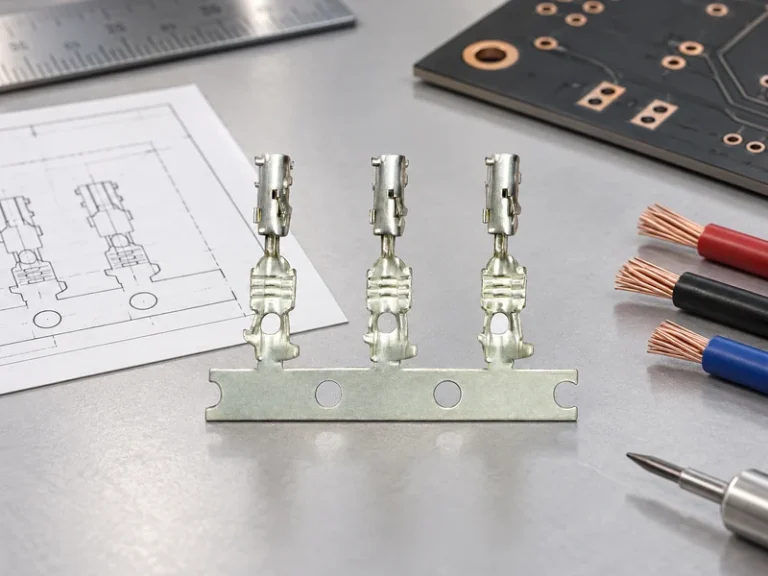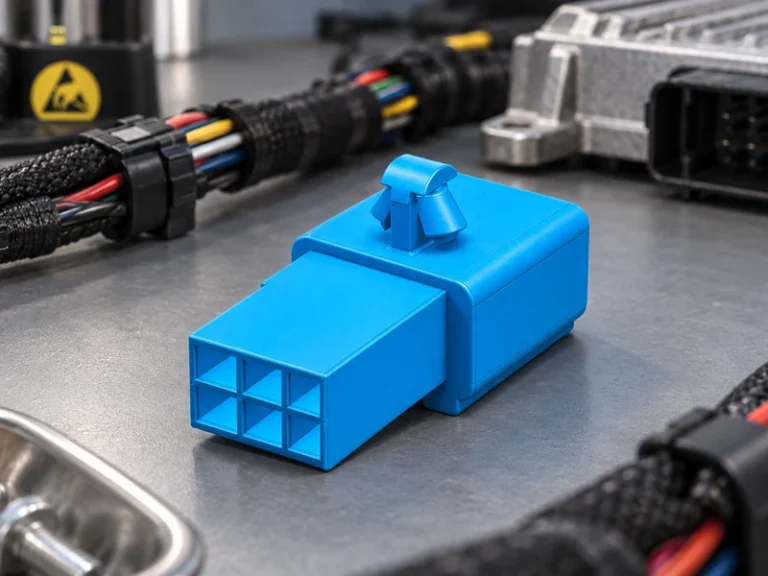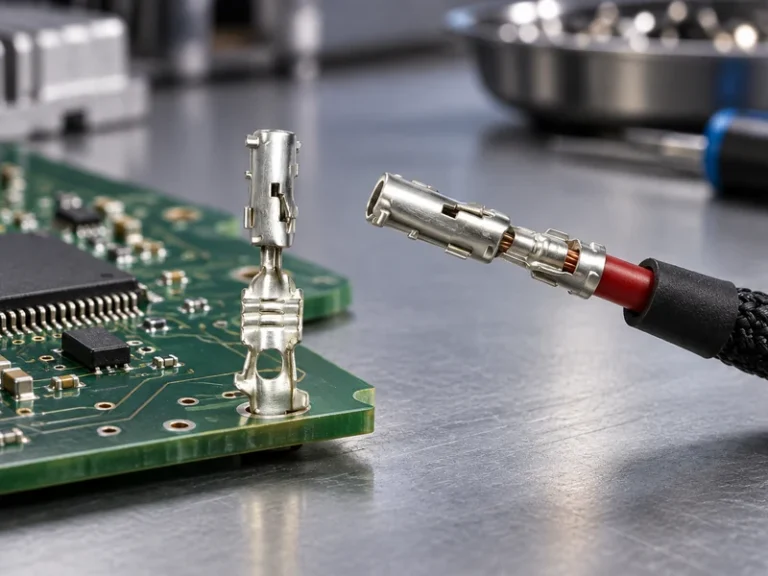


When a harness-validation engineer in Pune approved a replacement connector for an engine-bay program, the line team mated the parts and a warning lamp appeared within minutes during a shake check. This fictional composite case was not solved by changing suppliers: the interface had been selected around pin count and unit cost, while the cavity seal, terminal-wire range, keying, and validation plan had not been specified together.
Summary: The right auto electrical connector types are selected from the circuit, environment, interface, and validation evidence—not from appearance alone. A connector may carry only a low-current signal yet require a sealed, keyed interface because it sits near splash, heat, or vibration; conversely, a high-current circuit needs a documented temperature-rise and terminal system review. SAE/USCAR-2 and IEC 60512 provide test and specification references, while IATF 16949 addresses the supplier’s quality-management system rather than certifying an individual connector. Procurement teams should freeze a connector data sheet before nomination: mating family, wire range, sealing arrangement, retention, test plan, traceability, and change-control requirements.
Vehicle connectors join power, signal, data, and sensing circuits across the cabin, body, chassis, powertrain, and electrified systems. Their apparent simplicity can hide system risk: a mismatch can create rework at build, intermittent diagnostic faults, water ingress, or a service part that will not mate. The practical goal is to convert the vehicle location and electrical function into measurable interface requirements.
Select auto electrical connector types by circuit and environment
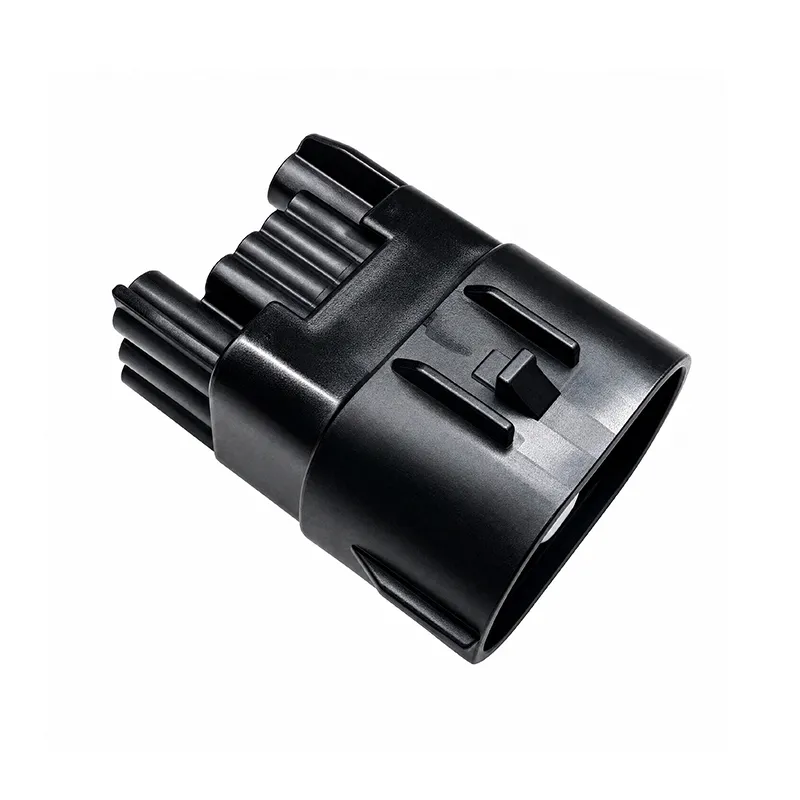
Start with function. Low-level sensor signals, switched power, ground paths, coaxial or data circuits, and high-current distribution have different contact geometry, shielding, retention, and thermal needs. Pin count is therefore only one filter. The required current, voltage, conductor cross-section, allowable contact resistance, duty cycle, ambient temperature, and nearby contaminants should be recorded for each circuit rather than inferred from a similar-looking assembly.
Environment turns a suitable interface into an unsuitable one quickly. An interior module may prioritize package space and service access, while an underbody connector must account for water, salt, debris, pressure washing, and vibration. IEC 60512 is a series of test methods for electromechanical components; relevant parts may address contact resistance, mechanical operation, vibration, or sealing-related performance, but a test method is not a product certificate. SAE/USCAR-2 likewise supplies performance and test requirements for automotive electrical connector systems. The applicable revision and customer specification should be agreed before validation.
Use a requirements sheet, not a generic category
- Map every circuit to its conductor size, terminal family, current profile, and voltage class.
- Describe the exposure zone: cabin, body, engine bay, wheel area, battery enclosure, or another defined location.
- State the permitted mating cycles, service access, connector position assurance need, and allowable harness bend radius.
- Set acceptance criteria and test samples before tooling or purchase release; include visual, dimensional, electrical, and mechanical checks.
A useful minimum is a 100% visual and keying check at assembly plus sampling or validation tests that reflect the stated risk. Exact sample quantities, forces, cycles, and temperature conditions must come from the customer specification or the selected standard; they should not be assumed from a catalogue label.
Mating compatibility, speaker circuits, and total-cost decisions
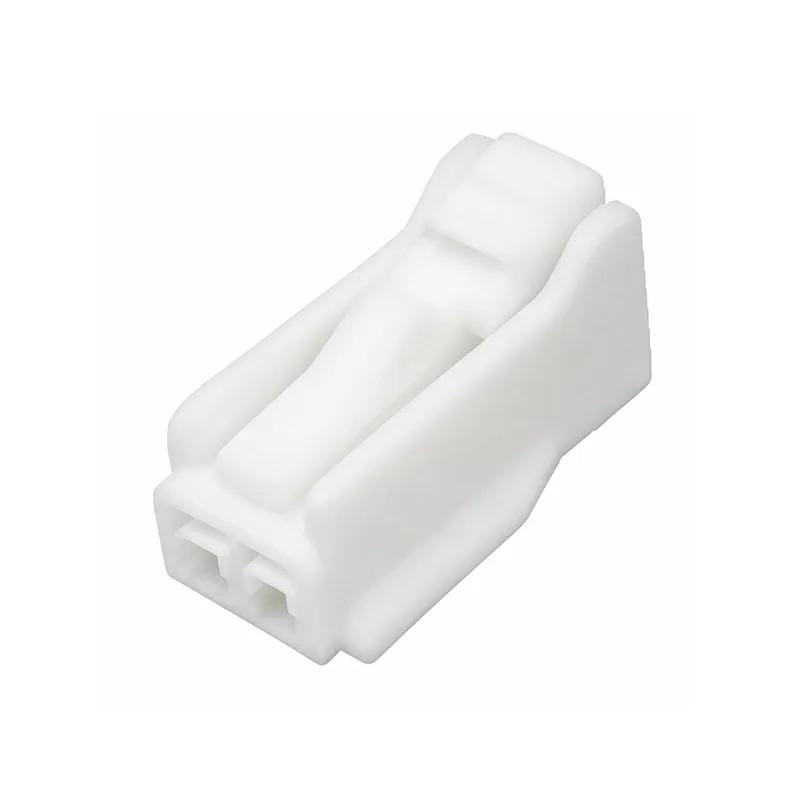
Mating compatibility is a controlled system property. The housing key, polarization, terminal design, plating, secondary lock, cavity plug, wire seal, and connector position assurance feature must be evaluated as a compatible family. A terminal from another family may enter a cavity yet fail retention, contact force, or sealing. Confirm part numbers, revision control, drawing dimensions, and supplier change notifications before approving alternates.
| Selection dimension | Signal / interior use | Sealed body or engine-bay use | Higher-current distribution use |
|---|---|---|---|
| Primary concern | Package space and stable signal path | Ingress, retention, and vibration exposure | Temperature rise and conductor/terminal interface |
| Evidence to request | Mating drawings and electrical test data | Sealing, vibration, and retention results | Current/thermal data and termination evidence |
| Maintenance tendency | Check latch access and repair method | Inspect seals and cavity closures | Inspect torque or crimp process as applicable |
| TCO risk | Mis-keyed service replacement | Field diagnosis and water-related rework | Heat damage, rework, and downtime |
For audio harnesses, auto speaker connectors should preserve channel identification, polarity, latch access, and the designed wire/terminal combination. Selecting auto speaker wire connectors by convenience can create a polarity error or a poor crimp even where power levels are modest. In service or aftermarket packaging, auto speaker connectors should be paired with an unambiguous mating drawing, and auto speaker wire connectors should be checked against insulation diameter as well as conductor size.
An illustrative total-cost comparison makes the point: saving a small amount on a connector can be outweighed by one harness rework event, extra inspection time, or a returned module. The calculation is not a price claim; the buyer should use its own labour rate, defect history, validation scope, and service exposure. Well-documented auto speaker connectors and auto speaker wire connectors reduce uncertainty because the mating and termination assumptions are explicit.
Specify vacuum interfaces and inspect installation
Electrical and fluid-routing components should not be conflated. auto vacuum hose connectors are specified around hose material, inside and outside diameter, media, pressure or vacuum range, temperature, retention, routing, and leakage test method. They may appear beside electrical harnesses in an engine compartment, but their sealing physics and acceptance criteria differ from electrical connector systems.
| Application / cost driver | Questions before release | Inspection evidence |
|---|---|---|
| Interior electrical harness | Will the keyed connector fit the module and repair procedure? | Visual orientation, latch engagement, continuity as specified |
| External electrical harness | Which splash, heat, vibration, and salt exposures apply? | Documented performance to the agreed test plan |
| Vacuum hose routing | What hose dimensions, media, temperature, and retention loads apply? | Dimensional, retention, and leak checks defined for the program |
| Service kit | Can technicians identify mating parts and avoid damage? | Clear part identification and installation instructions |
For auto vacuum hose connectors, a specification checklist should name the mating hose dimensions and tolerances, route constraints, barb or retaining feature, material compatibility, expected temperature, and test conditions. Request evidence for the actual hose and application; a general statement about “universal fit” is not enough. Where auto vacuum hose connectors are near a wiring loom, add abrasion clearance and assembly-sequence controls to avoid a mechanically sound part becoming an installation failure.
Installation inspection should be equally deliberate for auto electrical connector types. Verify wire strip length and crimp geometry against the approved terminal process, inspect for terminal back-out and damaged seals, confirm secondary locks, then perform the agreed electrical or functional check. Rework should be traceable: repeated unmating, an unapproved terminal extraction tool, or a substituted wire can invalidate earlier validation evidence.
Standards, compliance, and a procurement path
IATF 16949 is a quality-management-system standard for organizations in the automotive supply chain. It does not certify a particular connector’s current capacity, sealing level, or vehicle suitability. SAE/USCAR-2 and IEC 60512 are connector test/specification references; they define or support methods and performance expectations, but passing a selected test does not automatically establish certification for every destination market or use case. Marketing claims must therefore identify the exact product, revision, test scope, and applicable market requirements.
Unsupported claims can cause rejected PPAP or supplier documentation, delayed program approval, commercial disputes, and costly containment. The destination market, intended use, vehicle-level regulations, customer engineering standards, and claims on drawings or packaging determine what documentation is needed. Procurement should request the applicable standard edition, a test matrix, results tied to the relevant configuration, and any deviations—not a generic certificate.
Four practical sourcing actions
- Issue a controlled requirements sheet that distinguishes connector, terminal, seal, wire, and mating half.
- Ask for drawings, material declarations where required, test scope, traceability, and formal change-control terms.
- Validate the complete mated assembly under the program’s specified conditions, including vibration where the location requires it.
- Assess landed cost with validation, assembly yield, serviceability, and field-risk costs—not the unit quote alone.
For buyers exploring configurable automotive connector components, Wenzhou Shenji’s product range can be a starting point for a documented technical discussion. The company describes itself as a Wenzhou, Zhejiang manufacturer integrating R&D, manufacturing, sales, and service since 2010; supplied credentials include IATF 16949, ISO 14001, ISO 45001, and an ISO 17025 CNAS-compliant laboratory. Their applicability, scope, and project relevance should be verified for the requested configuration. Buyers can also compare intended deployment through the application overview and review the company’s manufacturing background when assessing a potential sourcing partner.
Frequently asked questions and references
What types of automotive connectors are used in vehicles?
Vehicles use connector systems for low-level signals, power, grounds, sensors, data, lighting, audio, and high-current distribution. The appropriate family is driven by electrical load, wire size, mating interface, location, and environmental exposure. A design should select the complete connector system rather than only a housing with the right number of cavities.
How do you select sealing for an automotive connector?
Define the actual water, dust, temperature, chemical, and pressure-wash exposures first, then choose seals, cavity plugs, and backshell features compatible with the wire and housing. Confirm sealing through the agreed test plan for the mated production configuration. A seal can fail through installation damage or an incorrect wire outside diameter even when the housing is otherwise suitable.
When should auto vacuum hose connectors be considered?
They should be considered wherever a vehicle vacuum line needs a controlled, serviceable joint with defined hose dimensions and media exposure. Selection should include vacuum range, temperature, hose compound, retention, routing, and leakage acceptance criteria. They are not substitutes for electrical connectors, even where both are packaged in the same area.
What vibration tests apply to an automotive connector?
The applicable vibration method and severity should come from the customer requirement and program environment; SAE/USCAR-2 and relevant IEC 60512 methods are useful references for automotive connector evaluation. Test the fully mated, terminated assembly in the intended orientation where possible, then assess electrical continuity, retention, and physical damage against agreed criteria. Do not claim compliance from a method name alone.
References
- SAE/USCAR-2: Performance Specification for Automotive Electrical Connector Systems
- IEC 60512: Connectors for electrical and electronic equipment—tests and measurements
- IATF 16949 overview
- ISO 14001 environmental management
The durable connector decision is made before the purchase order: define the interface, prove the configuration, and preserve the evidence. When a program reaches that decision point, teams can contact Wenzhou Shenji to discuss connector configurations, documentation, testing expectations, and sourcing support.