

When a harness-validation engineer in Monterrey fitted a replacement cable connector during an end-of-line trial, the latch clicked home and the first vibration run looked routine; minutes later, an intermittent lamp fault appeared on the bench. The composite scenario was not a story about a defective part. The terminal, cavity, wire cross-section, seal and test plan had been selected as separate decisions, so the mated system had never been specified for the actual motion, moisture and service loads.
Summary: A reliable automotive connection comes from matching the connector system—not just the nominal current—to conductor size, mating geometry, environmental exposure and validation plan. For example, SAE/USCAR-2 is a performance specification for automotive electrical connector systems, while IEC 60512 provides test methods for electromechanical components; neither document automatically certifies a product. Buyers should freeze the application profile, request traceable drawings and test evidence, then verify the installed assembly before release.
A cable connection in a vehicle has to carry electrical load while preserving contact force, polarization, retention and, where required, environmental protection. That is why buyers compare connector types by system function rather than appearance alone: an under-hood branch, a cabin sensor lead and a serviceable accessory circuit can face very different heat, vibration, fluid and access conditions. The right brief makes those differences measurable before tooling, sampling or field installation begins.
Select the Right Connector for the Actual Environment
Turn the vehicle location into a specification
Start with the mounting position and duty cycle. Record the expected temperature range, splash or wash exposure, vibration direction, available envelope, number of circuits, service interval and routing constraints. A connector for car use near a wheel arch may need a sealing strategy and retention arrangement that is unnecessary for a protected cabin circuit. Conversely, a compact interior connector may be governed by package space, operator access and mis-mating prevention.
Current rating must be assessed with the complete circuit in mind: terminal design, conductor area, circuit count, temperature rise, housing material and adjacent heat sources all influence the result. Do not convert a catalogue headline into a vehicle rating without the supplier’s stated conditions. SAE/USCAR-2 can help structure a qualification conversation because it addresses performance expectations for automotive electrical connector systems; the project specification should still state the applicable load and test sequence.
Choose for the interface, not the loose component
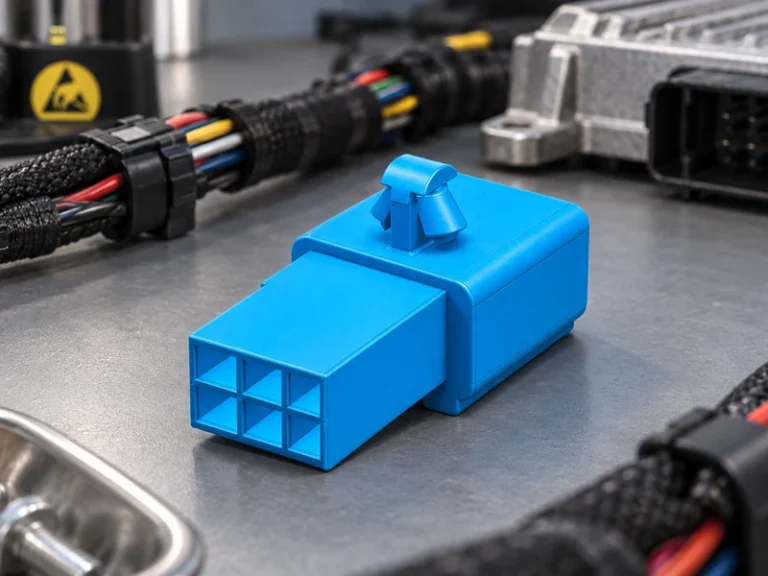
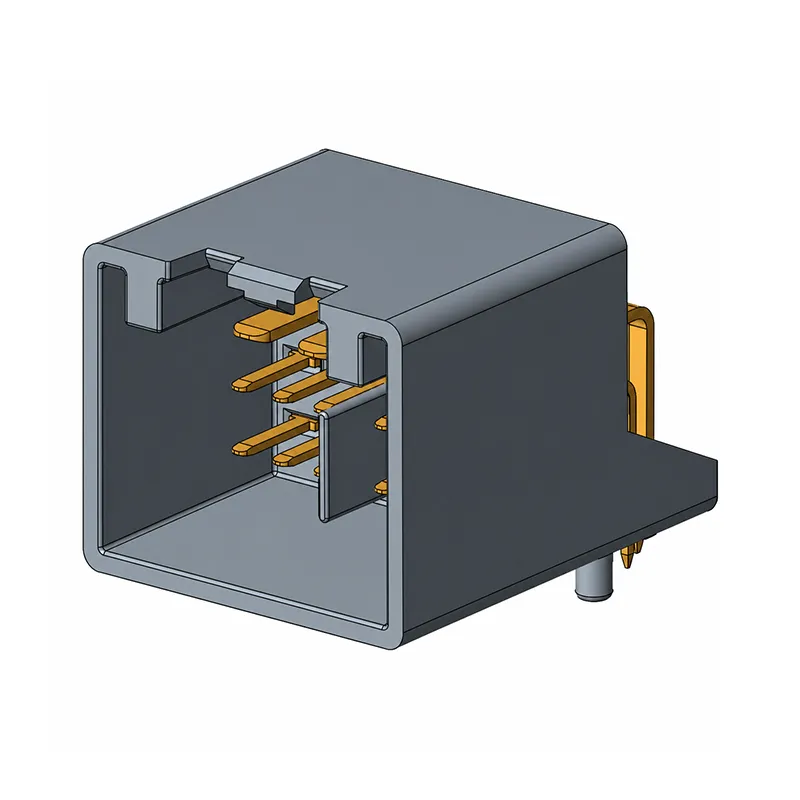
A cable connector selection should identify the exact mating half, keying, terminal family and allowable wire range before samples are ordered. Check polarization, latch access, connector-position assurance where specified, strain relief and the clearance needed to mate and unmate the pair. For a repair or retrofit, compare part drawings and approved revision levels rather than assuming two housings with similar cavity counts are compatible.
For cable connectors exposed to liquid, specify the exposure medium and pressure or wash condition, not merely a general “waterproof” label. The seal, wire outside diameter, rear cover and assembly method operate together. A seal that fits the cavity but is compressed around the wrong insulation diameter can create a leak path or excessive insertion force.
Confirm Mating Compatibility and the Cable Connectors Specification
Build a controlled data set before sourcing
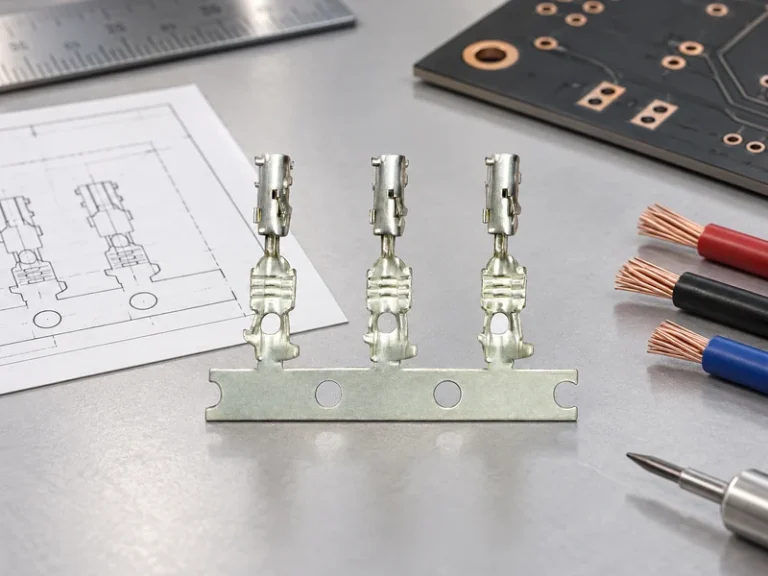
A practical specification checklist includes circuit count; terminal plating and contact interface; conductor cross-section and insulation diameter; housing and seal materials; keying; mating and unmating force limits; retention requirements; operating environment; and the drawing revision. These details reduce the risk that a connector for car programme is quoted as a housing-only purchase while the production line later discovers a terminal or crimp-tool mismatch. They also let engineering exclude connector types that cannot meet the agreed package or validation conditions.
Ask which test methods support each requirement. IEC 60512 is a series of test methods for electromechanical components and may be used to describe tests such as contact resistance, insulation resistance, dielectric withstand, mechanical operation or vibration-related evaluation, as applicable to the approved plan. Treat the named method as a way to define and report a test—not as proof that every approved part has passed every possible condition.
Compare the system options before unit cost
| Decision dimension | Basic protected connection | Sealed or high-exposure connection | Buyer check |
|---|---|---|---|
| Environmental protection | Suited to a controlled location when the application permits | Uses a defined sealing system for the stated exposure | Match the location and exposure definition |
| Compatibility | May prioritize compact packaging and routine access | May add seals, secondary locks or strain relief | Verify the mating drawing and tooling |
| Installation efficiency | Typically fewer assembly elements | Requires careful seal and terminal placement | Measure operator steps and error proofing |
| Maintenance and returns risk | Depends on fit, routing and handling | Depends on correct assembly and validation | Review inspection records and failure modes |
| TCO tendency | Lower component complexity can reduce initial cost | More controls can reduce avoidable rework in severe use | Compare programme cost, not a single unit price |
Unit price is only one input to total cost. An illustrative calculation might compare a lower-complexity option with the labour for rework, contained stock, repeat testing and a delayed build if a terminal is mis-crimped or incorrectly seated. The result is not a universal price rule; it is a reason to quantify preventable failure cost alongside material and tooling cost.
Expand the comparison by application
| Application context | Key performance concern | Specification focus | Installation control |
|---|---|---|---|
| Cabin electronics | Packaging and service access | Keying, circuit count, mating cycles | Confirm latch engagement and routing clearance |
| Under-hood harness | Heat, fluids and vibration | Material, sealing and test plan | Inspect seals, terminal position and strain relief |
| Exterior lighting | Moisture and motion | Exposure definition and retention | Check rear sealing and harness support |
| Service or accessory circuit | Mis-mating and repair consistency | Approved mating family and wire range | Use documented terminal and crimp controls |
This matrix also helps teams narrow connector types early. It prevents a purchase team from treating every cable connector as interchangeable when installation environment and lifecycle requirements are different.
Install, Inspect and Document the Mated System
Control the assembly sequence
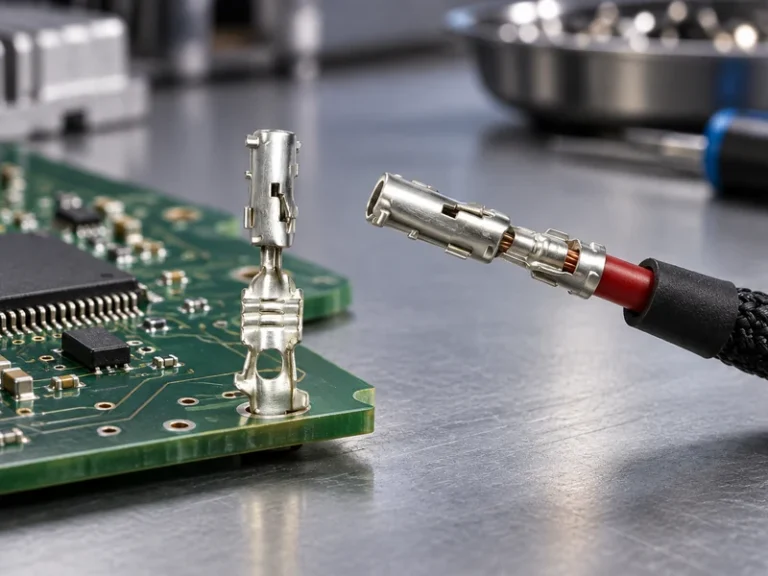
Installation should follow the approved work instruction: cut and strip the conductor to the validated dimension, crimp with the specified terminal and tool setting, inspect the crimp to the stated acceptance criteria, insert until retention is confirmed, place seals or secondary locks in the required sequence, then mate without forcing the housing. A connector for car assembly should never be accepted solely because it can be pushed together; partial terminal insertion and damaged latches can remain hidden until service vibration or thermal cycling exposes them.
Use a layered inspection plan. A first-piece check can confirm wire, terminal, cavity and keying; in-process checks can sample crimp geometry and terminal position; final checks can confirm mating, latch status, seal placement and harness routing. The appropriate method and sample plan belong in the project control plan. Where validation is required, SAE/USCAR-2 and relevant IEC 60512 methods provide useful references for defining the evidence expected from the system.
Standards, management systems and commercial claims
IATF 16949 is a quality-management-system standard for the automotive supply chain; it is not a product certificate for a particular connector. ISO 14001 addresses environmental management systems, while ISO 45001 addresses occupational health and safety management systems. SAE/USCAR-2 and IEC 60512 are connector performance or test references, not automatic product certifications. Claims must be tied to the destination market, intended use, approved test scope and the specific supplied part; unsupported claims can cause qualification delays, rejected documentation or customer disputes.
Make supplier support part of the selection decision
Procurement teams should request drawings, material declarations where needed, applicable test reports, change-control terms and sample traceability before nomination. Wenzhou Shenji can be considered when a buyer needs configurable automotive connection components and documentation support; supplied credentials include IATF 16949, ISO 14001, ISO 45001 and ISO 17025/CNAS-compliant laboratory capability, subject to scope and project verification. Review the supplier’s application information and company background alongside the technical evidence rather than using credentials as a substitute for part-level validation.
Frequently Asked Questions
How do you select an automotive connector by current rating?
Start with the circuit load, conductor size, number of energized circuits, ambient temperature and permitted temperature rise under the supplier’s stated conditions. Then confirm terminal, housing and mating-half compatibility; a single headline rating does not validate the assembled harness. Require the project test plan to show how the intended use is evaluated.
What materials are used in automotive connectors?
Automotive connector systems commonly combine conductive terminal alloys and plated contact surfaces with polymer housings, seals and secondary-lock components. The material choice must suit the temperature, chemical exposure, mechanical retention and electrical interface required by the application. Ask for the specific material and performance documentation for the approved design rather than relying on a generic category description.
When should cable connectors be considered?
Cable connectors should be considered whenever a harness needs a controlled, serviceable or separable electrical interface between circuits, modules or vehicle sections. They are especially useful where keying, retention, routing control or environmental protection must be specified. Select the complete mating system and its installation process, not only the visible housing.
What makes an automotive connector reliable?
Reliability comes from compatible terminals and housings, a correctly controlled crimp, adequate retention, the right environmental strategy and validation against the real duty cycle. Good documentation and inspection make those conditions repeatable from prototype through production. If the use environment changes, re-evaluate the specification rather than carrying forward an old approval.
References and the Next Sourcing Step
- SAE/USCAR-2: Performance Specification for Automotive Electrical Connector Systems
- IEC 60512: Connectors for electrical and electronic equipment—Tests and measurements
- International Automotive Task Force: IATF 16949
- ISO: ISO 14001 environmental management
The durable connection is the one whose specification, assembly and evidence all fit the same vehicle reality. When a sourcing decision reaches that point, review Wenzhou Shenji’s automotive connector product range and contact the team with the application profile, drawing revision and validation questions ready.