

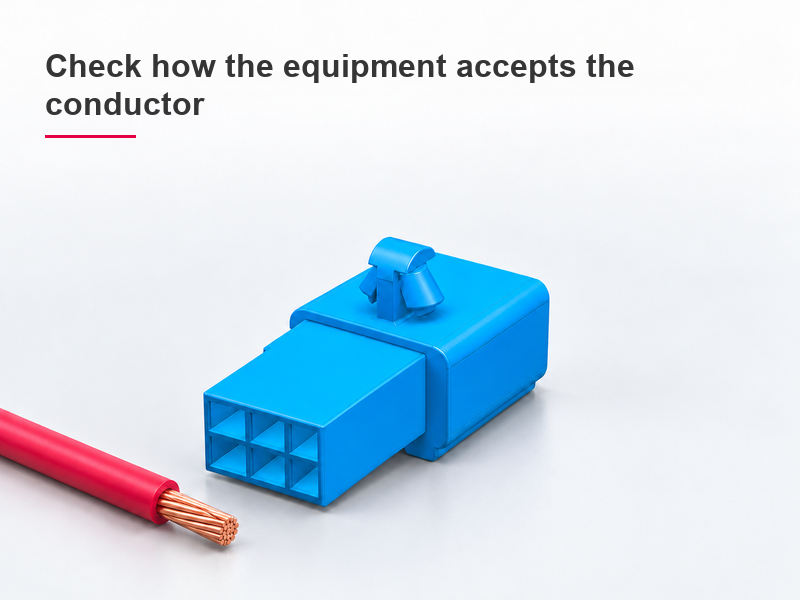
A cable end that fits into an opening is not necessarily the connection the equipment was designed to accept. A speaker spring clip, a screw terminal and an automotive connector housing may all receive wires, but they retain and contact them in different ways. Selecting a wire connector terminal by cable size alone can therefore create a mismatch at the other end of the joint. This guide starts with the equipment interface, then separates wire preparation, retention and electrical loading. It also explains why speaker wire terminals deserve their own checks rather than being treated as a low-risk exception to normal termination practice.
The short answer is to identify the equipment’s approved connection method before buying a wire connector terminal. Confirm whether it accepts bare conductor, a specified ferrule, a fork or ring, a plug, or a contact retained in a housing. A wire terminal block may have different conductor and preparation rules for each connection technology. Phoenix Contact’s terminal-block documentation distinguishes screw, spring and other systems; those differences affect installation. For speaker connections, use the equipment manual and cable requirements together. Next, verify wire construction, strip length, tool or tightening instructions and strain relief for the exact interface rather than assuming visual fit means approval.
Can a terminal block replace a connector housing?
Only after a design review establishes that the replacement suits the equipment and application. A wire terminal block and a connector housing solve different mechanical problems. The block provides a defined conductor connection system; the housing typically positions and retains specified contacts. Changing between them can affect service access, enclosure layout, retention and environmental protection.
Buyers using the phrase wire connectors terminals should turn it into a precise specification: conductor type, equipment-side interface, required disconnection method and application conditions. The electrical connector selection guide helps separate these product families. Do not force a terminal under a screw or into a cavity that was intended for a different wire end.
| Equipment interface | Typical decision | Check before assembly |
|---|---|---|
| Housing with removable contacts | Correct contact and retention system | Contact drawing, cavity and release method |
| Screw connection | Accepted conductor or terminal form | Preparation, tightening and conductor capacity |
| Spring connection | Accepted conductor construction | Insertion/release method and ferrule permission |
| Speaker binding post or clip | Equipment-approved cable end | Wire range, polarity and exposed-conductor limits |
Which terminals should be used for speaker wire?
Speaker wire terminals must match the equipment. Some interfaces accept prepared bare conductor; others accept specified plugs or spades. A ferrule is not automatically suitable for every spring clip or binding post. Check the manual, conductor capacity and available clamping area before adding a terminal that changes the wire end’s dimensions.
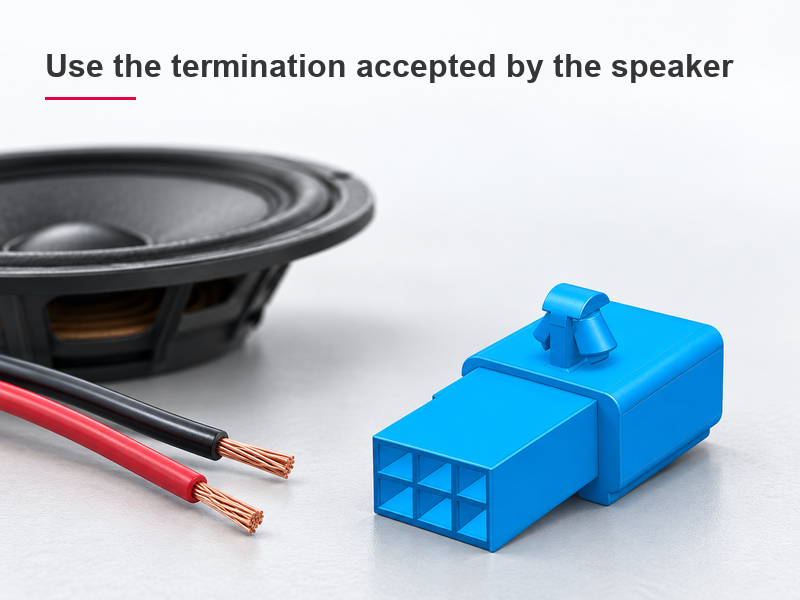
Control stray strands and exposed conductor so adjacent connections cannot be bridged. Preserve polarity identification and provide cable support where needed. Low nominal signal voltage does not make an accidental short or unsuitable connection harmless. Do not infer an audio current rating, polarity or mating arrangement from the colour of a generic automotive housing.
Why do wire connections become hot or pull loose?
Separate the wire attachment from the equipment contact. Wire connectors terminals can fail because of unsuitable conductor size, poor preparation, an incorrect crimp, loose fastening or inadequate support. Check which interface moves or heats before choosing a repair. A new terminal will not fix an equipment-side contact that is damaged or contaminated.
For applicable US workplace equipment, 29 CFR 1910.303 addresses electrical connections and use according to the relevant listing or labeling instructions. Its conductor-compatibility requirements illustrate why material and terminal identification matter. The regulation is not a product-specific automotive or audio certification.
| Symptom | Separate these possible causes | Next check |
|---|---|---|
| Wire slips out | Wrong size, preparation or retention | Application instructions and actual wire construction |
| Warm joint | Load, resistance or poor mating contact | Operating conditions and each connection interface |
| Intermittent operation | Movement, retention or equipment fault | Routing, release/lock features and equipment diagnosis |
| Discolored insulation | Heat exposure or connection damage | Find the cause before replacing the wire end |
What should be included in a terminal purchase request?
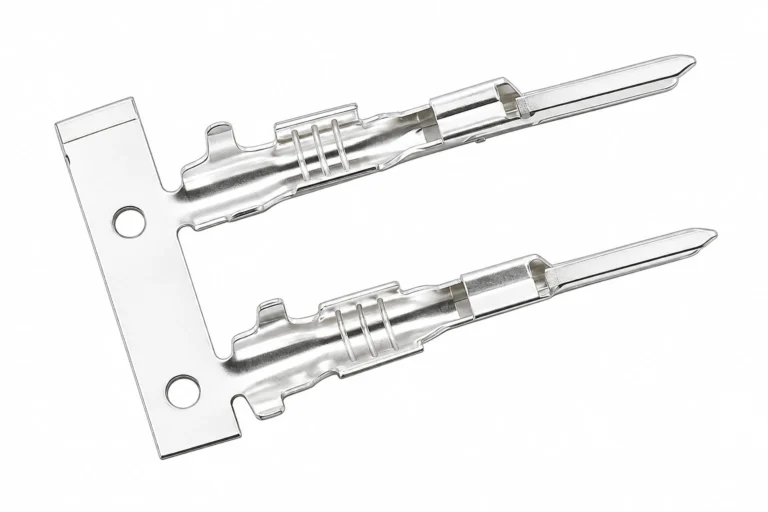
List the equipment-side part number or drawing, conductor size and construction, environmental conditions and service method. For wire connectors terminals, require the supplier to identify the proposed part and its application documents. Ask whether the quoted assembly includes contacts, housing and any required retention or sealing components; do not assume a product photograph establishes the supplied contents.
For a wire terminal block, follow the block manufacturer’s conductor preparation requirements. The Phoenix Contact terminal-block overview demonstrates why connection technology belongs in the specification. Compare installation effort and service access as well as unit cost, without assigning unsupported performance rankings to different technologies.
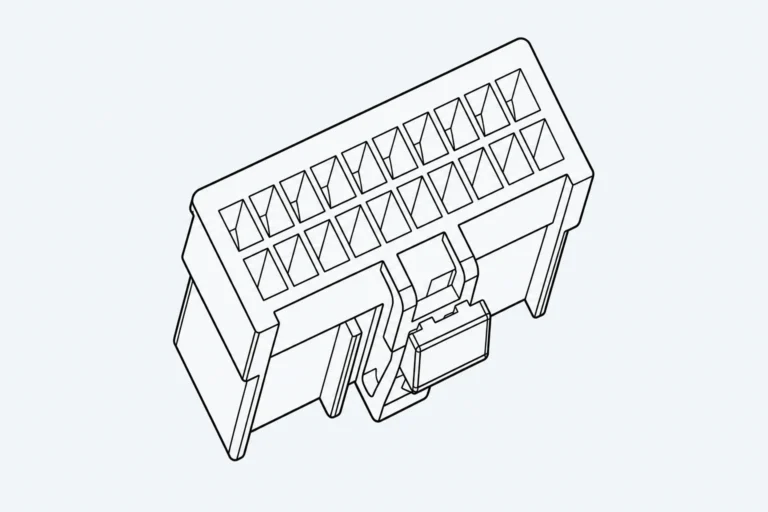
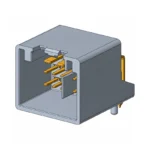
The photograph of the DJ7061-2.2-11-X connector housing identifies that product’s visible form. It is not evidence that the housing belongs on a particular loudspeaker. Wenzhou Shenji’s automotive component scope should remain distinct from an equipment manufacturer’s audio connection requirements.
A formal workmanship reference is NASA-STD-8739.4A, Change 4 (April 13, 2022), whose stated scope covers interconnecting cable and harness assemblies. Its NASA requirements apply only when the relevant programme or contract adopts them; they are not proof of automotive approval. Keep acceptance limits tied to the selected product and project.
Frequently asked questions
How do you identify the correct wire terminal size?
Read the conductor range and insulation-diameter requirements, then verify the equipment interface separately. A mating opening or sleeve colour cannot establish all three.
What causes wire terminal connections to overheat?
Investigate electrical load, conductor suitability and resistance at both the wire joint and the equipment joint. Loose fastening, damaged contacts or an incorrect crimp can remain after a superficial replacement.
How does wire connector terminal affect wire pull strength?
Its wire-attachment geometry and specified assembly process affect mechanical retention. Use the defined test method and acceptance requirement; a pull result does not independently establish current capacity.
What inspection standard applies to a wire terminal?
Use the equipment and terminal application requirements plus any workmanship standard specified by the contract. Harness requirements such as IPC/WHMA-A-620 do not replace an audio device’s approved connection instructions.
References
- Wikipedia, “Crimp (joining),” electrical crimping overview; accessed October 26, 2026. Background only; not a product acceptance specification.
- OSHA, 29 CFR 1910.303, General, particularly conductor connections and equipment installation; current web text accessed October 26, 2026. US workplace scope.
- NASA-STD-8739.4A, Change 4, Workmanship Standard for Crimping, Interconnecting Cables, Harnesses, and Wiring; change dated April 13, 2022. NASA workmanship scope; not an automotive certification.
- Phoenix Contact, Terminal blocks, connection technologies and application overview; accessed October 26, 2026. Product-specific instructions take precedence.
Conclusion
The equipment interface should determine the connection family before the wire end is prepared. Establish what the equipment accepts, verify conductor dimensions and construction, and follow the specified crimp, clamp or fastening procedure. For speaker wire terminals, preserve polarity, avoid stray strands and confirm the actual device’s requirements instead of assuming a general-purpose terminal is suitable. Mechanical retention, electrical loading and environmental protection remain separate checks. Wenzhou Shenji can help identify candidates within its automotive component range when the wire and mating details are provided. Start with the connector and terminal product catalogue and request the relevant drawings before approving a substitute or turning a physical fit into a production decision.