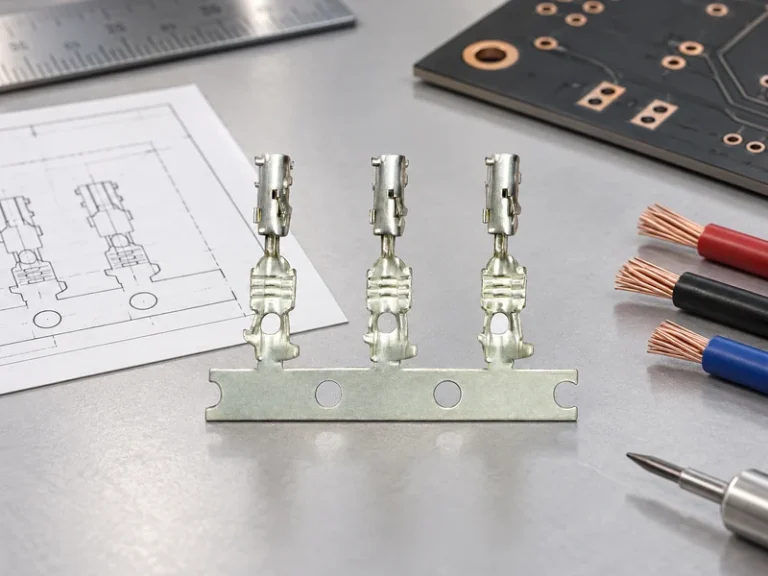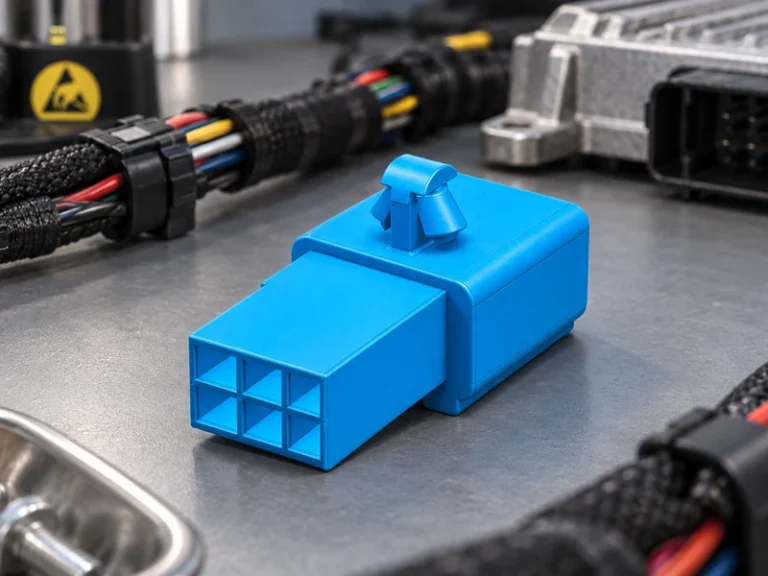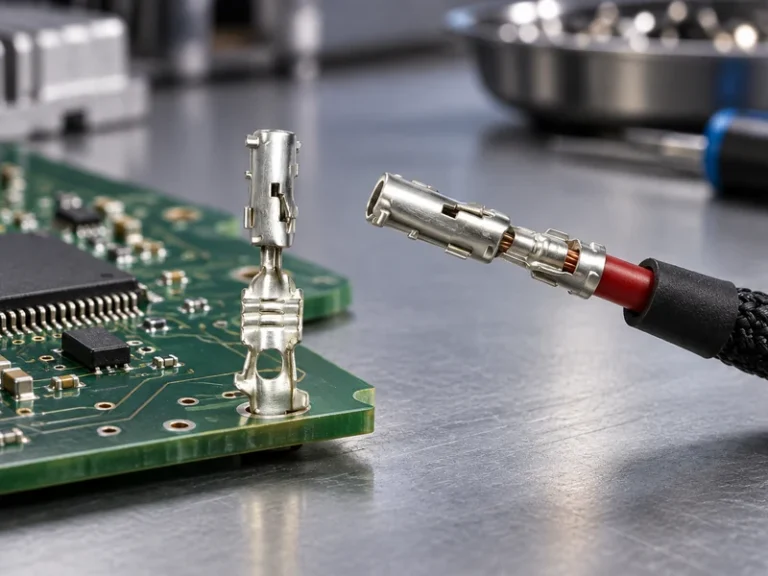


When a harness validation engineer in Monterrey received a mating sample for a new vehicle subassembly, she seated the halves on the bench and saw the quick lock appear to engage; continuity then failed before the first cycle was complete. The visible symptom suggested a bad part. A review of terminal geometry, circuit assignment, and the intended mating counterpart showed a different cause: the sample had been selected to a familiar shape, not to the interface specification.
Summary: An automotive connector must be chosen as a mated electrical-and-mechanical system, not as a housing alone. SAE/USCAR-2 and IEC 60512 are performance/specification references for connector systems and test methods; they are not, by themselves, automatic product certifications. The recommended action is a three-check review of circuit load, mating interface, and environmental validation before a buyer releases a harness design.
Start with the failure mode, then define the connector system
A vehicle connection has at least four interacting elements: housing, terminal, seal or cavity plug where required, and the approved mating half. The practical unit of selection is therefore the complete interface. A mismatch can be dimensional, electrical, or procedural; a terminal may fit into a cavity while still being unsuitable for the wire range, plating system, retention feature, or mating contact it must work with.
For engineers, the useful distinction is between a nominally compatible form and a documented interface. An auto connector description can identify a family or market term, but it does not establish pin count, keying, terminal series, wire size range, or sealing arrangement. SAE/USCAR-2 is widely used as a performance specification reference for automotive electrical connector systems, while IEC 60512 sets out connector test methods. Both help turn a purchase description into a testable requirement.
That distinction also explains hidden cost. A low initial component price can be outweighed by harness rework, diagnosis time, replacement stock, and delayed line release if mating, lock position, or circuit identification was not confirmed. An illustrative sourcing calculation should compare the landed component cost with the expected cost of inspection, crimp setup, validation samples, and field-return exposure; it should not assume that a visually similar part is interchangeable.
Connector types that matter to a harness program
Common families include unsealed and sealed wire-to-wire connectors, wire-to-device interfaces, multi-pin signal connectors, and power interfaces. A sealed design can support protection against an intended ingress environment only when the correct seals, wire diameters, plugs, terminals, and assembly process are used together. A high-pin-count signal interface may simplify packaging, whereas separate connectors can improve serviceability and circuit segregation.
For low-voltage vehicle circuits, 12 V and 24 V architectures remain common reference points, and 48 V systems introduce another design context; high-voltage traction systems need a separate safety and system-level assessment. Voltage alone is not a selection shortcut. Current, conductor cross-section, temperature rise, circuit duty cycle, terminal resistance, and adjacent-cavity loading must be reviewed against the applicable drawing and validation plan. IEC 60512 test-method references can help teams specify how contact resistance, mechanical operation, and environmental behavior are assessed.
Translate drawings into specifications and wiring controls
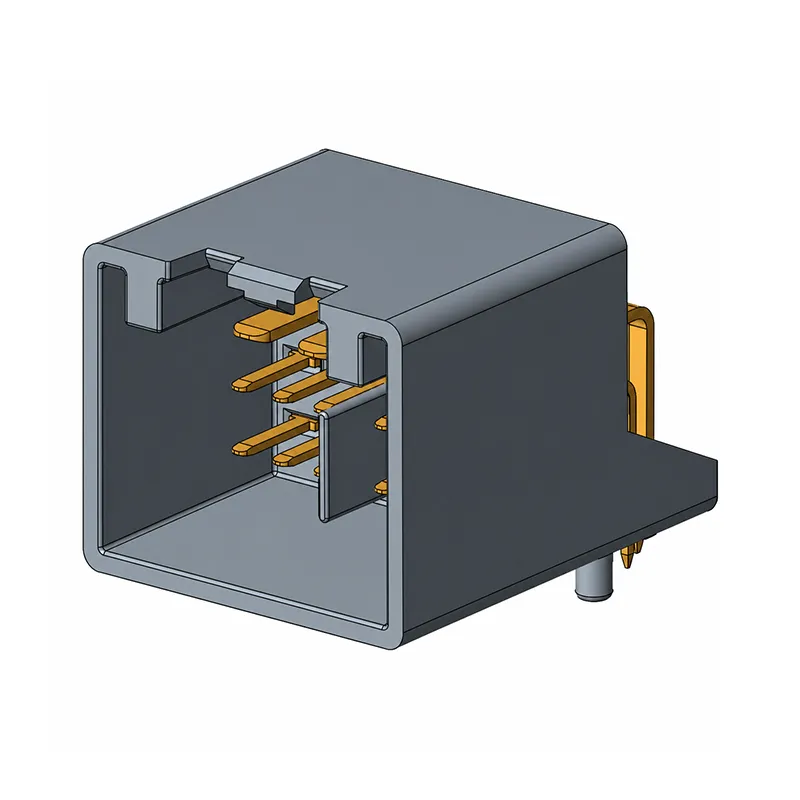
Specification control begins before a request for quotation. The buyer should record the mating part number or controlled drawing, number of ways, keying, terminal type, wire cross-section range, sealing needs, mounting condition, and service-access constraints. For an automotive wiring harness connector, add the cable exit direction, bend allowance, strain relief, cavity population, and any secondary lock requirement; these details often determine whether the assembly can be built repeatedly.
Crimp quality belongs in the same decision. Terminal selection, strip length, conductor and insulation crimp dimensions, pull-force criteria, and applicator setup should follow the approved terminal documentation and the customer’s process controls. SAE/USCAR-2 is relevant when a program uses it to define or verify connector-system performance, but it does not replace an OEM drawing, a crimp specification, or a production-control plan. Inspection records should identify the terminal and wire combination actually used, rather than only the housing label.
A value comparison for procurement and engineering
| Decision basis | Visual replacement approach | Specified mated-system approach | Commercial effect |
|---|---|---|---|
| Compatibility evidence | Appearance and cavity count | Drawing, keying, terminals, and mating half | Reduces ambiguity before samples are built |
| Electrical performance | Nominal voltage statement | Current, wire range, circuit duty, and validation criteria | Supports a defensible design review |
| Durability | Assumed from material or format | Program-relevant testing referenced to SAE/USCAR-2 or IEC 60512 | Limits avoidable rework and return risk |
| Assembly efficiency | Housing ordered separately | Terminal, seal, plug, tooling, and instructions aligned | Improves repeatability at the harness line |
| Total cost tendency | Lowest unit-cost focus | Component plus validation and process-control cost | Makes downstream cost visible |
The same logic applies to automotive electrical connectors used near sensors, actuators, lighting, body electronics, and control modules. The buying question is not which generic type looks closest; it is whether the selected system preserves the intended circuit, interface, and validation evidence. Specifications for automotive electrical connectors should identify the required mate and terminal configuration, not merely a family name.
Match applications, validation references, and compliance claims
Application context changes the specification. A cabin connector may prioritize packaging and service access; an under-hood interface may require a different environmental review; an aftermarket repair connector may need clear repair instructions and compatible terminals. The table below is a scoping tool, not a substitute for the vehicle manufacturer’s drawing or test plan. In each setting, automotive electrical connectors need evidence tied to the actual location and assembly condition.
| Application context | Dimensions to define | Useful validation reference | Procurement question |
|---|---|---|---|
| Sensor or low-current signal | Ways, keying, terminal fit, wire range, service access | IEC 60512 test methods as specified by the program | Is the mating interface and terminal series controlled? |
| Lighting or body electrical | Circuit load, vibration context, mounting, cavity population | SAE/USCAR-2 where required by the customer | Are circuit loads and wire combinations documented? |
| Under-hood harness | Temperature, fluids, sealing system, retention, routing | Program-specific environmental plan using relevant references | Are seals and plugs matched to actual wire dimensions? |
| Aftermarket repair | Repair length, terminal tooling, instructions, interchangeability | Approved repair procedure and application validation | Can installers reproduce the intended connection? |
Standards language needs similar discipline. IATF 16949 is a quality-management-system standard for the automotive supply chain; it is not a declaration that every individual connector is certified or suitable for every vehicle application. IEC 60512 and SAE/USCAR-2 are connector test/specification references, not automatic product certification. Claims about conformity must be tied to the destination market, intended use, customer requirements, and the evidence available for the exact configuration supplied.
Unsupported compliance statements can create commercial risk: they may trigger supplier clarification, incoming-inspection holds, customer audit findings, or costly relabeling. A robust file identifies which standard, revision, test method, configuration, laboratory, and acceptance criteria apply. It also distinguishes a component test report from system approval. Those boundaries matter especially when designs are adapted across regions or when a distributor markets a part for a broader set of vehicles than the original sourcing brief.
Use a controlled selection process before releasing the purchase order
- Freeze the interface. Obtain the controlled mating reference, keying, cavity count, terminal family, and any secondary-lock or CPA requirement.
- Map every circuit. Record voltage class, expected current, wire construction, wire cross-section, duty cycle, and adjacent-cavity use; do not infer capacity from a housing outline.
- Define the environment. State location, temperature exposure, vibration, fluids, washdown or ingress expectation, and service cycles, then map these to the program’s validation plan.
- Qualify the assembly process. Confirm crimp tooling, inspection method, terminal insertion, seal handling, lock engagement, and traceability before pilot production.
- Request configuration-specific evidence. Ask what drawings, material declarations, test references, and sample controls apply to the selected combination.
For buyers who need a documented sourcing discussion, Wenzhou Shenji is a China B2B automotive connector and components manufacturer integrating R&D, manufacturing, sales, and service, founded in 2010 in Wenzhou, Zhejiang. The company lists IATF 16949, ISO 14001, ISO 45001, and an ISO 17025 (CNAS-compliant laboratory) as supplied credentials; procurement teams should request evidence applicable to their specific part and program rather than treat credentials as a universal product approval.
Part-level review is still essential. A 2BK01-161228W-A auto connector, a 2GY01-161628A auto connector, or a DJ70110-6.3-21 connector should be evaluated against its own drawing, terminal options, and mating counterpart. An automotive wiring harness connector selection also needs the released wire and process details. Product pages can support initial comparison, but the released specification remains the decision authority.
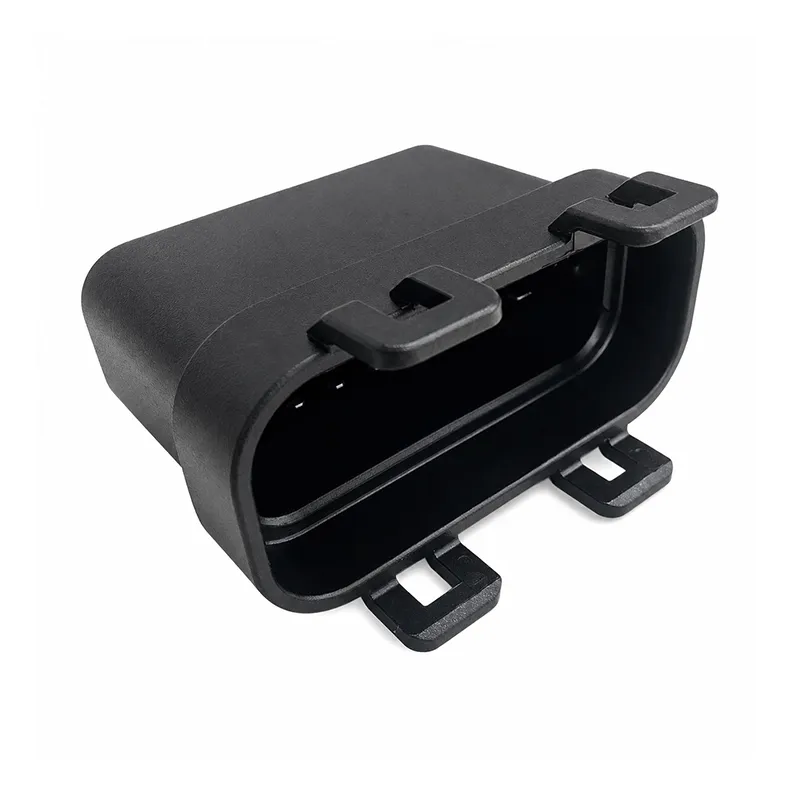
Before release, each automotive connector should be traceable to its controlled mate, terminal configuration, and validation evidence.
What is an automotive connector used for?
An automotive connector joins electrical circuits between vehicle harnesses, components, sensors, actuators, and modules while providing a controlled mating and retention interface. Its use is defined by the circuit and environment, not by the housing shape alone. Buyers should confirm the terminal system and mate before selecting a replacement; an automotive wiring harness connector also requires a compatible wire, terminal, and assembly process.
How do you choose an automotive connector for voltage and current?
Start with the controlled application data: voltage class, expected current, wire cross-section, duty cycle, temperature context, and the approved terminal combination. Then use the customer’s drawing and relevant validation references, such as SAE/USCAR-2 or IEC 60512 where applicable, to define acceptance evidence. Do not use a nominal voltage description as the only current-capacity decision.
What is the difference between automotive connector and auto connector?
In ordinary purchasing language, the two labels often refer to the same broad category. Neither term alone identifies the exact mating interface, terminal family, keying, or performance requirement. A purchase order should therefore use controlled part numbers and drawings alongside the descriptive name.
What makes an automotive connector reliable in harsh environments?
Reliability depends on the matched system: correct terminals and wire sizes, properly installed seals and cavity plugs where needed, secure locking, validated materials, and an assembly process that can be inspected. The operating environment must be translated into a program-specific validation plan; a generic environmental statement is not evidence for every application.
References
- SAE/USCAR-2: Performance Specification for Automotive Electrical Connector Systems
- IEC 60512: Connectors for electrical and electronic equipment—Tests and measurements
- IATF 16949 overview
- ISO 14001 environmental management overview
A connector choice earns its value when the drawing, terminal, wire, mate, process, and evidence all agree.
At the point of specification, contact Wenzhou Shenji to discuss the required interface and documentation for the program.