

Copper busbar contact surface preparation starts with identifying the surface that will actually carry current and the finish specified for it. Use the equipment or joint manufacturer’s approved cleaning procedure, protect plating, remove permitted contamination and prevent recontamination before assembly. Do not assume that every discolored area needs abrasion or that a bright appearance proves a low-resistance joint. Bare copper, plated contact faces, polymer supports and completed assemblies can require different treatment. This guide explains how buyers and quality teams can review a preparation procedure and its evidence. It does not provide a universal solvent, abrasive grade or torque value for all busbar products.
Identify the joint before choosing a cleaning method
A busbar assembly can contain conductive interfaces, plated terminals, insulating features and mounting hardware. These surfaces do not share one cleaning requirement. Ask for a drawing that identifies the electrical overlap area and the finish on each mating face. Confirm whether the joint is copper to copper or uses another material. Record any coating, plating or joint compound specified by the design owner before authorizing work.
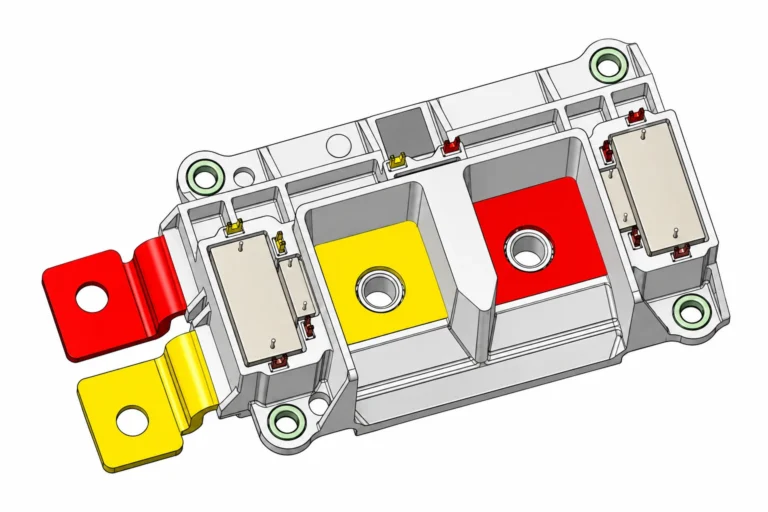
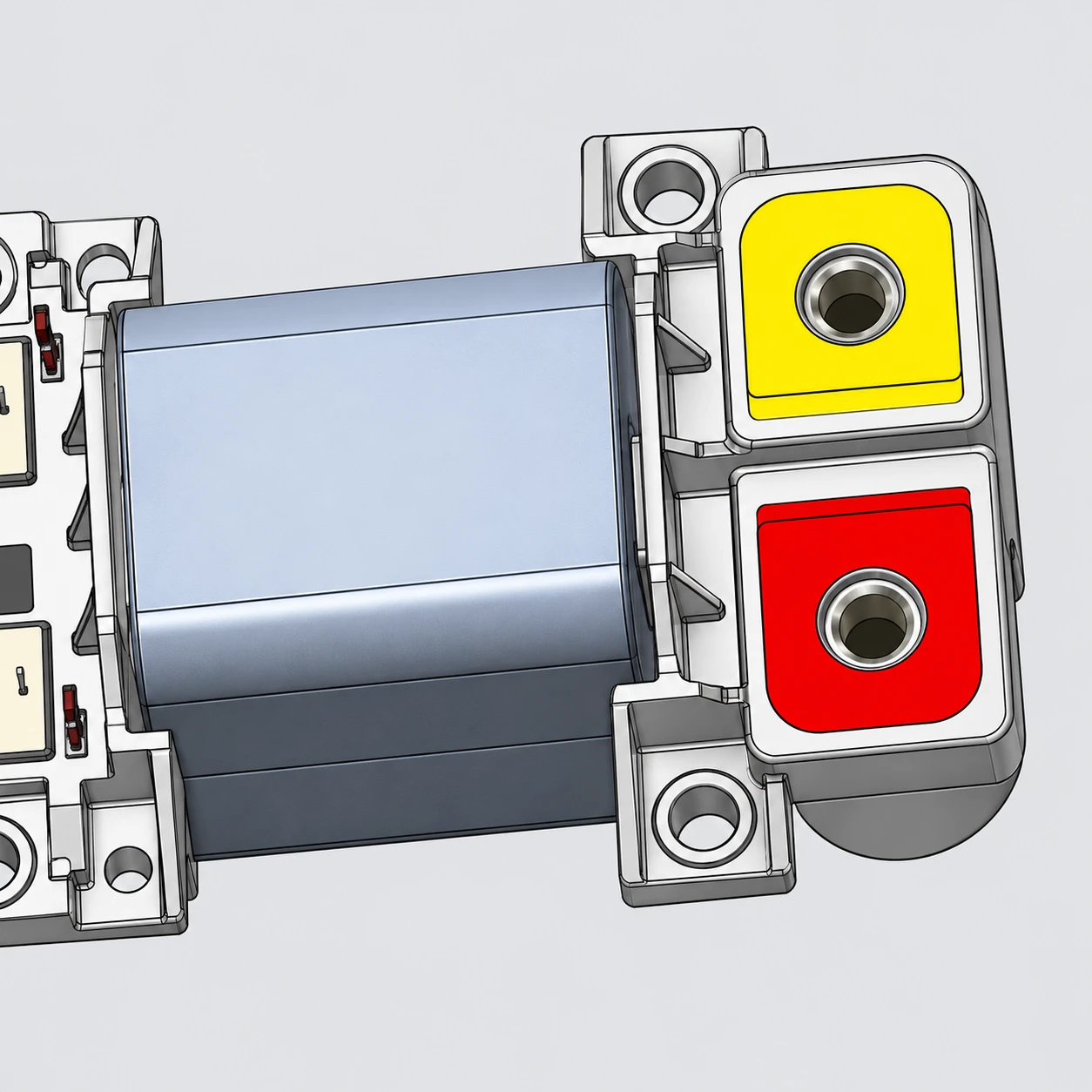
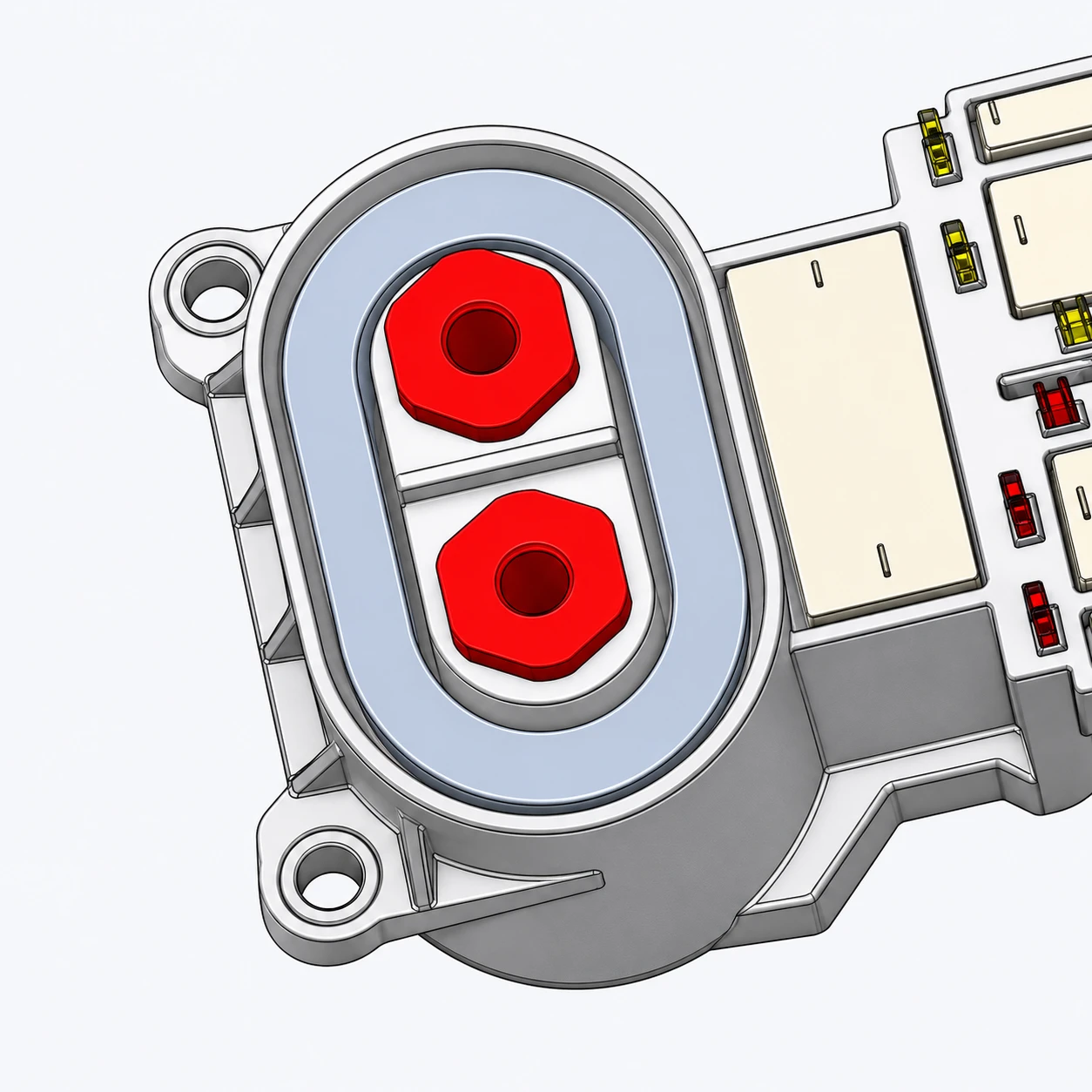
The BM001128 catalogue assembly shows several different visible features within one product. Its colored pads and gray carrier help distinguish locations, but the image does not establish the underlying alloy or plating system. Obtain the material and finish specifications for the exact revision. A preparation method appropriate for a separate bare copper bar may damage a finished component or its insulating parts.
For the wider application context, see the electrical copper busbar overview. Keep surface preparation distinct from joint geometry and hardware selection. A clean contact face cannot compensate for an incorrect overlap, unsuitable fastener or unsupported assembly configuration.
Review the procedure as a controlled manufacturing step
The procedure should identify its applicable part numbers, revisions and surface finishes. It should list approved consumables, application methods and prohibited treatments. Request a clear distinction between removing loose contamination, removing an oxide film where permitted, and repairing a damaged finish. These are different operations. A general instruction such as “clean until shiny” leaves too much scope for inconsistent material removal.
The EPRI Electrical Connector Application Guidelines discusses preparation and handling of electrical connection surfaces, including the need to avoid damaging protective plating. Its nuclear-plant context is different from an automotive assembly, so use it to understand the issue rather than to transfer an entire installation procedure. The released product instructions still determine which treatment is acceptable.
| Observed condition | First question | Controlled response | Evidence to retain |
|---|---|---|---|
| Loose particles or packaging debris | Is the approved process nonabrasive? | Remove contamination using the specified method and protect adjacent parts | Location, method and post-clean inspection |
| Oil or handling residue | Which cleaner is compatible with every exposed material? | Use the approved cleaner and application controls | Consumable identity and residue check |
| Discolored bare contact face | Is the surface bare copper and is oxide removal authorized? | Follow the part-specific preparation instruction | Finish identification and permitted treatment |
| Scratched or worn plated face | Has the protective finish been breached? | Escalate for finish assessment instead of polishing away evidence | Photographs, affected area and disposition |
| Pitting, cracking or heat damage | Is repair allowed by the design owner? | Segregate the part pending an approved decision | Damage map and engineering authorization |
This is a qualitative review matrix. It deliberately supplies no abrasive grade, solvent recipe or universal acceptance limit. Add those details only from approved product documentation and a validated process. Confirm that the procedure addresses the real assembly rather than an isolated material coupon with no coatings, seals or adjacent plastics.
Protect plating and insulating components
Plating is part of the engineered interface. Removing an unknown amount to improve appearance can change the joint instead of restoring it. If a finish is scratched, flaking or locally missing, record the condition before treatment. Do not describe a visibly altered surface as restored unless the repair has an approved basis and its required checks have passed. Replacement may be the specified response.
A cleaner that is acceptable for metal can affect a plastic carrier, marking, adhesive or seal. Control the application area and prevent pooling in inaccessible features. Ask how the process confirms that residue has been removed and that the part is ready for assembly. Where drying is required, use the specified method; improvised heat or compressed air can introduce another uncontrolled condition.
Use joint compounds only when specified
A joint compound can be part of a qualified assembly process, but the product type, location and quantity matter. Do not substitute a household grease or a different compound based only on a similar appearance. Check compatibility with the joint materials and the required service environment. The instruction should also explain whether the compound affects the prescribed tightening process and how excess material is controlled.
Control handling between cleaning and assembly
A prepared surface can be contaminated again during transport, inspection or storage. Define a protected transfer method and avoid touching the electrical interface with bare fingers. Use clean, compatible handling materials and packaging that does not shed particles onto the contact area. Keep unprepared, prepared and rejected parts distinguishable so the assembly team does not rely on memory or appearance to identify their status.
Record the time and conditions of preparation where the approved process makes them relevant. An arbitrary storage interval cannot be inferred from the color of the metal. If the interval or packaging condition falls outside the approved method, obtain a disposition before assembly. Repeating an abrasive operation automatically can remove additional material and may create a new defect.
The American Chemical Society’s copper education resource explains that copper can form different surface compounds depending on its environment. This is useful background for understanding why color alone is an incomplete diagnosis. It does not qualify a busbar cleaning method or prove that a particular discolored joint is acceptable.
Ask for evidence beyond a clean-looking photograph
A useful preparation record identifies the part and lot, the operator, the instruction revision and the consumables used. Include observations before and after treatment and any deviations. Photographs should show the same interface under consistent lighting. They can document particles, scratches or residue, but cannot by themselves establish contact resistance, plating thickness or long-term joint reliability.
Assembly verification should follow the relevant product specification. Depending on the design, evidence may include controlled tightening records, dimensional checks, resistance measurements or temperature-rise testing. Define the configuration and acceptance criteria in advance. Do not treat one favorable result from an unspecified setup as approval for another current, material pair or operating environment.
Use the complementary guide to busbar bolted-joint torque review when reviewing hardware and assembly controls. If the mating faces do not sit as intended, consult the contact-face flatness inspection guide. Surface chemistry, geometry and clamping conditions need separate evidence even though they influence the same interface.
Investigate a suspect joint before removing evidence
If a joint shows abnormal heating, isolate the equipment under the applicable electrical safety procedure before physical inspection. Work must be performed by appropriately qualified personnel. Preserve operating information such as load, comparison points and the observation method. A temperature difference taken under changing load does not automatically identify the failed component or prove that dirt caused the problem.
Before cleaning, document the contact pattern, discoloration, residue, fastener condition and nearby damage. Identify whether the observed surface was inside the electrical overlap or outside it. Separate evidence of environmental contamination from evidence of overheating or mechanical movement. Cleaning first can erase the features needed to distinguish those causes and leave the original problem unresolved.
For a supplier review, request the finish specification, approved preparation procedure, compatibility evidence, packaging controls and assembly verification plan together. Ask what triggers rejection, who can approve a repair and how a repaired part is identified. These questions are more useful than requesting a brighter product photograph. They establish a repeatable process that purchasing, manufacturing and quality teams can evaluate against the same requirements.
Further learning: copper surface chemistry
The ACS student-chapter demonstration below provides background on copper reactions. It is an educational chemistry demonstration, not a cleaning instruction. Do not apply its chemical reagents or heating methods to a busbar assembly; the approved industrial preparation procedure is a separate document.
Watch React with Copper on YouTube
Frequently asked questions
Should all copper busbar surfaces be polished?
No. Identify the electrical interface and its finish first. Polishing can remove plating or change a specified surface. Follow the approved preparation instruction for the exact part.
Does a dark surface always mean the joint is defective?
No. Color is an observation, not a complete diagnosis. Determine the surface material, location, contamination and operating evidence before deciding whether treatment or replacement is required.
Can one solvent be used on every busbar assembly?
No. Compatibility depends on the metal finish and adjacent plastics, seals, markings and adhesives. Use only the product-approved cleaner and controlled application method.
Is contact grease always required?
No. Compound use depends on the qualified joint design and instructions. The wrong product or application can change assembly conditions. Obtain the specified type and method before use.
What should buyers request after surface preparation?
Request traceable process records, inspection observations and the assembly verification required by the specification. A photograph can support the record but cannot replace electrical or mechanical acceptance evidence.