

Two wires carrying the same AWG marking can behave differently during termination because their strand construction or insulation diameter differs. A terminal selected only by nominal size may accept the conductor but fail to support the insulation, or fit the wire while missing the equipment interface. Searches for wire terminals connectors often combine these separate questions into one buying decision. Enamelled winding wire adds another complication: its thin insulation cannot simply be treated like the removable jacket on ordinary cable. This guide explains the information needed to size a connection, how to compare ratings without overreading a catalogue entry, and when a different termination process must be specified.
The short answer is to size terminal wire connectors from the complete wire specification and the terminal manufacturer’s application data. Confirm conductor area, strand construction, material and insulation diameter, then check the equipment-side geometry. Current capacity belongs to the installed system, including ambient temperature and permitted temperature rise; voltage suitability also depends on insulation and spacing. The two checks are not interchangeable. Enamelled wire terminals require a process explicitly intended for the coating and conductor involved. The next step is to obtain the wire datasheet and terminal drawing together, then qualify samples using the production wire rather than a convenient substitute.
Does the same wire gauge fit every terminal?
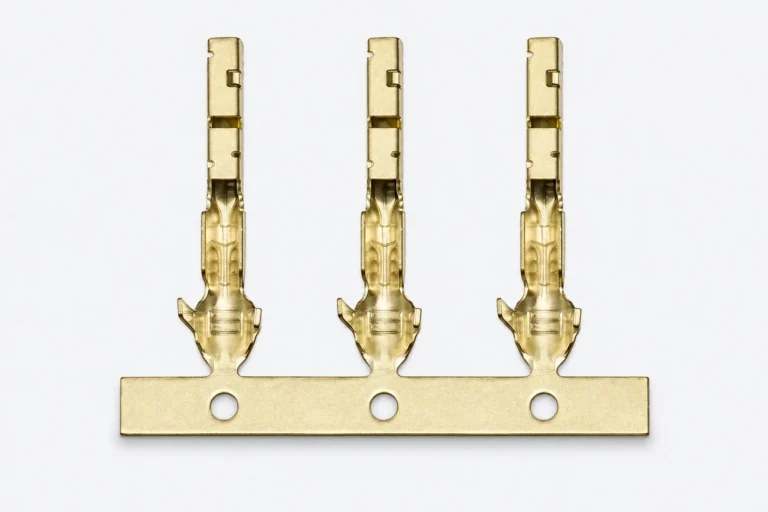
No. The stated conductor range is an initial filter. Read whether it covers solid or stranded wire and which strand constructions are accepted. Check the insulation support separately. For wire terminals connectors, reducing strand count or trimming insulation support to force a fit changes the intended assembly. A successful physical insertion does not establish a suitable termination.
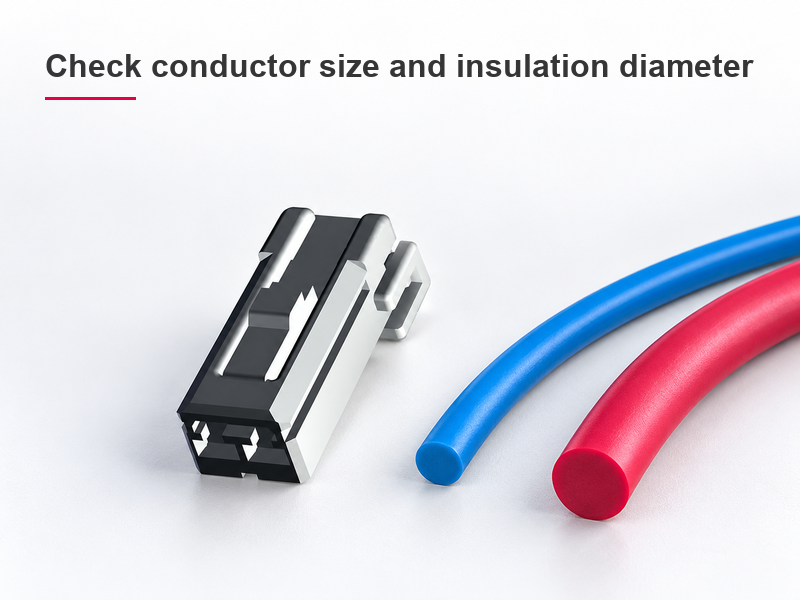
The system-level distinction between electrical connectors and their contacts helps avoid another error: a contact that fits a wire may not lock into the chosen housing. Terminal wire connectors need compatible wire and equipment interfaces, with part numbers that can be traced through the drawing set.
| Wire information | Why it matters | What to compare |
|---|---|---|
| Conductor area / AWG | Establishes the nominal wire size | Terminal’s approved conductor range |
| Strand construction | Affects bundle geometry and handling | Accepted solid/stranded constructions |
| Insulation diameter | Affects support and seal fit where specified | Support and seal ranges |
| Conductor material and coating | Affects the applicable termination process | Material approval and preparation instructions |
How should current and voltage ratings be compared?
Compare ratings only when their test conditions and application scope are known. A headline current value may assume a particular wire, ambient temperature or circuit population. It is not permission to apply that load under every installation condition. For terminals and connectors, ask what part of the assembly the value describes and which temperature limit governs.
Voltage suitability is a separate issue involving the actual insulation system, spacing and conditions of use. A low-resistance crimp does not prove an assembly meets the required insulation criteria. For US workplace installations within its scope, 29 CFR 1910.303 addresses suitability, conductor connections and use according to listing or labeling instructions. Do not present that regulation as a certification for automotive components.
Can ordinary crimp terminals be used on enamelled wire?
Do not assume so. Magnet wire has a thin insulating coating on the conductor. A termination may require controlled coating removal or a contact system specifically designed for that wire and coating. Ordinary compression of a coated conductor can leave an electrically unsuitable interface even when it appears mechanically secure. Enamelled wire terminals therefore need a defined process, not simply a smaller crimp barrel.
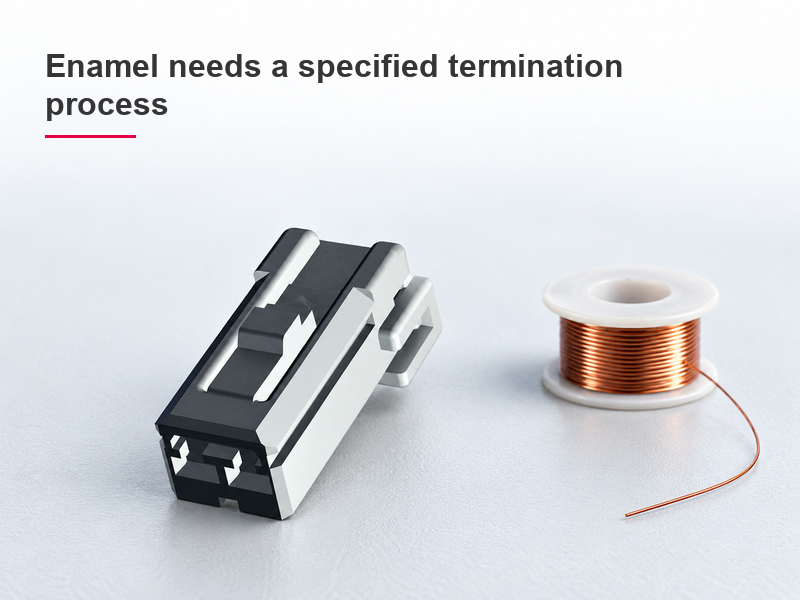
Confirm the coating type, conductor diameter and approved preparation method with the winding-wire and terminal suppliers. If a specialised insulation-displacement process is proposed, obtain its exact wire-range and tooling instructions. Do not infer that an ordinary automotive housing or contact can perform this function. The physical process overview in Crimp (joining) provides background on crimping; it does not qualify enamel removal for a particular product.
Which material and plating details belong in the specification?
State the conductor material, terminal material and plating requirements rather than selecting by surface color. Consider the mating surface, temperature and environment as a system. For terminals and connectors, a general catalogue statement is a reason to request the relevant drawing, not a substitute for checking the exact revision and part number.
| Application | Priority question | Required supplier evidence |
|---|---|---|
| Flexible harness wire | Is this strand construction approved? | Wire range and crimp specification |
| Winding wire | How is the coating handled? | Defined enamel preparation or approved contact process |
| Warm enclosure | What limits the operating temperature? | Assembly conditions and thermal limits |
| Serviceable connection | How is the part released and replaced? | Mating and service instructions |
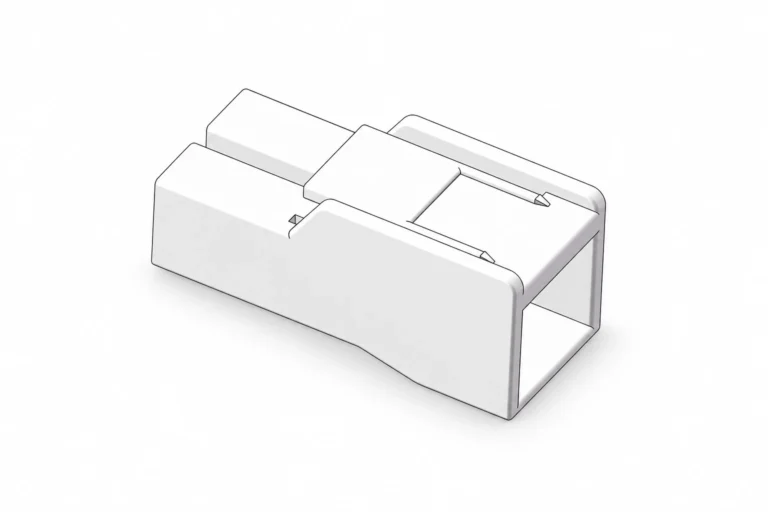
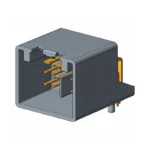
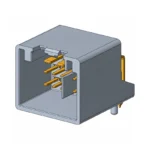
The 1WH02-021821 connector housing illustrates why external product identity and conductor suitability must be documented separately. Its photograph shows the housing form, not an approved wire range or a magnet-wire termination. Wenzhou Shenji should receive the actual wire and mating requirements when asked to propose a component.
A formal workmanship reference is NASA-STD-8739.4A, Change 4 (April 13, 2022), whose stated scope covers interconnecting cable and harness assemblies. Its NASA requirements apply only when the relevant programme or contract adopts them; they are not proof of automotive approval. Keep acceptance limits tied to the selected product and project.
Frequently asked questions
What is a wire terminal used for?
It forms a defined connection between a conductor and another contact, stud, board or equipment interface. The contact geometry and wire-attachment method determine its particular function.
How do you choose the right wire size for a wire terminal?
First select a conductor suitable for the circuit and installation. Then choose a terminal that explicitly accepts that conductor size, material and construction, with suitable insulation support and tooling.
What is the difference between wire terminals connectors and terminal wire connectors?
These are overlapping search terms, not two standardized product classes. Specify the actual part type and interface instead of relying on word order to communicate a technical difference.
How should a wire terminal be crimped and inspected?
Use the manufacturer’s wire preparation, tool and die instructions. Inspect the specified crimp geometry and insulation support, then carry out the required mechanical and electrical checks for the application.
References
- Wikipedia, “Crimp (joining),” electrical crimping overview; accessed October 26, 2026. Background only; not a product acceptance specification.
- OSHA, 29 CFR 1910.303, General, particularly conductor connections and equipment installation; current web text accessed October 26, 2026. US workplace scope.
- NASA-STD-8739.4A, Change 4, Workmanship Standard for Crimping, Interconnecting Cables, Harnesses, and Wiring; change dated April 13, 2022. NASA workmanship scope; not an automotive certification.
- Phoenix Contact, Terminal blocks, connection technologies and application overview; accessed October 26, 2026. Product-specific instructions take precedence.
Conclusion
Nominal wire size is the beginning of selection, not the full specification. Establish the conductor construction and insulation dimensions, verify the mating interface, and compare ratings only with their stated conditions. Treat enamelled wire terminals as a separate process decision because a coated conductor cannot be assumed to behave like stripped harness wire. Before production, verify the actual sample against the selected part’s application instructions and keep the wire and tooling revisions traceable. Wenzhou Shenji’s terminals and connectors catalogue can help identify a product family for discussion. Supply the wire datasheet, equipment interface and acceptance requirements with the enquiry so the response addresses the complete connection rather than only a nominal wire size.