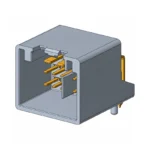


A connector housing flammability rating describes how a defined plastic specimen behaves in a specified flame test. To review a housing, match the exact resin grade, recognized thickness and color coverage to the supplied part, then confirm the requirements for the finished connector. A catalog statement such as “V-0 material” is only the starting point. The useful purchasing question is whether the supporting record covers the material and geometry you will actually receive, and whether the responsible engineer has accepted that evidence for the intended application.
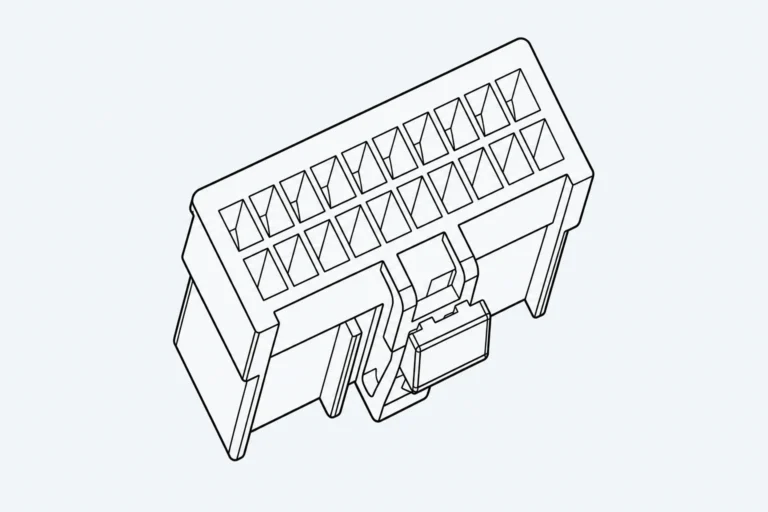
This guide provides a document-review workflow for molded connector housings. The illustrated DJ70110-6.3-21 housing identifies a product form; no flame classification, resin identity or certification is assigned to that product by its illustration. Request current, part-specific records before putting a material requirement into a purchase order.
What does a UL 94 statement actually cover?
UL 94 addresses small-scale burning behavior of plastics under controlled conditions. UL Solutions explains that horizontal and vertical classifications involve different specimen orientations, and that vertical classifications consider burning behavior and whether flaming drops ignite an indicator. These distinctions matter when a drawing names a particular classification. A report for another test family cannot simply be substituted because its name sounds similar. See the official UL overview of plastics combustion tests for the test families and their boundaries.
Keep the classification separate from the required evidence route. Your specification may require a recognized material record, an identified test report, a component evaluation or an end-product approval. Ask which route applies before requesting a generic certificate. This prevents a supplier from answering a finished-part question with an unrelated resin brochure.
Likewise, do not read “self-extinguishing” as permission to expose a connector to an uncontrolled ignition source. A classification does not remove the need to manage overloads, installation faults and adjacent combustible materials. Electrical protection and the overall equipment assessment remain separate engineering decisions.
Build a traceable chain from resin to molded part
Start with exact material identity
Record the resin producer and complete grade designation, including suffixes that distinguish formulations. A broad polymer name on a housing or quotation does not identify a tested grade. Two materials described with the same family abbreviation may have different supporting records. The supplier should connect the purchase specification, incoming material identity and molding record to the part number being reviewed.
Ask whether the sample and production material follow the same approved formulation route. If the supplier proposes a substitution, treat it as a new approval question rather than a clerical rename. Document who accepts equivalence and what evidence supports that decision. Purchasing staff should not have to infer it from a similar trade name.
Check thickness and color coverage
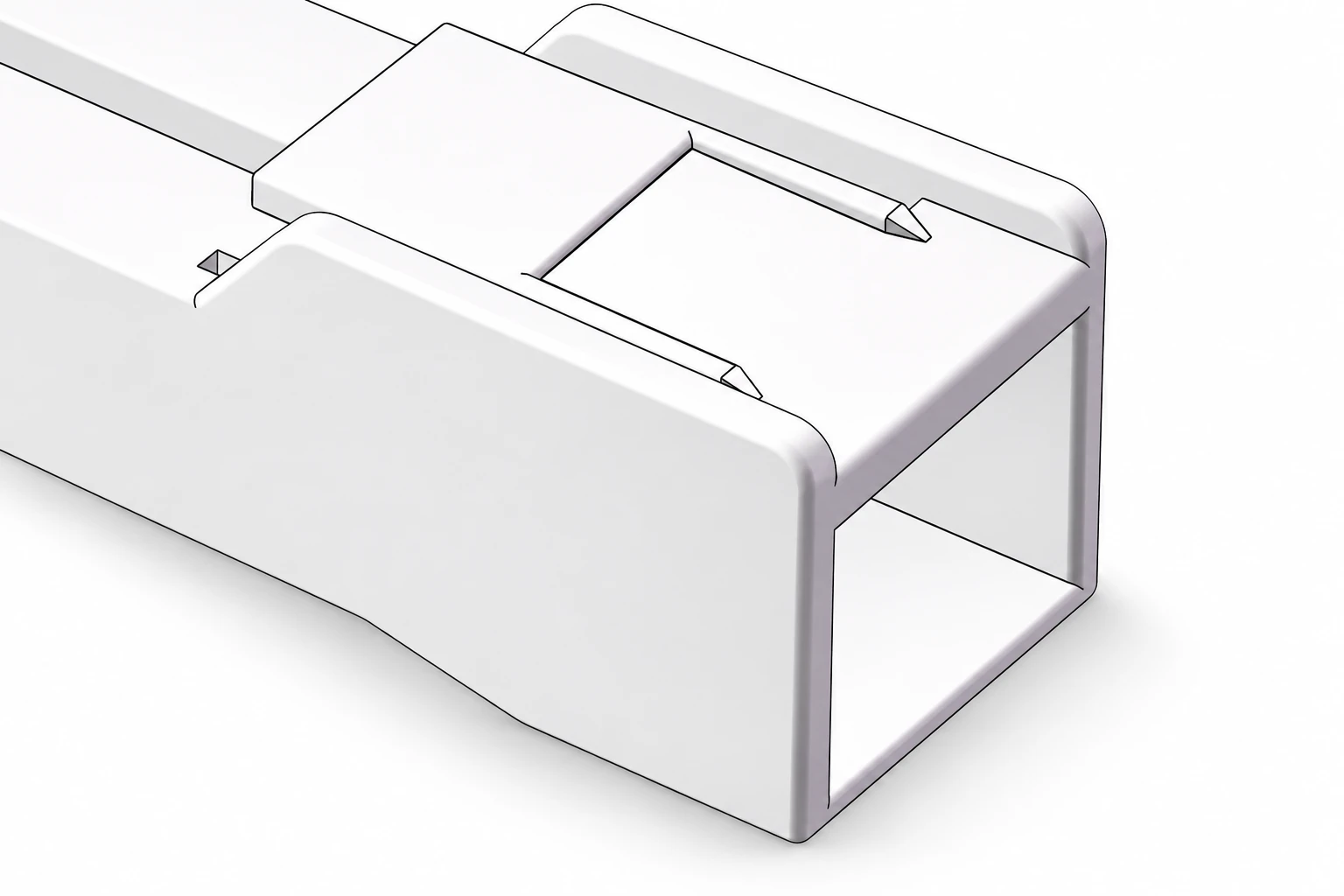
A housing drawing contains several wall regions, ribs and latch features. Identify the wall features relevant to the applicable material recognition or evaluation and have the responsible engineer compare their controlled dimensions with the evidence. Do not estimate wall thickness from a catalog perspective image. Use an approved drawing and, when needed, a measured part report.
UL’s plastics recognition program explanation explicitly includes thickness recognition and color coverage among the subjects needed to interpret a Yellow Card. Keep the exact record revision with the approval package. A screenshot showing only the classification can omit the conditions that determine whether the record is relevant.
For a color change, ask for confirmation that the proposed formulation remains inside the accepted coverage. A visually identical housing is not evidence of identical formulation. Conversely, a different color is not automatically a failure; it is a reason to check the actual record and the project’s change-control requirements.
Also check how long the approval records will be retained and which document controls take precedence if a sales sheet conflicts with the drawing. Identify the current revision explicitly. An accessible but superseded record can be misleading when a resin formulation, product variant or customer requirement has changed since the original sample review.
A practical flammability evidence checklist
The following table is a procurement review tool, not an additional test standard. It organizes the information needed to connect a material statement to a controlled housing supply. Acceptance limits and required classifications must come from the applicable project specification.
| Review item | Evidence to request | Action if unclear |
|---|---|---|
| Part identity | Part number, drawing revision and approved variant | Separate records for different variants before comparing results |
| Material | Producer, full resin grade and traceable material declaration | Hold approval when only a polymer family is supplied |
| Recognition conditions | Classification with applicable thickness and color coverage | Ask the responsible engineer to resolve uncovered features |
| Sample link | Report sample description and relation to production material | Request the missing batch or formulation connection |
| Finished assembly | Applicable connector or equipment requirement and approval owner | Do not close a component approval using a resin claim alone |
| Future changes | Notification rules for resin, color, tool and supplier changes | Add review responsibility before release |
Use a status column in your own review record: accepted, awaiting clarification or rejected with reason. An empty field should remain visible until somebody resolves it. Replacing missing detail with a generic “compliant” stamp makes later changes harder to assess and can hide a mismatch between engineering and purchasing expectations.
Handle gaps before they become production assumptions
When the quotation says V-0 but provides no record
Request the exact material record and a statement connecting it to the quoted housing. Ask which thickness and color conditions support the quotation. Keep the answer alongside the supplier’s part number rather than in an isolated email thread. If the supplier cannot identify the grade, the review is incomplete even when the sample looks satisfactory.
When the approved drawing changes
A thinner wall, different resin or revised molding source may require renewed review. Build a short comparison describing what changed and which prior approval assumptions it touches. Send that comparison to the engineering owner with the supporting records. This is more useful than resubmitting a large document package with no explanation of the actual difference.
Set a clear release condition for samples and production. A trial sample can be useful for checking fit while material approval remains open, but its temporary status should be explicit. Avoid allowing an unapproved sample label to become the only identity used for the first production order.
Keep flame behavior separate from other housing properties
Use the plastic connector selection guide for the broader housing selection process. A flammability classification does not answer every insulation or environmental question. Prepare separate evidence fields for the properties required by your application. The housing marking and material identification guide helps distinguish visible markings from the detailed material record. The creepage and clearance review addresses geometry and insulation coordination, while chemical resistance evidence addresses fluid exposure.
NIST’s explanation of flammability measurement shows why test context matters: laboratory measurements and full-scale fire behavior provide different information. This is useful background for keeping a small specimen classification within its proper scope. It does not establish a housing’s behavior in a vehicle fire or certify an assembled electrical system.
Understand ignition before interpreting a flame classification
The educational video below explains the fire triangle: fuel, oxygen and an ignition source. It is included as combustion background, not as a UL 94 procedure or a connector qualification demonstration. Use qualified laboratories and the applicable controlled test method for material testing; do not attempt a lighter test on a finished housing as a purchasing shortcut.
Watch The Fire Triangle Explained With 3 Simple Demonstrations on YouTube
Prepare a quotation package that can be approved
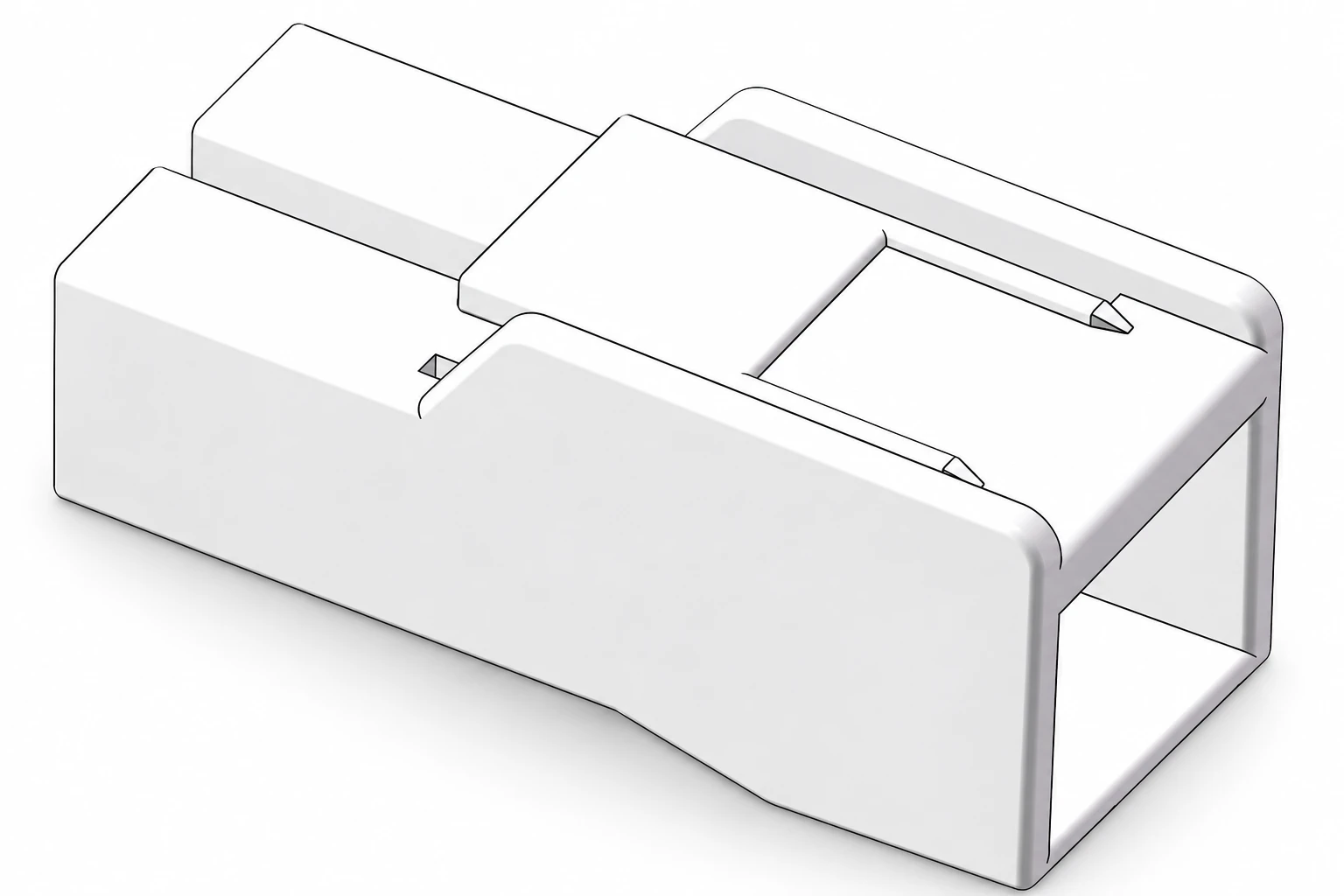
For a housing such as the DJ70110-6.3-21 connector housing, send the supplier the intended part revision, required material classification, governing equipment requirement and requested documentation. Include the review deadline and the person responsible for technical acceptance. Ask the supplier to identify exceptions explicitly rather than silently replacing an unavailable grade.
Before release, reconcile three names: the part on the purchase order, the part on the drawing and the part identified in the evidence package. Record any approved cross-reference. Keep material and color changes within that same record so the next order does not depend on somebody remembering why the first sample was accepted.
A useful final review meeting has a narrow agenda: confirm identity, resolve uncovered conditions and assign remaining actions. If one condition stays open, state whether it blocks production release or only a later application decision. Clear responsibility makes the evidence usable throughout sourcing, inspection and future supplier changes.
Frequently asked questions
Does V-0 mean the connector cannot burn?
No. It is a classification under defined test conditions. It does not promise immunity from fire, overloads or all ignition scenarios.
Can a polymer family name prove the rating?
No. Request the exact producer and resin grade, applicable classification conditions and a traceable link to the supplied housing.
Why does wall thickness matter?
The supporting material record has thickness conditions. Compare those conditions with controlled housing dimensions through the responsible engineering review.
Does a resin Yellow Card approve the finished connector?
It supplies material evidence. Finished connector and equipment approval must follow their applicable requirements and evaluation route.
What should happen after a color or resin change?
Check the revised formulation against the accepted evidence and project change rules, document the decision and obtain approval before production release when required.