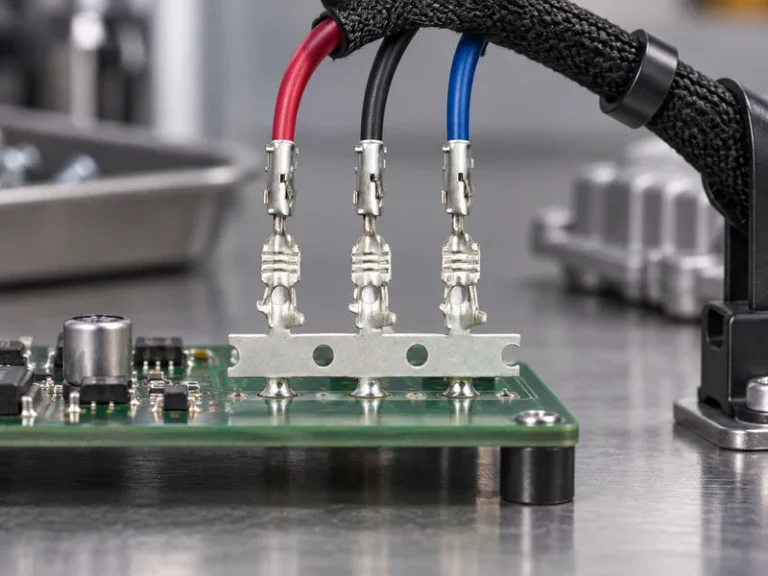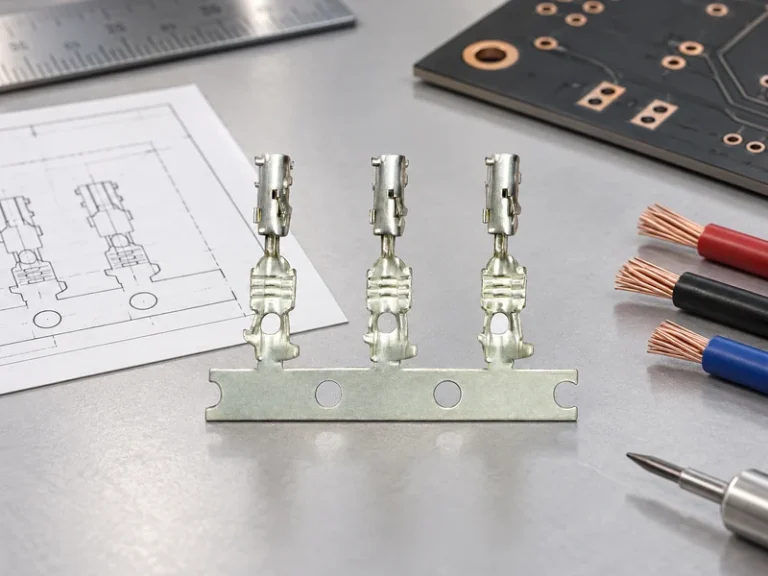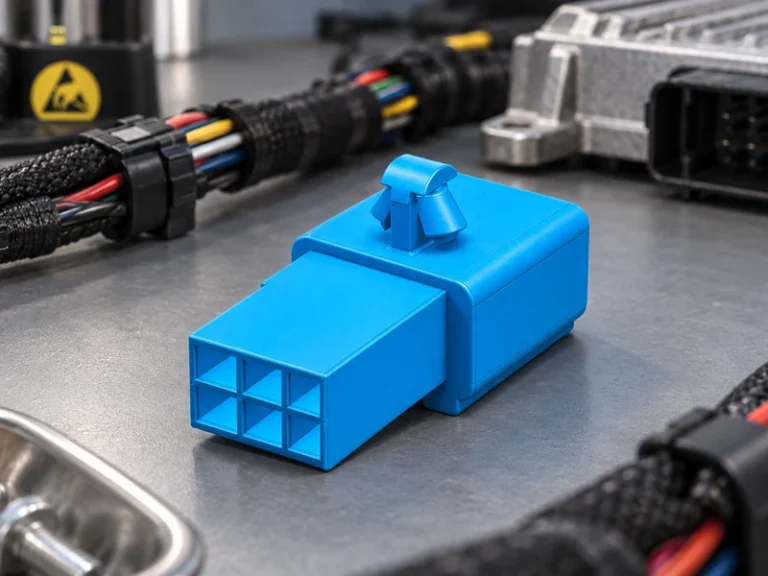


When a harness-validation engineer in Pune replaced a compact connector during a pilot build, the new assembly powered up briefly and then showed a hot, discoloured terminal at the first load check. The fictional, composite incident was not evidence of a universally bad part: the reversal came when the team traced it to an unspecified mating interface, an unverified terminal size and a current path that had never been assessed as a system. Selection, specification and process control decide whether an interface is dependable.
Summary: The interface should be selected from the circuit’s voltage, continuous and transient current, wire range, environment, mating family and validation plan—not from housing shape alone. As an illustrative check, a 1,000 W load at 48 V implies about 20.8 A before losses and transients; that immediately changes the terminal, conductor and temperature-rise questions. Use the applicable product drawing together with test references such as IEC 60512 and SAE/USCAR-2, then validate the mated harness for its destination and use case.
A connector is the separable interface that joins conductors or circuits while allowing assembly, service or module replacement. In procurement, “connector” may mean the housing, terminals, seals, secondary locks, backshells and mating half; a useful specification identifies each of those items. The International Electrotechnical Commission’s IEC 60512 series supplies test methods for electromechanical components, while SAE/USCAR-2 provides performance requirements and test procedures widely used for automotive electrical connection systems.
Application Scenarios and Interface Types
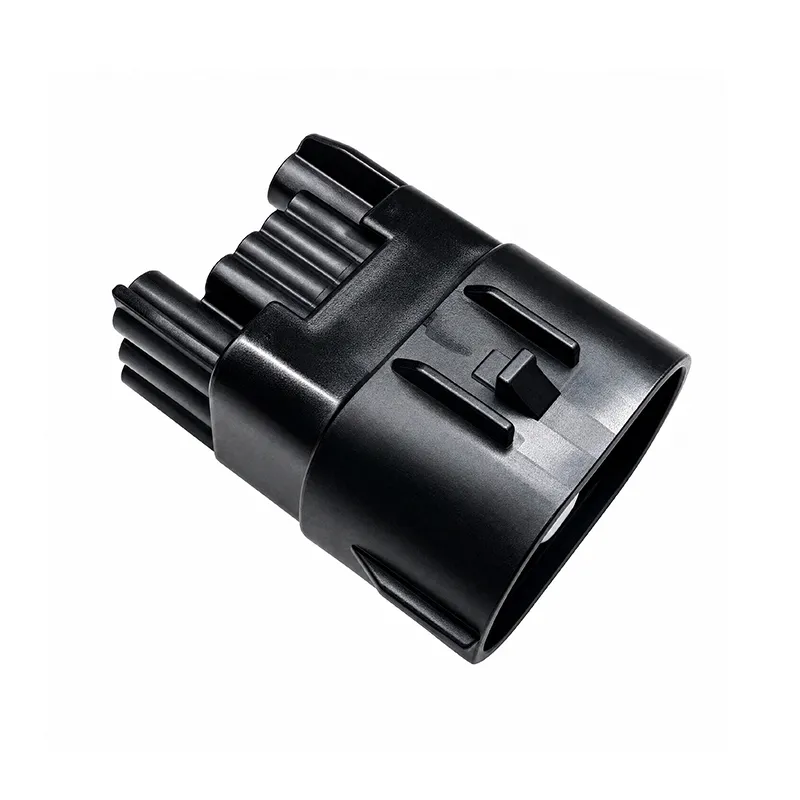
The first decision is where the interface lives. A 12 V body circuit, a 48 V auxiliary system and a high-voltage vehicle subsystem expose a connection to different fault energies, insulation demands and service practices. The system voltage is not a connector rating; it is the starting point for defining voltage withstand, creepage and clearance needs in the applicable design rules and product documentation.
For sealed exterior harnesses, ingress, salt exposure, vibration and strain relief commonly drive the choice. Inside an enclosure, mating frequency, available space and service access may dominate instead. In either case, IEC 60512 test-method families can be used to define checks such as contact resistance, mechanical operation and environmental exposure; the exact method, severities and acceptance criteria should come from the customer specification or qualified component plan.
An electronic connectors category is often used for signal, board and low-power interfaces, whereas power-harness families generally need a more explicit terminal-and-wire definition. An electronics connector may be perfectly suitable for a protected control module yet unsuitable for an underbody power circuit. Procurement teams should map the category name to the actual duty cycle, not assume the label sets performance; the same review applies to electronic connectors used in protected equipment.
Common selection patterns
- Signal and sensing: terminal geometry, contact resistance stability, shielding or keying may be central.
- Low-voltage power distribution: conductor range, current carrying capability and temperature rise must be assessed together.
- Exterior vehicle harnesses: sealing system, retention, vibration and corrosion exposure become critical.
- Serviceable modules: mating ergonomics, polarization, cycle life and error-proofing shape the interface.
Ratings and Specification Checklist
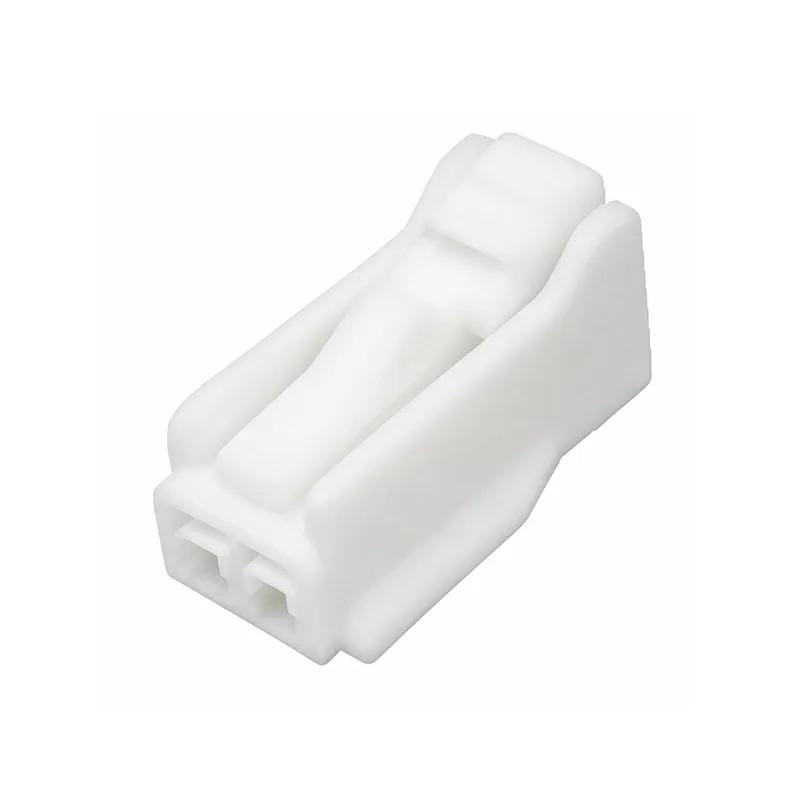
Current and voltage ratings require conditions. A catalogue value may be tied to a conductor size, temperature limit, number of loaded circuits, orientation or test fixture. For the illustrative 48 V, 1,000 W example, 20.8 A is only an electrical starting calculation; connector temperature rise, contact resistance and harness bundling still need review. IEC 60512-2 test methods address electrical continuity and contact-resistance testing, while an automotive validation plan may apply the relevant SAE/USCAR-2 procedures.
| Specification field | Why it matters | Evidence to request |
|---|---|---|
| System voltage and circuit function | Sets insulation and safety-review context for 12 V, 48 V or higher-voltage systems | Electrical schematic and product drawing |
| Continuous, peak and transient current | Determines terminal, wire and temperature-rise assessment | Load profile; stated test conditions |
| Wire cross-section and insulation diameter | Controls crimp compatibility and seal fit | Crimp specification and pull-force plan |
| Mating half, keying and CPA/TPA features | Prevents cross-mating and incomplete engagement | Interface drawing and assembly work instruction |
| Environment and service cycles | Defines sealing, materials and validation severity | Use profile and IEC 60512/SAE/USCAR-2 test matrix |
Compatibility must be proven at three levels: the housing-to-housing interface, terminal-to-terminal engagement and wire-to-terminal crimp. Mixing visually similar families can alter contact normal force, terminal position or lock engagement. A controlled sample build, visual inspection and the named mating/retention tests in the agreed plan are lower-cost safeguards than a field return or line stop.
Material, Plating and Cost Drivers
A practical electronic connector comparison starts with the material system. Copper-alloy terminals offer conductivity and spring characteristics; plating selections such as tin or gold are evaluated against the actual current, mating, fretting, corrosion and storage conditions. Housing polymers must also withstand the relevant heat, chemicals and assembly loads. Material names alone do not confirm performance, so request test data tied to the final terminal, plating, seal and housing combination.
Total cost is broader than unit price. Tooling, crimp applicator setup, scrap from incorrect wire insertion, inspection time, warranty exposure and alternate-source control all belong in the decision. For example, a lower unit-cost option that adds one manual inspection step to every harness may raise conversion cost; this is an illustrative TCO consideration, not a price comparison. Contact resistance measurement under IEC 60512 and applicable mechanical retention testing help make that trade-off evidence-led.
| Decision dimension | Protected/module application | Sealed harness application | Commercial implication |
|---|---|---|---|
| Primary exposure | Controlled enclosure, service access | Moisture, contamination, vibration | Seals and validation can change tooling and assembly needs |
| Performance focus | Pitch, signal integrity, mating cycles | Retention, sealing, current path stability | Compare evidence at the assembly level |
| Maintenance | Accessible inspection or replacement | Harness-level diagnosis may be required | Service design affects lifetime cost |
| Returns risk | Mis-mating or contact damage | Water ingress, poor crimp or vibration-related interruption | Use error-proofing and process controls where risk is highest |
| Unit-cost tendency | Often driven by density and terminal count | Often driven by seals, locks and validation scope | Obtain like-for-like quotations; avoid unsupported price assumptions |
In data sheets, an electronics connector description should therefore be read alongside rated conditions, application notes and the exact mating part number. An electronics connector designation is a search category, not a validation result. When a design needs a family change, repeat the qualification logic rather than carrying over a result from a different plating or cable assembly.
Standards, Tests and Compliance Boundaries
SAE/USCAR-2 is a connector performance/specification reference for automotive electrical connection systems. IEC 60512 is a series of test methods for electromechanical components; citing a method identifies how a test can be conducted, not that a product is automatically certified. A request for “USCAR compliant” should be converted into a written test plan identifying the applicable revision, samples, configurations, conditions and acceptance criteria.
IATF 16949 is a quality-management-system standard, not a product approval or a substitute for application validation. Destination-market regulations, vehicle safety requirements and marketing claims must be checked against intended use and local obligations. Unsupported claims can create bid risk, customer audit findings, shipment delays or warranty disputes; a traceable drawing, material declaration and test report are commercially more useful than a broad label.
Where environmental-management expectations matter, ISO 14001 concerns an organization’s environmental management system rather than the electrical rating of an individual part. Wenzhou Shenji lists IATF 16949, ISO 14001, ISO 45001 and an ISO 17025 CNAS-compliant laboratory among supplied credentials; purchasers should verify current scope, site and project applicability before relying on any credential in an approval file.
Procurement Actions, FAQs and Next Steps
Buyers can reduce ambiguity with five actions:
- Freeze the mating part number, terminal size, wire range and polarization before RFQ release.
- Provide voltage, continuous/peak current, load profile and ambient-temperature assumptions.
- Classify the installation as protected, splash-prone or exposed, and specify chemicals and vibration sources.
- Agree the validation matrix, including applicable IEC 60512 methods and SAE/USCAR-2 references, before sampling.
- Review crimp tooling, traceability and incoming-inspection requirements with the harness assembler.
For configurable automotive connector projects, Wenzhou Shenji can be considered as a sourcing partner for drawings, sample coordination and documentation review. Its connector product range and application information provide a starting point; final suitability remains subject to project-specific verification.
What is an electrical connector used for?
The interface joins circuits so power, signals or data can pass through an assembly while still allowing manufacture, service or replacement. Its use determines the needed terminal, housing, keying, sealing and test evidence. Start from the circuit and environment, then select the interface.
What types of electrical connectors are available?
Available types include wire-to-wire, wire-to-board, board-to-board, sealed harness, power, signal and coaxial interfaces. An electronic connectors family may suit signal or board work, while a power or exterior harness may require a different construction. Compare exact mating families and stated conditions rather than generic type names.
What is the difference between electrical connector and electronic connector?
In ordinary use, the terms overlap, but “electrical” often emphasizes power or wiring systems and “electronic” often emphasizes signal, board or device interfaces. The design decision should not rest on wording: a electronic connector still needs defined voltage, current, mating and environment requirements. Ask for the product drawing and validation basis.
How do you choose an electrical connector for your application?
Match the proposed interface to the wire and terminal range, voltage/current conditions, environment, assembly process and test plan. Confirm the configuration with samples and applicable IEC 60512 or SAE/USCAR-2 procedures. If requirements are incomplete, resolve them before releasing production tooling.
References
- SAE/USCAR-2 performance specification
- IEC 60512: Connectors for electrical and electronic equipment—Tests and measurements
- International Automotive Task Force: IATF 16949
- ISO: ISO 14001 environmental management
The durable connection is the one specified for the real circuit and proven in the real environment. When the decision reaches drawings, samples or validation planning, contact Wenzhou Shenji to discuss a configurable connector requirement and its supporting documentation.