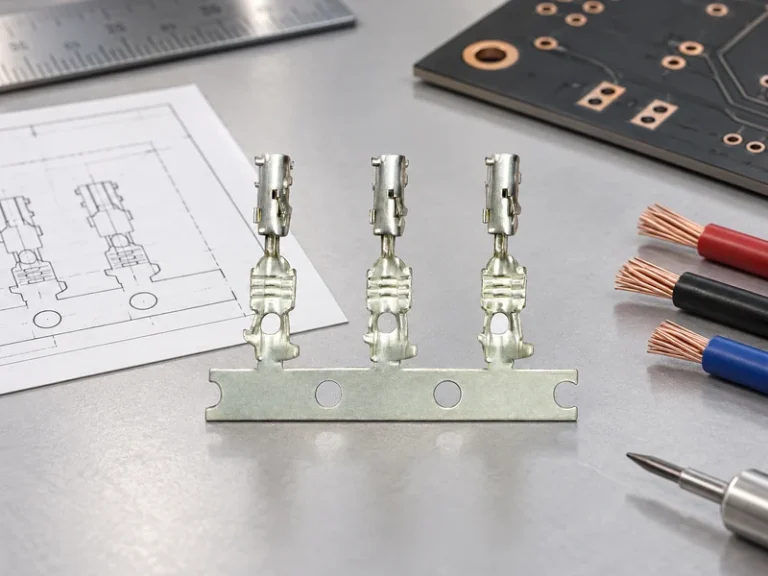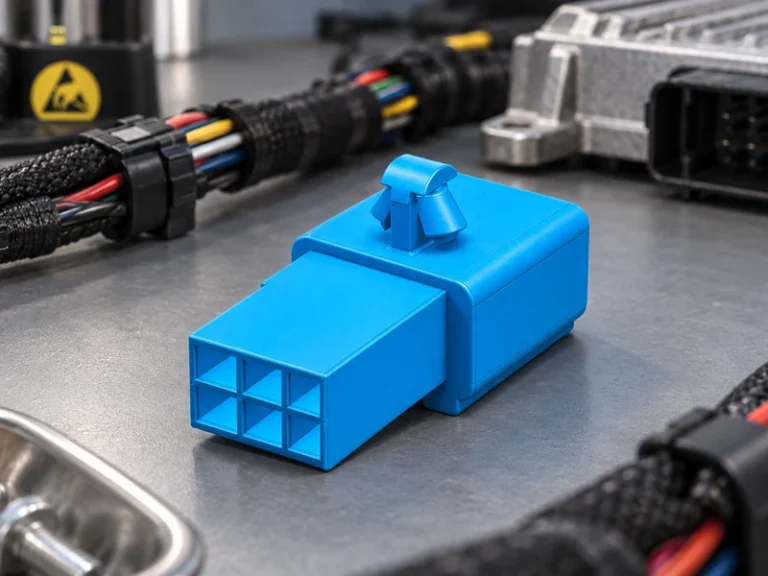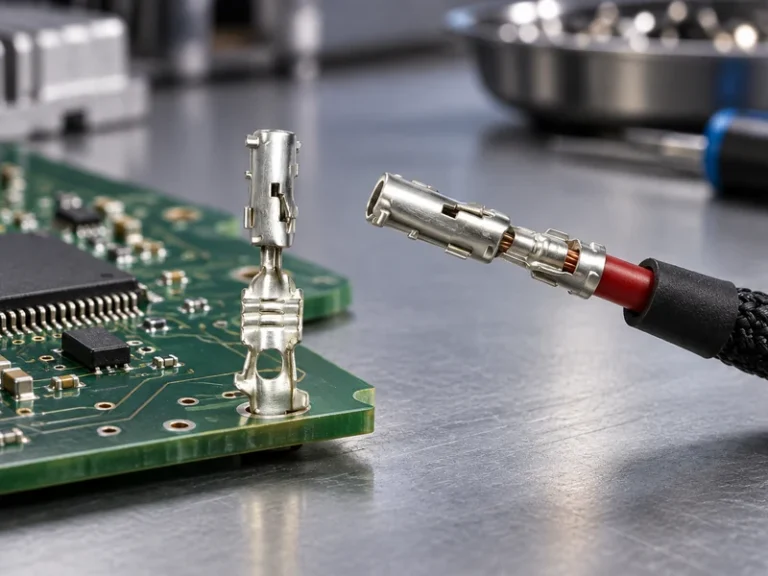


When a harness procurement engineer in Detroit approved a replacement interface from a drawing and a sample photo, the first pilot build looked successful; minutes into a vibration check, a loose terminal caused intermittent signals and a production stop. The visible failure was not simply a bad part: the team had selected an interface without fully specifying terminal system, sealing, retention, mating force, and validation route.
Summary: The right connector is selected as a system—not as a shell shape. For automotive work, teams should translate electrical load, circuit count, environment, mating interface, and validation evidence into a controlled specification before requesting quotes. Different types of connectors should be compared against the required test and interface criteria; SAE/USCAR-2 is a performance-specification reference for automotive electrical connector systems, while IEC 60512 provides test methods for electromechanical components. Start by freezing the application conditions and the mating counterpart, then validate the selected configuration against the project requirement.
Electrical connectors create a separable path for power, signal, or data between a harness and a component. In a vehicle, the decision affects assembly time, diagnostic access, corrosion exposure, serviceability, and the risk of field returns. A housing may appear interchangeable while its terminals, keying, seals, wire range, or locking geometry are not; that distinction is why engineering review must precede purchasing comparison.
Map the connector architecture to the application
Start with the circuit and mating definition
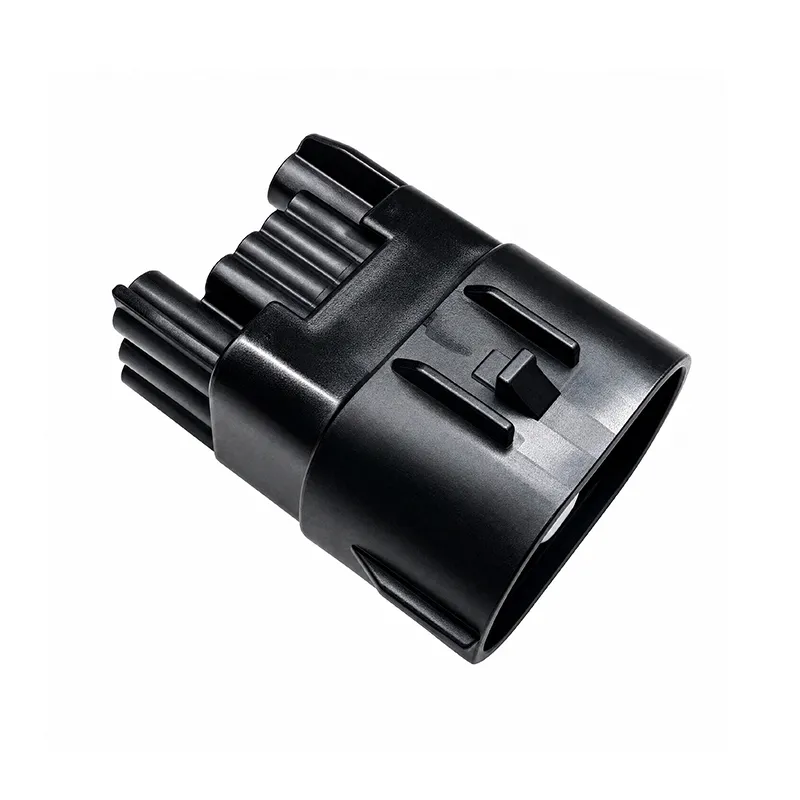
Different connector types serve different circuit architectures: low-current signal interfaces, power connections, coaxial or high-speed data interfaces, and sealed multi-pin harness connections each impose distinct constraints. Record the number of ways, terminal family, wire cross-section range, current and voltage requirements, polarization, locking method, available space, and the exact mating half. A requirement such as “two pins” is incomplete when the counterpart, terminal plating, and allowable cable range remain open.
The type of connector must also match its operating environment. An interior module and an underhood actuator may use similar-looking housings, yet heat cycling, splash exposure, chemical contact, and vibration can lead to very different seal, material, and retention requirements. SAE/USCAR-2 is useful here because it frames performance expectations for automotive electrical connector systems; it does not by itself declare every supplied part certified for a vehicle program.
Separate interface choice from catalogue naming
Part families are convenient procurement shorthand, but they are not a substitute for a controlled interface definition. Different types of connectors may share a broad catalogue label while still differing in coding, terminal cavity layout, secondary locks, or mating direction. Use the supplier drawing, mating-part number, terminal drawing, and assembly instructions to confirm compatibility rather than relying on a category name or a photograph.
Design for sealing, vibration, and total cost
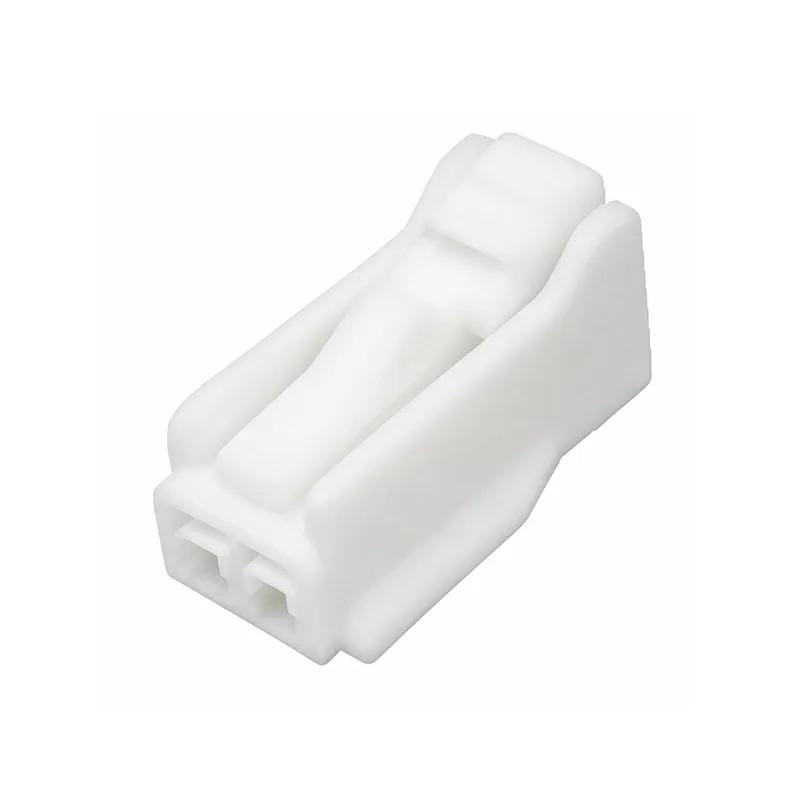
A connector’s service life is shaped by the full assembly: terminal-to-wire crimp, terminal-to-housing retention, housing-to-housing lock, seal compression, backshell or strain relief, and harness routing. For sealed applications, ask where water can enter and whether the wire seal, interface seal, cavity plugs, and mating procedure are defined for unused and used positions. For vibration-prone locations, evaluate retention and contact stability with the project’s applicable test plan rather than assuming that a latch alone is sufficient.
IEC 60512 is a series of test methods for electromechanical components and can help teams name test categories consistently; it is a test-method reference, not an automatic product certification. A proposed validation plan should identify the relevant procedures, sample condition, acceptance criteria, and report traceability. That discipline exposes hidden cost early: a low unit-price option can create extra tooling, rework, inspection, harness-routing, or return costs if its assembly process is unstable.
| Decision dimension | Open or lightly protected application | Sealed or harsh-environment application | Commercial implication |
|---|---|---|---|
| Environment | Controlled interior exposure | Water, dust, temperature cycling, chemicals, vibration as applicable | Specify the actual exposure rather than assuming a category |
| Interface protection | Housing and latch may be central concerns | Seal system, cavity management, mating procedure, and lock confirmation require review | Assembly controls can change total installed cost |
| Validation evidence | Fit, retention, electrical continuity, and program-specific checks | Environmental and mechanical checks added as the use case requires | Request a traceable plan and relevant reports before approval |
| Maintenance and returns | Access and service disconnection matter | Incorrect seal or terminal handling can drive intermittent faults | Compare rework and field-risk exposure, not unit cost alone |
Different connector types should therefore be evaluated with an illustrative total-cost model: unit price + assembly labor + validation effort + expected rework exposure. The calculation is illustrative, not a forecast; its value is that it makes stakeholders discuss which cost drivers are known, which are assumptions, and which require a supplier response.
Choose, source, and validate with documented evidence
Use a procurement matrix to compare the candidate connector configurations. The point is not to assign generic winners; it is to show which configuration can meet the stated application, interface, process, and evidence requirements.
| Application condition | Questions to resolve | Evidence to request | Selection risk if omitted |
|---|---|---|---|
| Interior signal harness | Pin count, terminal system, keying, service access | Drawings, mating-part confirmation, assembly instructions | Mis-mating or unverified terminal compatibility |
| Power or actuator circuit | Conductor range, electrical loading, retention, heat exposure | Application-specific specification and validation plan | Overlooking the interface’s real duty cycle |
| Exterior or underhood harness | Sealing architecture, vibration route, chemical and temperature exposure | Defined environmental tests and traceable reports where required | Water ingress or intermittent contact issues |
| Service or aftermarket replacement | Counterpart identity, coding, repair method, availability of terminals and seals | Cross-reference review and installation guidance | Fit-only substitutions that fail in use |
Standards, regulations, and claim control
IATF 16949 is a quality-management-system standard for the automotive supply chain; it does not certify an individual connector’s performance. SAE/USCAR-2 and IEC 60512 are specification or test-method references that must be applied to the particular product and program. Destination market, intended use, customer specifications, and marketing claims determine which requirements apply, so a buyer should not treat a standards citation as proof of compliance without scope, revision, sample, and report review. Unsupported performance or certification claims can delay approval, create contractual exposure, and complicate product labeling.
A practical selection sequence
- Define the mating counterpart, circuit function, wire range, packaging space, and service requirements.
- Document environmental and mechanical conditions, including sealing and vibration risks relevant to the installation.
- Choose the different connector types that can meet that specification, then compare terminal, seal, and lock configurations—not housing appearance alone.
- Request drawings, assembly instructions, applicable test evidence, change-control expectations, and sample traceability.
- Validate the selected type of connector in the actual harness and counterpart before production release.
Before release, compare the shortlisted configurations against the same counterpart and build conditions. Different types of connectors can change terminal insertion, seal loading, harness orientation, and inspection sequence even when circuit counts match. The preferred type of connector is the one whose documented limits, assembly route, and validation evidence align with the stated application—not merely the lowest quoted line item.
For teams sourcing configurable automotive interfaces, Wenzhou Shenji’s product range can be reviewed alongside the required drawings and validation documents. The company lists IATF 16949, ISO 14001, ISO 45001, ISO 17025 (CNAS-compliant laboratory), National High-Tech Enterprise, Zhejiang Provincial SRDI SME, and Green Low-Carbon Factory as supplied credentials; purchasers should confirm the relevant scope, current status, and project applicability during qualification. Its application information can also help frame the intended installation before a sourcing discussion.
FAQ
What does an electrical connector connect?
An electrical connector joins conductors or devices so power, signals, or data can pass through a controlled, separable interface. In a harness, that usually means a mating housing, terminals, wire terminations, and sometimes seals or secondary locks. The correct answer depends on the circuit and the exact counterpart, so identify both before selecting parts.
How do you check electrical connector compatibility?
Check the mating-part number, terminal family, cavity layout, keying, coding, wire range, seals, and locking features against current drawings. Then confirm assembly instructions and validate a sample in the intended harness. A physical fit alone does not establish electrical, environmental, or process compatibility.
How does types of connectors affect installation?
Connector choice affects routing space, crimp tooling, seal handling, mating force, service access, and inspection steps. A configuration chosen without considering these factors may slow assembly or introduce avoidable rework. Define the installation process and operator checks before final release.
What standards apply to an electrical connector?
Applicable standards depend on the market, use case, customer requirement, and the claims made for the product. SAE/USCAR-2 and IEC 60512 may be relevant references for automotive connector performance and test methods, while IATF 16949 concerns quality-system management. Confirm the required edition, scope, and acceptance criteria with the program owner.
References and next step
- SAE/USCAR-2: Performance Specification for Automotive Electrical Connector Systems
- IEC 60512: Connectors for electrical and electronic equipment—Tests and measurements
- IATF Global Oversight: IATF 16949
- ISO: ISO 14001 environmental management
The durable procurement principle is simple: select the interface from documented operating conditions, then prove the complete assembly against the applicable requirement. When a project is ready to compare configurations, documentation, and qualification support, contact Wenzhou Shenji with the mating-part details and application conditions.