

Summary: A car battery terminal connector should be selected as a complete electrical, mechanical, and serviceable interface. The decision should connect the battery post or stud, cable cross-section and strand construction, expected load profile, temperature and corrosion exposure, protective cover, assembly process, and validation evidence. SAE/USCAR-2 and IEC 60512 can inform connector performance and test planning; IATF 16949 concerns a supplier’s quality-management system, rather than certifying an individual vehicle connection.
For procurement and engineering teams, the aim is a released configuration that can be assembled and checked consistently. Starting, charging, and auxiliary circuits can all be affected by resistance, heat, corrosion, poor retention, or accidental contact with adjacent metal. A clear requirement sheet is therefore more useful than choosing from shape or price alone.
Start with the vehicle circuit and battery interface
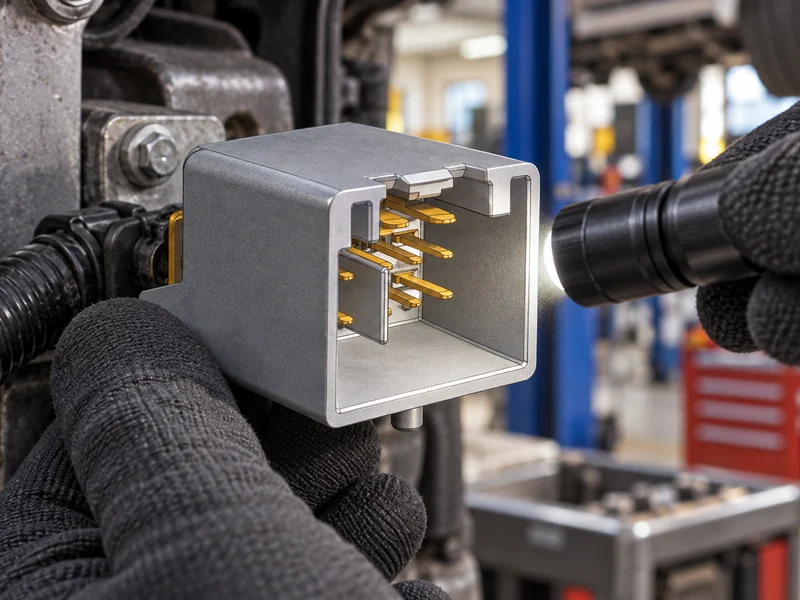
Begin with the real battery interface and circuit role. A conventional starting circuit, a commercial-vehicle auxiliary supply, and an electrified platform’s low-voltage branch may have different duty cycles, packaging limits, and service expectations. Record the nominal system voltage; continuous, peak, starting, and charging loads; permitted voltage drop; cable conductor area; strand construction; insulation outside diameter; polarity layout; battery-post or stud geometry; cover clearance; cable route; and available tool access.
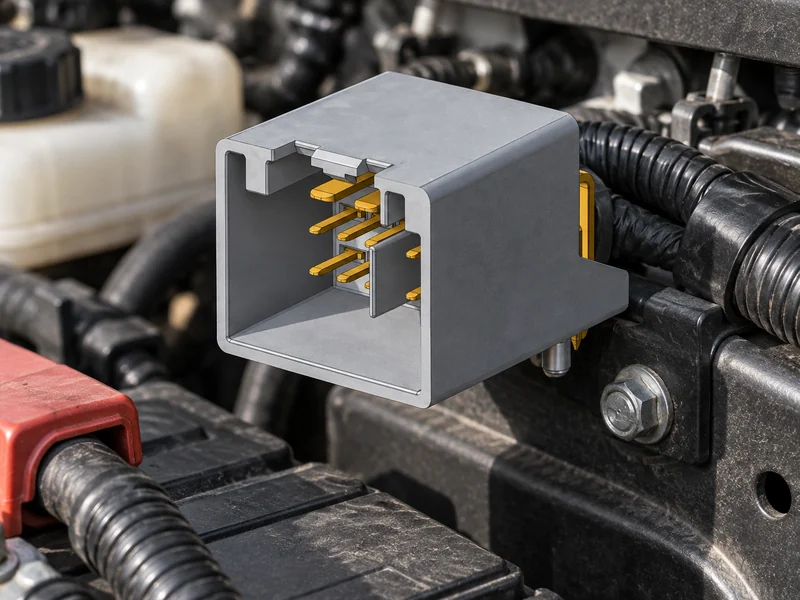
A car battery terminal connector that looks compatible can still be unsuitable if its contact geometry, clamp range, cable direction, or cover conflicts with the released assembly. The terminal, conductor, insulation, fastener, post, and protection features need to be considered together. Catalogue descriptions may help an early search, but a controlled drawing and application review should determine the final configuration.
Write a requirement sheet purchasing can use
- Identify the exact post, side-terminal, or stud profile, polarity, mating envelope, keying, and cover requirement.
- State conductor material, cross-section, strand class, insulation diameter, approved termination type, and permitted cable exit angle.
- Describe the actual duty cycle, including starting and charging events, rather than relying on one broad current label.
- Define temperature, splash, salt, chemical, vibration, service access, removal, and traceability expectations.
For service and remanufacturing work, cable condition deserves its own line item. Damaged insulation, broken strands, corrosion migration, or an over-stiff cable can defeat an otherwise suitable terminal. The released record should also say whether the connection is factory-crimped, bolted during vehicle assembly, or replaced in the field, because tooling and acceptance controls differ.
Compare terminal fit, cable construction, and environmental evidence
Top-post clamps, side-terminal hardware, stud-mounted lugs, and distribution assemblies can all be described as battery connections, yet they are not interchangeable. The selected solution must preserve contact area, retention, strain relief, cover fit, polarity identification, and safe service access. A battery terminal wire brush may be appropriate for removing loose surface contamination during controlled service preparation, but it does not correct a distorted clamp, overheated conductor, pitted post, or incompatible material pairing.
| Selection dimension | Questions to control | Evidence to request |
|---|---|---|
| Battery interface | Which post, side-terminal, or stud geometry and polarity layout apply? | Released drawing and mated-fit confirmation |
| Cable interface | What conductor size, strand construction, insulation diameter, and termination process are approved? | Work instruction and inspection criteria |
| Electrical duty | What continuous, peak, starting, and charging loads occur in the installed circuit? | Program-specific electrical and thermal evaluation plan |
| Environment and service | What corrosion, vibration, contamination, access, and removal conditions apply? | Relevant test scope, installation guidance, and traceability records |
Material and protective finish should be assessed as a system. Conductivity, mechanical strength, corrosion behavior, fastener compatibility, and possible galvanic interaction can affect contact stability. The same is true for battery terminal wires: their strand construction and insulation diameter influence crimp selection, cable support, bend radius, and the chance that a cover will close fully after installation.
Maintenance instructions sometimes call for a wire brush for battery terminals, but the instruction should define the allowed tool, cleaning area, debris control, and post-cleaning inspection. Aggressive brushing can remove protective material, spread conductive debris, or disguise damage. If corrosion is present, investigate charging-system behavior, electrolyte exposure, sealing, cable damage, and clamp force instead of treating cleaning as a complete corrective action.
Final current capacity, torque, pull performance, and temperature capability should not be inferred from an unrelated product family or a generic article. These outcomes depend on the complete circuit, contact resistance, installation geometry, duty cycle, and service conditions. Configuration-specific evidence is needed where the customer requirement or released drawing requires it.
Install and inspect the terminal as a repeatable process
Before fitting a replacement or production assembly, follow the applicable vehicle safety procedure, isolate the circuit as required, confirm battery type and polarity, and inspect the cable and adjacent hardware. A battery terminal wire brush should only be used where the approved procedure permits it and after loose debris has been controlled. Cleaning cannot make a heat-damaged cable or cracked cover acceptable.
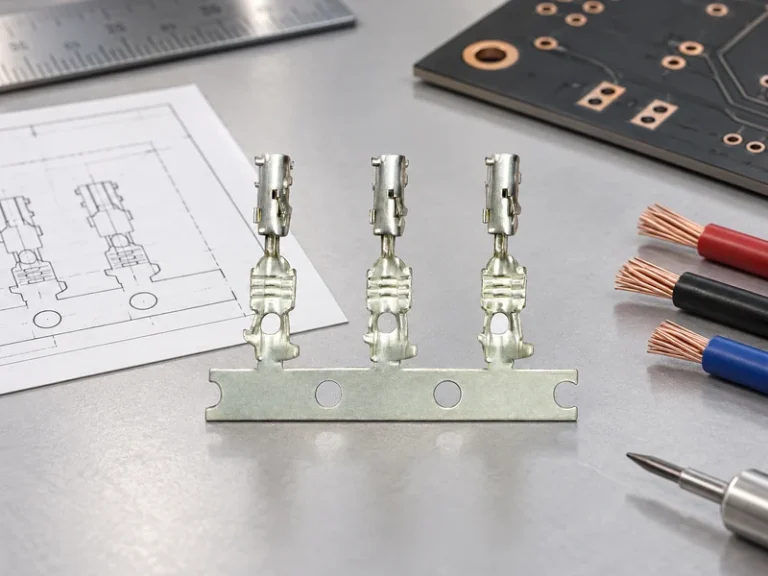
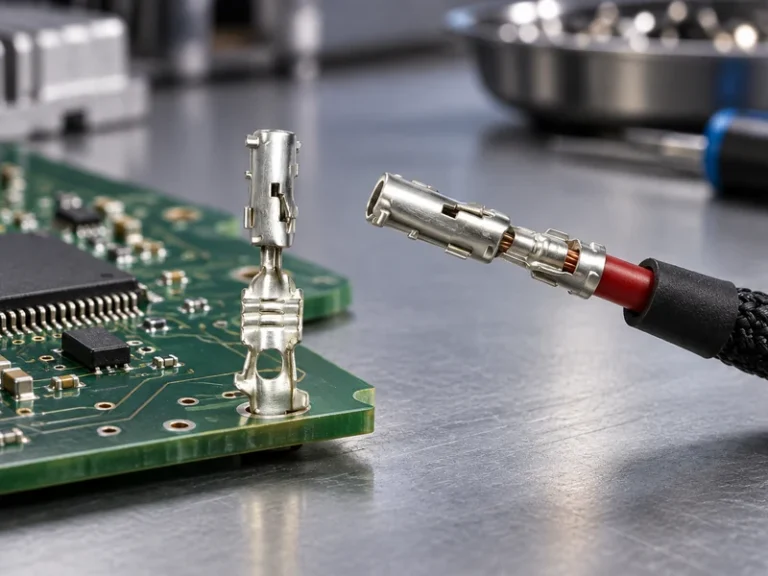
Use approved wire preparation, crimping, and fastening equipment. The conductor should be fully seated; insulation should not be pinched; the cable should have appropriate strain relief; and the cover should close without forcing the route. Where battery terminal wires are replaced or shortened, do not assume a visually similar conductor is equivalent: confirm conductor area, strand behavior, insulation dimensions, and the approved terminal-tool combination.
| Installation stage | Control point | Why it matters |
|---|---|---|
| Pre-install review | Confirm battery type, polarity, cable condition, and approved configuration | Prevents a superficially fitting but incompatible part |
| Preparation | Inspect the post and cable; use the specified cleaning method only when needed | Prevents contamination or damage from entering the joint |
| Termination and mating | Use specified tooling, seating, orientation, cover fit, and tightening method | Supports stable conductor contact and mechanical retention |
| Final verification | Complete approved visual, electrical, or vehicle-function checks | Finds damage or unresolved faults before release |
A wire brush for battery terminals is a maintenance aid, not an acceptance test. The selected wire brush for battery terminals should also be compatible with the permitted cleaning method and debris-control procedure. After any cleaning or replacement, inspect the cable exit, cover position, clearance to live or grounded metal, and any evidence of looseness or heat. Recording the terminal revision, cable size, assembly method, inspector, and observed condition helps fleet and production teams identify repeat patterns rather than normalize an unapproved substitute.
Use standards and supplier information in context
SAE/USCAR-2 provides performance and test requirements for automotive electrical connector systems, while IEC 60512 is a series of tests and measurements for connectors used in electrical and electronic equipment. They can help teams frame test scope for a complete mated and terminated connection. Neither reference automatically certifies a product, establishes every vehicle-specific rating, or replaces agreement on the applicable edition, samples, configuration, severity, and acceptance criteria.
IATF 16949 is a quality-management-system standard for organizations in the automotive supply chain; it is not evidence that a particular connection has a particular current rating, sealing level, or vehicle approval. Wenzhou Shenji describes itself as a Wenzhou, Zhejiang manufacturer integrating R&D, manufacturing, sales, and service since 2010. Its supplied credentials include IATF 16949, ISO 14001, ISO 45001, and an ISO 17025 CNAS-compliant laboratory; buyers should verify scope and relevance for the requested configuration.
A practical sourcing and validation route
- Release a requirement sheet covering the battery, cable, terminal, cover, fastener, environment, and installation process.
- Request controlled drawings, applicable material information, relevant test scope, traceability, and formal change-control terms.
- Evaluate the mated and terminated configuration under relevant electrical, thermal, mechanical, and environmental conditions.
- Compare total cost through assembly yield, service access, validation effort, and field-risk exposure as well as unit price.
Buyers can begin a documented technical discussion through Wenzhou Shenji’s product range. The application overview and company background can support an initial supplier assessment, while final selection remains tied to controlled program evidence.
Car battery terminal connector FAQs
What types of battery terminal connectors are used in vehicles?
Common interfaces include top-post clamps, side-terminal connectors, stud-mounted lugs, and distribution assemblies. The right option is the one that matches the released battery interface, cable, load profile, cover, packaging, and service procedure; category names alone do not establish interchangeability.
How do you select sealing for a battery terminal connector?
Define the exposure first: splash, salt, dust, chemicals, temperature change, and cable movement. Then evaluate the terminal, cover, cable seal or grommet where applicable, and installation geometry as one system. Sealing evidence must apply to the requested configuration and test conditions.
When should a battery terminal wire brush be used?
A battery terminal wire brush can be considered during controlled service preparation when the vehicle procedure permits it and light removable contamination is present. It should not be used to compensate for damaged posts, loose joints, persistent corrosion causes, or deteriorated battery terminal wires.
What vibration tests apply to a battery terminal connector?
The applicable vibration evaluation should be defined by the vehicle program, installation location, and released test plan. SAE/USCAR-2 may be relevant as a connector-system reference, but it does not by itself certify the installed part. Review the mated terminal, cable support, fastening, and cover in the intended configuration.
References
- SAE/USCAR-2: Performance Specification for Automotive Electrical Connector Systems
- IEC 60512: Connectors for electrical and electronic equipment—tests and measurements
- IATF 16949 overview
- ISO 14001 environmental management
A dependable connection is specified before purchase and protected through assembly and service. Teams can contact Wenzhou Shenji to discuss configurations, documentation, validation expectations, and sourcing support.