

A ratcheting crimper can complete its cycle and still produce the wrong joint if its die does not match the terminal. Wire gauge markings on the handles tell only part of the story: different barrel designs need different forming profiles, and a general-purpose tool may not control the contact position required by a small harness terminal. Choosing a wire terminal crimper therefore starts with the part being assembled, not the tool’s appearance or advertised range. This guide explains how to match terminal, wire and die, when a hand tool is appropriate, and what evidence is needed before a new setup is released for repeat production.
The short answer is to choose the terminal application specification first and buy the tool it permits. A complete wire termination includes the defined conductor, terminal, preparation method, die and inspection criteria. Distinguish conductor crimping from insulation support: the two features perform different jobs and may require different control. IPC/WHMA-A-620 may be named in a harness contract, but it does not replace the product-specific tool and crimp dimensions. For wire crimp terminals, verify the exact part number and wire construction with the tooling supplier. Qualify a first sample before judging a tool by speed, grip or purchase price.
Which die fits the terminal barrel?
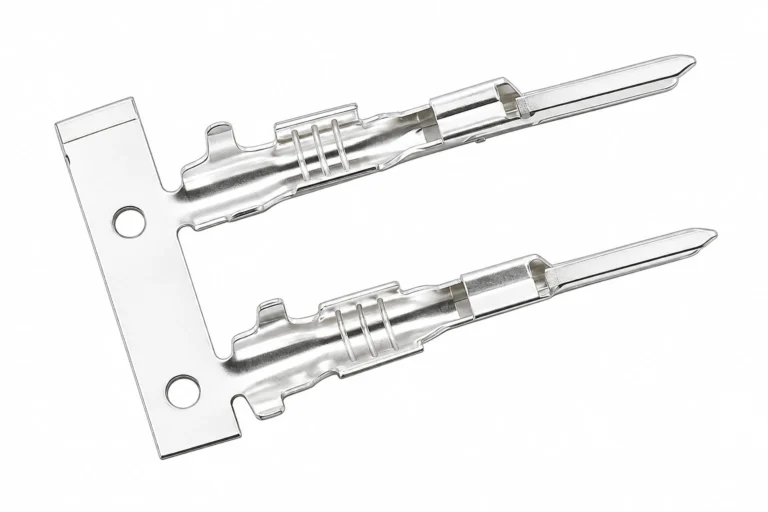
The die must suit the barrel form and the approved wire range. Open-barrel contacts, closed-barrel terminals and ferrules are not interchangeable tooling applications. Even within one category, terminal material thickness and geometry can change the required die. A wire terminal crimper marked for a broad AWG range does not automatically cover every part within that range.
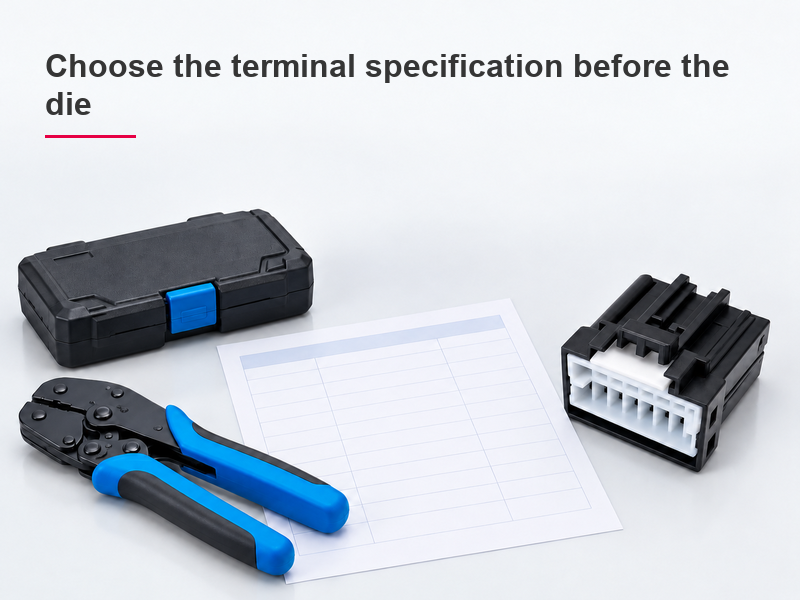
For terminal connector wire assemblies, record the terminal part number, wire specification, tool frame, die identifier and any locator. Treat a supplier’s generic compatibility statement as a starting point for checking the application instructions. The site’s terminal crimping tool guide provides broader tool context; this article focuses on approving the exact setup.
| Tool option | Useful application | Qualification question |
|---|---|---|
| Specified hand tool | Repairs, prototypes or suitable low-volume work | Does it cover this terminal and wire combination? |
| Ratcheting tool | Controlled completion of a defined hand cycle | Are the die, locator and adjustment correct? |
| Bench press with applicator | Repeat production using a qualified setup | How are setup, wear and first-piece checks controlled? |
| General-purpose pliers | Not a substitute for specified crimp tooling | What evidence would establish the required geometry? |
Does a ratchet guarantee a good crimp?
No. A ratchet can enforce completion of a tool cycle, but it cannot identify the wrong terminal, damaged conductor or incorrect wire insertion. It also cannot prove that the crimp dimensions remain correct after tool wear or an inappropriate adjustment. For wire crimp terminals, the process must control inputs as well as the closing action.
The background discussion in Crimp (joining) describes crimping as deformation that holds the joined materials. That principle explains why improvised squeezing is not a measurable substitute for a specified forming process. Do not adjust the tool until a sample “feels tight”; use the acceptance dimensions and method in the application document.
How do you check the first crimp?
Inspect strip length and conductor condition before crimping. After forming, check conductor position, insulation support and visible damage against the manufacturer’s examples. Measure the specified crimp features with appropriate equipment. Carry out the required pull test using its defined method; a manual tug is not a recorded process qualification.
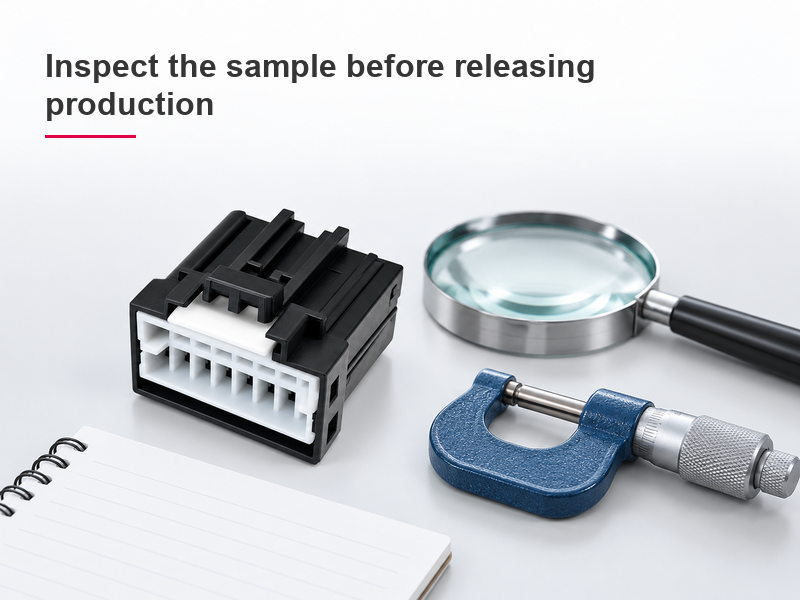
Mechanical retention and electrical performance answer different questions. A wire termination can hold under tension while the equipment-side joint remains resistive. Where the application requires it, evaluate electrical and environmental performance under the stated conditions. Do not invent universal pull-force or crimp-height limits for terminal connector wire assemblies.
| Change made | Why it can matter | What to review |
|---|---|---|
| Different wire supplier | Stranding or insulation may change | Wire specification and first-piece acceptance |
| Different terminal revision | Geometry or material may change | Tooling approval and application document |
| Die replacement or adjustment | Forming conditions change | Setup and measured sample results |
| New production rate | Handling and maintenance demands change | Process capability and inspection plan |
When is a production tool worth the extra cost?
Compare total processing cost rather than the tool’s price alone. Include setup time, operator handling, inspection, maintenance and rejected assemblies. A bench system can be appropriate for repeat production, but its value depends on the actual part mix and volume. A specialised hand tool can be the better choice when its approved range matches a low-volume task and the inspection process remains practical.
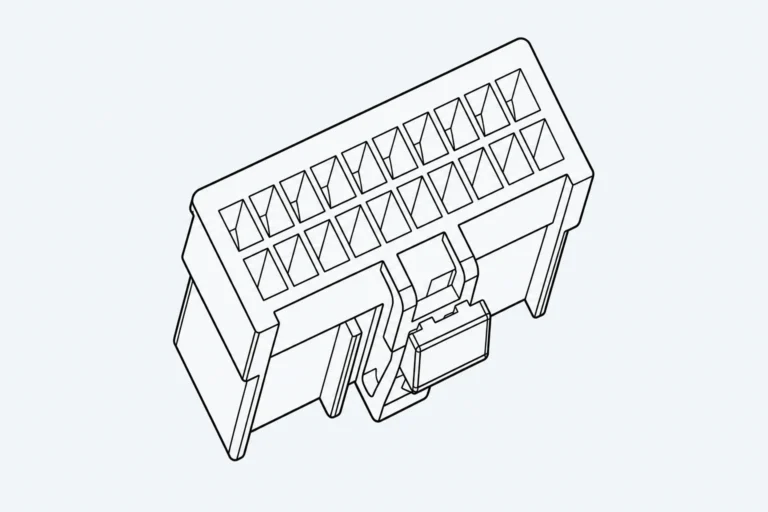
Keep the tool decision separate from the housing decision. The official connector housing reference shows an external component; it does not identify the crimp die for an unseen contact. Wenzhou Shenji should receive the contact and wire details when asked to support a tooling-related component enquiry.
A formal workmanship reference is NASA-STD-8739.4A, Change 4 (April 13, 2022), whose stated scope covers interconnecting cable and harness assemblies. Its NASA requirements apply only when the relevant programme or contract adopts them; they are not proof of automotive approval. Keep acceptance limits tied to the selected product and project.
Frequently asked questions
What types of wire terminals are available?
Common families include ring and fork terminals, quick disconnects, splices, ferrules and contacts retained in connector housings. Choose the equipment interface before narrowing the conductor and tooling requirements.
Which crimp tool is best for a wire terminal?
The best choice is an approved tool and die for the exact terminal and wire. A broad advertised range or ratchet mechanism alone is not sufficient evidence of suitability.
When should wire termination be selected?
Select the method during circuit and harness planning, before fixing the tooling and purchase specification. The equipment interface, maintenance access, environment and conductor determine which method is appropriate.
Can a wire terminal be reused after crimping?
A formed crimp terminal is generally replaced, not opened and recrimped onto another wire. Follow any explicit manufacturer exception; cutting back the wire also requires checking the remaining length and condition.
References
- Wikipedia, “Crimp (joining),” electrical crimping overview; accessed October 26, 2026. Background only; not a product acceptance specification.
- OSHA, 29 CFR 1910.303, General, particularly conductor connections and equipment installation; current web text accessed October 26, 2026. US workplace scope.
- NASA-STD-8739.4A, Change 4, Workmanship Standard for Crimping, Interconnecting Cables, Harnesses, and Wiring; change dated April 13, 2022. NASA workmanship scope; not an automotive certification.
- Phoenix Contact, Terminal blocks, connection technologies and application overview; accessed October 26, 2026. Product-specific instructions take precedence.
Conclusion
A wire terminal crimper should be purchased against an approved application, not selected solely by handle markings or a promise of universal use. Start with the terminal and conductor, identify the correct die and locator, then verify a first sample before production. Keep the distinction between mechanical retention and electrical performance visible in the inspection plan. For wire crimp terminals, changes to wire, tooling or terminal revision need review rather than automatic carryover of an old approval. Wenzhou Shenji’s connector and terminal catalogue supports the component-identification stage. Send the exact terminal connector wire requirements and request the relevant application documents before committing to a tool or repeating the assembly at scale.