

A ring terminal can slide neatly over a stud while being unsuitable for the cable attached to it. The reverse also happens: the barrel matches the wire, but the ring does not seat correctly within the equipment’s fastening arrangement. These are separate dimensions, and neither proves that the finished joint will tolerate its operating environment. Choosing a wire ring terminal therefore requires more than matching the visible hole. This guide explains how to specify both interfaces, what to check when a joint loosens or corrodes, and why a mixed wire terminal kit should be treated as an assortment of individual parts rather than a universal solution.
The short answer is to match the conductor range and stud interface independently, then follow the specified crimp and fastening instructions. A wire ring terminal needs suitable barrel geometry, ring opening, seating area and installed clearance. The required torque comes from the equipment and fastening specification, not a generic value inferred from the ring size. For wire terminal crimp connectors, tool approval and wire construction remain essential. OSHA 29 CFR 1910.303 gives a relevant US workplace principle: conductor connections must use suitable identified terminals. Before ordering, obtain the drawing and confirm the complete hardware arrangement with the equipment supplier.
How do you match the wire and stud sizes?
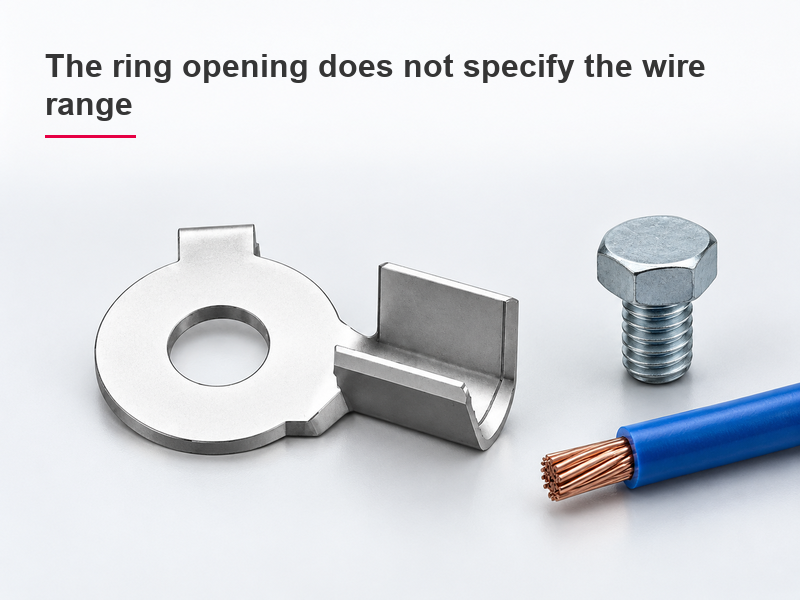
Specify conductor area or AWG, strand construction, material and insulation diameter. Then specify the mating stud and required ring opening from the approved drawing. Check that the ring’s outside profile and cable exit fit the available space. Do not enlarge the hole or trim the barrel to make a mismatch disappear.
A wire terminal kit can contain several conductor ranges with similar-looking ring sizes, or several stud sizes for the same wire range. Keep those identifiers separate during stock control. For wire terminal crimp connectors, color coding is useful only within the manufacturer’s documented scheme. The broader electrical connector selection guide explains why mating geometry and wire attachment are separate decisions.
| Interface | Specify | Do not substitute |
|---|---|---|
| Wire to barrel | Conductor range, construction and approved tool | A smaller wire folded to fill an unapproved barrel |
| Ring to stud | Specified opening and seating geometry | A hole drilled larger during installation |
| Ring to contact surface | Approved materials and fastening arrangement | An improvised washer stack |
| Cable to enclosure | Clearance and strain relief | A bend that continually loads the joint |
What can the product photograph actually confirm?
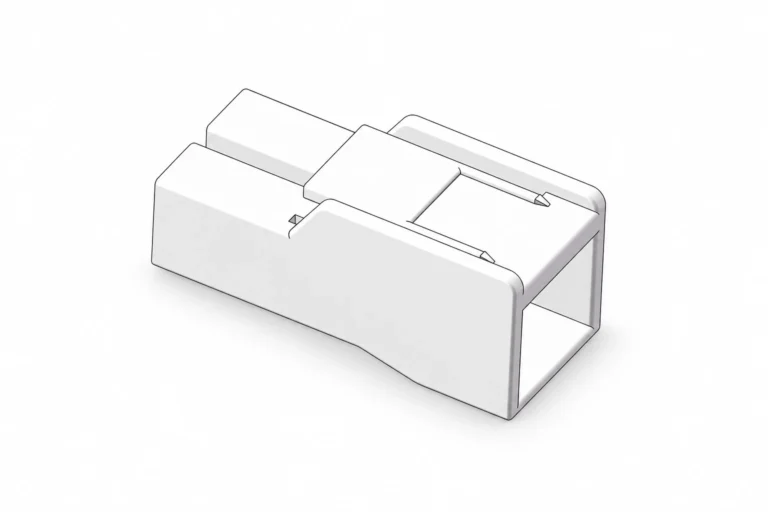
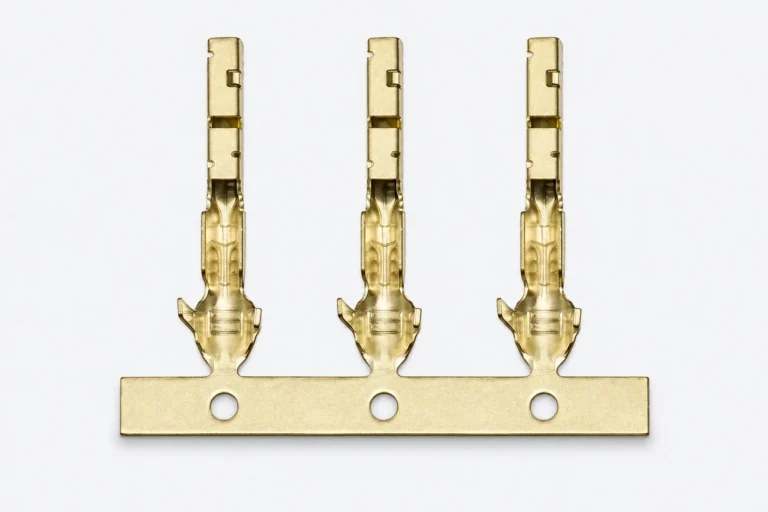
A product photograph can identify a visible ring opening and wire-attachment form. These are external identity details. It does not establish the allowable conductor range, current rating, torque or a sealed installation. A generic catalogue name should therefore be checked against the drawing rather than interpreted as an assembly-level performance claim.
This distinction matters when comparing wire terminals and connectors from different suppliers. Request matching drawing revisions and application documents before treating a similar photograph as an equivalent part. Retain the terminal part number in the assembly record so future replacements can be reviewed against the same requirements.
Why does a ring-terminal joint loosen or corrode?
Investigate the complete joint: seating surfaces, specified fasteners, tightening procedure, cable support and operating environment. A closed ring can remain around the stud even when contact pressure is inadequate. Being mechanically captured is therefore different from maintaining a satisfactory electrical connection.
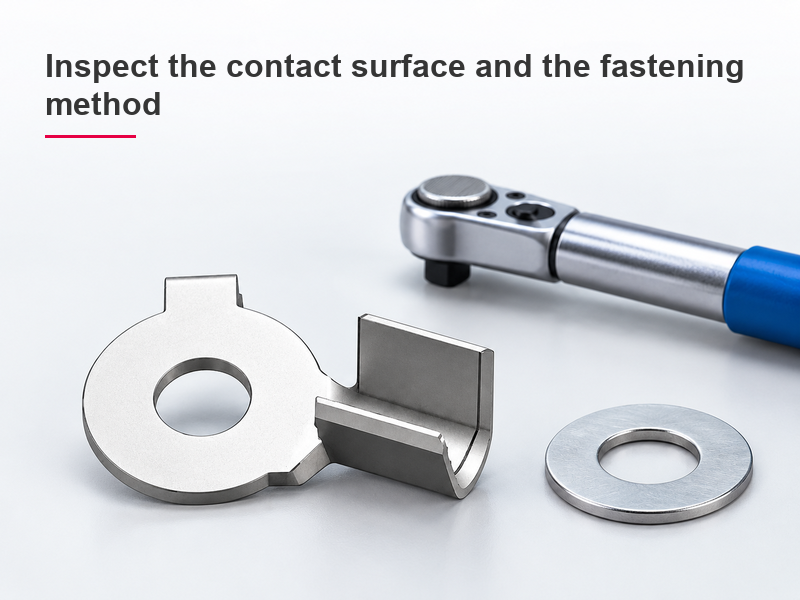
Corrosion questions involve moisture, contaminants and the materials of the mating surfaces. Do not assume a bright finish identifies a particular plating or that heat-shrink tubing seals the stud interface. Follow the equipment’s permitted protection methods. For wire terminals and connectors, correcting the exposure or contact problem matters as much as replacing visibly damaged hardware.
| Complaint | Check | Release condition |
|---|---|---|
| Joint loosens repeatedly | Fastening instructions, seating and cable loading | Correct hardware and installation procedure confirmed |
| Heat discoloration | Load and resistance at each interface | Cause identified and damaged components replaced |
| Corrosion deposits | Environment and mating materials | Protection method and replacement criteria resolved |
| Wire pulls from barrel | Wire range and crimp setup | New joint meets the specified acceptance checks |
How should ring-terminal assemblies be inspected?
Check the crimp against the application specification before installation, then inspect seating and fastening after installation. A pull test evaluates the wire attachment under defined conditions; it does not establish correct stud torque or thermal performance. The general explanation of electrical crimping supports the need for process control, but acceptance limits must come from the specific product and contract.
When comparing production costs, count part identification, setup, installation and inspection alongside purchase price. A wire terminal kit is convenient only when each selected part remains traceable to its range and instructions. Unmarked assortment compartments can turn a small purchasing saving into repeated sorting and rework.
The official 358-YX ring-shaped terminal listing provides a concrete sourcing reference. Wenzhou Shenji should receive the actual stud, conductor and installation requirements with a request for the relevant drawing. The photo is useful for identifying the sample, but it should not be the sole acceptance evidence.
A formal workmanship reference is NASA-STD-8739.4A, Change 4 (April 13, 2022), whose stated scope covers interconnecting cable and harness assemblies. Its NASA requirements apply only when the relevant programme or contract adopts them; they are not proof of automotive approval. Keep acceptance limits tied to the selected product and project.
Frequently asked questions
How do you prevent corrosion in a wire terminal?
Specify appropriate mating materials and environmental protection, then follow the equipment’s installation requirements. Do not apply a compound or covering unless it is approved for the contact system.
What insulation options are available for wire terminals?
Ring terminals may be uninsulated, pre-insulated or used with a specified heat-shrink system. Insulation around the barrel does not automatically protect the ring-to-stud interface from water.
How does wire terminal crimp connectors change installation requirements?
The crimped wire attachment requires approved wire preparation and tooling in addition to the stud fastening procedure. Treat crimp inspection and final joint installation as separate acceptance steps.
What is the safest way to remove a wire terminal?
Isolate and verify the equipment according to its service procedure, then release the specified fasteners. Replace damaged or previously formed crimp parts as required rather than opening and reusing the barrel.
References
- Wikipedia, “Crimp (joining),” electrical crimping overview; accessed October 26, 2026. Background only; not a product acceptance specification.
- OSHA, 29 CFR 1910.303, General, particularly conductor connections and equipment installation; current web text accessed October 26, 2026. US workplace scope.
- NASA-STD-8739.4A, Change 4, Workmanship Standard for Crimping, Interconnecting Cables, Harnesses, and Wiring; change dated April 13, 2022. NASA workmanship scope; not an automotive certification.
- Phoenix Contact, Terminal blocks, connection technologies and application overview; accessed October 26, 2026. Product-specific instructions take precedence.
Conclusion
Selecting a wire ring terminal requires two independent fits and one controlled assembly process. Confirm the conductor and insulation requirements, check the stud opening and seating geometry, then follow the specified crimp and fastening instructions. A ring that cannot slide off the stud can still make a poor electrical joint, so do not replace inspection with an assumption about its shape. For repeat purchases of wire terminals and connectors, retain the exact part identity and application revision instead of buying by a generic photograph. Wenzhou Shenji’s terminal and connector catalogue can support the initial search. Submit the wire, stud and environmental requirements when requesting drawings, samples and a production quotation.