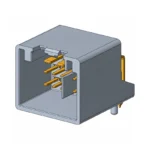


Connector contact plating compatibility must be reviewed as a mating pair, with both surfaces and their intended function identified. Matching dimensions or similar colors do not establish a compatible finish system. Before approving an alternative contact, obtain the material and plating specification, the permitted counterpart and evidence for the proposed operating conditions. The mating zone and the crimp or solder termination may use different surface treatments, so a single finish label may not describe the entire contact.
This guide explains how to turn a vague request for gold, tin or silver-colored terminals into a traceable purchasing decision. It does not infer a coating composition or qualification from a product photograph.
Separate base metal, surface finish and contact zone
The base metal describes the underlying contact material. The finish describes a surface system, which may include an underlayer and a functional outer layer. These are different entries in an engineering specification. A statement that a terminal uses copper or a copper alloy does not identify the surface presented to its counterpart.
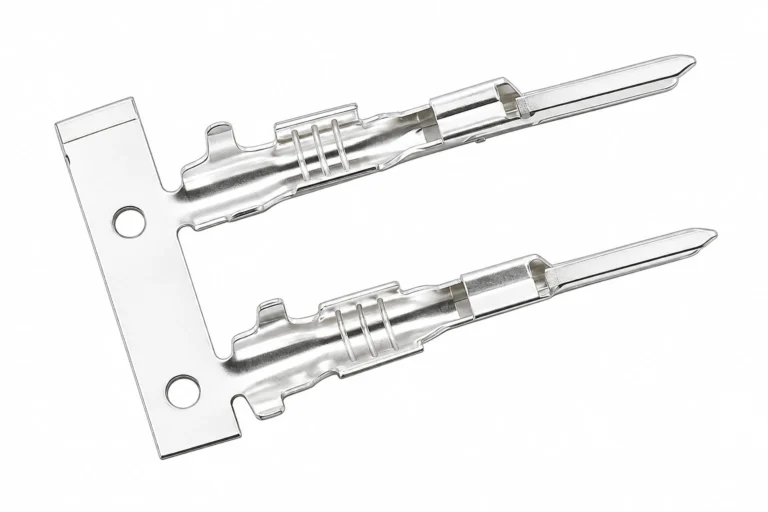
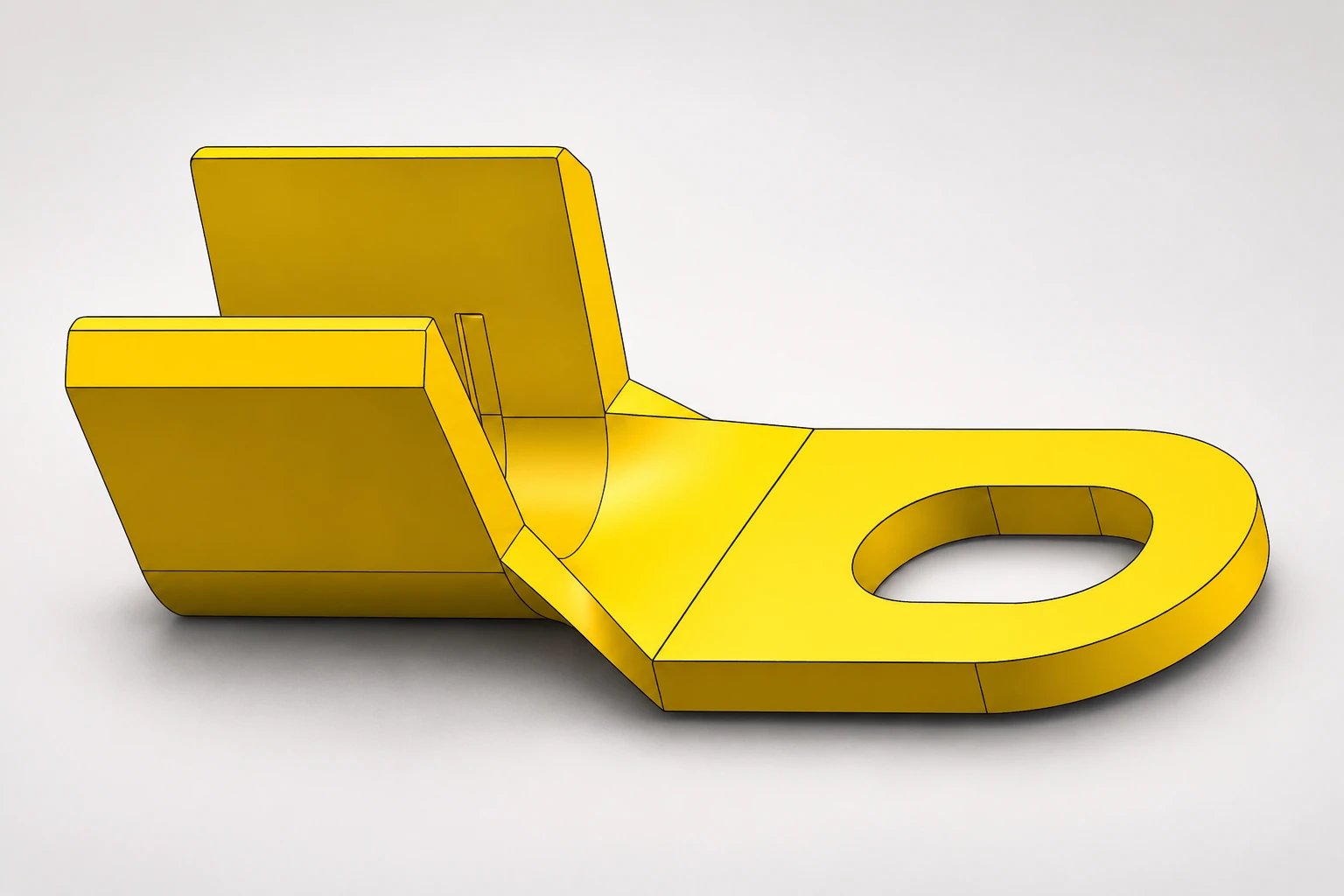
Likewise, a yellow-colored terminal is not automatically gold plated, and a bright silver-colored part is not proof of a silver coating. Lighting, image rendering and different materials can produce similar appearances. Use the public view of Shenji’s 336-YX terminal to identify its formed wings and oblong-hole palm. Request a controlled finish specification before assigning any plating description to the part.
Ask the supplier to identify functional zones. A contact may have one finish at the separable mating interface and another at its termination. A coating specified for solderability does not automatically describe the mating surface. If the drawing uses selective plating, confirm how the boundaries and inspection locations are defined. Purchasing should preserve that zone-specific description in the order.

Compatibility belongs to the complete mating system
SAE ARP6903A addresses finish compatibility in electrical wiring interconnect systems. Its public scope supports reviewing compatible component couples rather than selecting a finish in isolation. Obtain the applicable requirements for the actual interface; the scope page alone is not a complete material-selection procedure.
A connector drawing should identify the approved mating contact, including finish variant. A replacement with the same nominal shape may introduce a different surface combination. Ask whether that combination has been evaluated for the intended application. Do not assume that a premium-sounding finish improves an assembly when only one half of the mating pair changes.
NASA’s materials and processes standard, NASA-STD-6016C with Change 1, discusses risks at mixed gold and tin separable interfaces and includes restrictions for its mission-critical hardware scope. This illustrates why surface pairing deserves explicit control. Those aerospace requirements are not a blanket specification for every automotive connector, nor evidence that a particular Shenji finish is approved.
Do not confuse mating wear with solder-joint chemistry
A separable contact interface and a soldered termination have different functions and failure mechanisms. A discussion of gold in a solder joint cannot simply be used to approve or reject a gold-colored mating contact. Identify which location the evidence addresses before applying it. Reports that use the word “terminal” loosely may need clarification from the author.
This distinction is especially important when a buyer asks for a universal finish across several product families. Different interfaces may need different controlled solutions. Define the application first, then ask the engineering owner to approve the complete surface system. Avoid turning a preferred material name into a purchasing rule without supporting evidence.
Define the conditions the finish must survive
Describe the circuit function and operating environment. Low-level sensing, power transfer and protective bonding can have different performance requirements. The acceptable electrical behavior should come from the system specification. The same nominal resistance may have different implications in different circuits, so request evidence that addresses the intended use.
Also describe mating frequency, storage state, vibration, temperature variation and likely contamination. A coating selection cannot be reviewed meaningfully without those conditions. If a connector is exposed while unmated, make that explicit. If the assembly remains mated throughout service, distinguish the limited installation cycles from ongoing small movement at the contact interface.
| Question | Required record | Unacceptable shortcut |
|---|---|---|
| What is each surface? | Base material, finish stack and functional zone for both halves | Identify plating from color |
| Which pair is approved? | Exact counterpart and finish variant | Assume matching dimensions are sufficient |
| What is the environment? | Motion, temperature, moisture and contamination conditions | Specify “industrial use” without detail |
| What performance matters? | Circuit-related limits and measurement conditions | Use a generic contact-resistance promise |
| What evidence applies? | Traceable report for the proposed configuration | Supply a brochure for another contact family |
| How are changes controlled? | Approved substitutions and notification process | Change one finish without counterpart review |
This is an original procurement checklist rather than a ranking of plating materials. It deliberately avoids universal thickness, current and cycle limits. Those values depend on the product and qualification conditions. A supplier should provide a clear technical basis for the offered finish, including any boundaries that prevent its use in your proposed assembly.
Do not introduce cleaning chemicals or contact lubricants as an informal response to uncertainty. They may affect materials and surface behavior, and their suitability belongs in the approved assembly process. If a treatment forms part of qualification, identify its exact product, application method and maintenance requirements. An unspecified spray is not a controlled compatibility solution.
Request reports that can be matched to delivered contacts
Start with the drawing revision, material specification and finish code. Ask how the supplier verifies the specified surface system and where measurements are made. The inspection method and sampling plan should be appropriate to the drawing requirements. A certificate that states only “metal terminals” does not identify the functional finish.
For qualification evidence, review sample identity, counterpart, electrical measurement conditions and environmental sequence. Ask what was checked before and after conditioning. A report should make clear whether it assessed a raw plated part, a finished contact, a mated pair or an assembled harness. These specimens are related but do not answer the same question.
A report with acceptable initial resistance is not automatically evidence of durability after repeated mating or vibration. Conversely, a wear photograph does not by itself establish an unacceptable circuit outcome. Connect physical inspection and electrical results to the same samples and acceptance criteria. If evidence is incomplete, list the missing question instead of treating the absence as a pass.
Make incoming inspection specific
At receipt, check the ordered part and finish variant against labels and controlled documents. Keep lot information available for later investigations. Visual inspection can reveal obvious damage or contamination, but should not be presented as chemical identification of the plating. If finish composition or thickness verification is required, arrange the specified measurement rather than improvising a visual judgment.
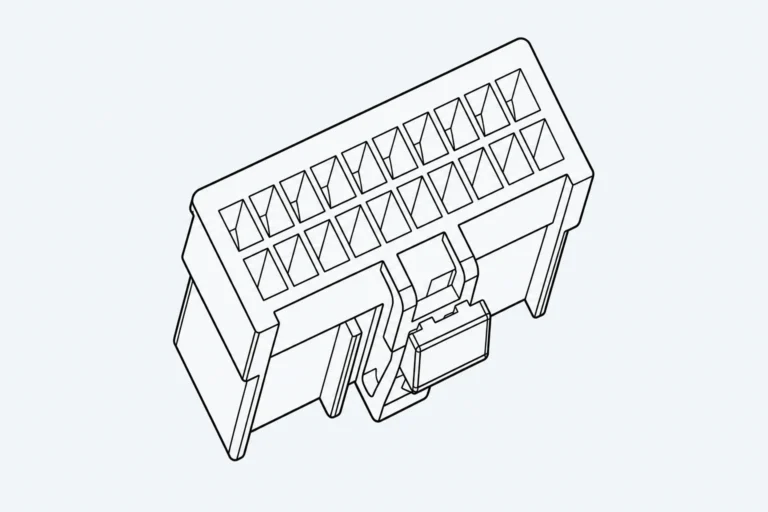
Use the terminal-type overview to describe the mechanical function, and the part-identification guide to keep housing and contact records distinct. A polymer marking on a housing does not identify the coating of the metal contact inside it.
Review replacements before allowing them into service
A replacement request should state what has changed and what is being retained. It may involve a different coating supplier, a revised plating zone, a new base alloy or a substitute mating contact. Ask which existing evidence still applies and which questions require renewed evaluation. Preserve the approved configuration until the responsible owner releases the change.
The mating-cycle guide explains how service handling relates to durability evidence. The voltage-drop guide helps define an electrical observation. Neither document permits a finish substitution on its own, but together they help frame the evidence a replacement review needs.
Consider an original purchasing scenario: an approved pin is available, but its matching socket is delayed and a supplier offers a dimensionally similar alternative. Ask for the finish and counterpart documentation before accepting it. If the proposed pair has no applicable evidence, keep the substitution open. A delivery deadline does not make dimensional compatibility equal to electrical reliability.
Close the review with a clear record: approved pair, finish zones, operating conditions, applicable evidence and permitted substitutions. Make that record available to maintenance as well as production. Field repair is a common point at which an otherwise controlled contact system can acquire an undocumented replacement part.
Chemistry background: oxidation and reduction
This CrashCourse lesson explains electron transfer in redox reactions. It provides background for understanding surface chemistry; it is not a connector plating-selection method or a qualification test.
Watch Redox Reactions: Crash Course Chemistry #10 on YouTube
Frequently asked questions
Can plating be identified from terminal color?
No. Use a controlled material and finish specification, supported by the required inspection evidence.
Is the most expensive finish always the best replacement?
No. Review the exact mating pair, application and qualification evidence before approving a substitution.
Can mating and termination zones have different finishes?
Yes, when the product drawing specifies that arrangement. Confirm the zone boundaries rather than using one label for the whole contact.
Do aerospace restrictions automatically apply to automotive parts?
No. They illustrate engineering concerns within their stated scope. Apply the standards and requirements invoked for your project.
What is the key procurement control?
Keep both contact identities and finish variants tied to the approved assembly, and review changes before accepting replacements.