

A connector IP rating describes protection under specified test and assembly conditions. Before accepting the rating, confirm whether it applies when the connector is mated and locked, unmated, capped or installed through a panel. The cable, wire seals, unused cavities and mounting interface may all form part of the tested configuration. A housing described as sealed does not by itself prove that a complete harness meets a particular IP classification.
For a reliable purchasing decision, request the exact assembly definition and supporting report. This guide focuses on reading that evidence, rather than assigning a protection level to a connector from its appearance or catalogue name.
Read an IP claim as a conditional statement
IEC 60529 provides the enclosure protection classification framework known as the IP Code. Its public scope establishes what the standard addresses; the full applicable test procedure and product requirements are needed to assess a particular assembly. A short catalogue label is not a substitute for that evidence.
Begin by asking what object the claim covers. It could describe a complete connector pair, a panel receptacle with a cap, a cable assembly or an enclosure containing several interfaces. Identify the rated boundary before interpreting the result. A cable entry that protects one enclosure does not automatically establish protection for an open mating face elsewhere in the system.
Keep the distinction between the standard and the product clear. A supplier can use an IEC test method without every article in its catalogue having passed the same tests. A report for a related family member may be relevant, but the supplier should explain which design features justify its applicability to the offered part and which differences remain untested.
Mated, unmated and capped are different configurations
Some protection claims require full engagement with a specified counterpart. Others may apply to an unmated interface only when a particular protective cap is installed. The assembly instruction should identify the locking condition and any closure hardware. An audible click or a similar connector shape does not establish that the tested condition has been reproduced.
The public description of IEC 61076-8-108 explicitly distinguishes protection when a particular connector design is mated and locked from protection when it is unmated. This is an example of configuration-dependent requirements, not a specification for all automotive connectors. Do not transfer that standard’s ratings or electrical values to a Shenji part.
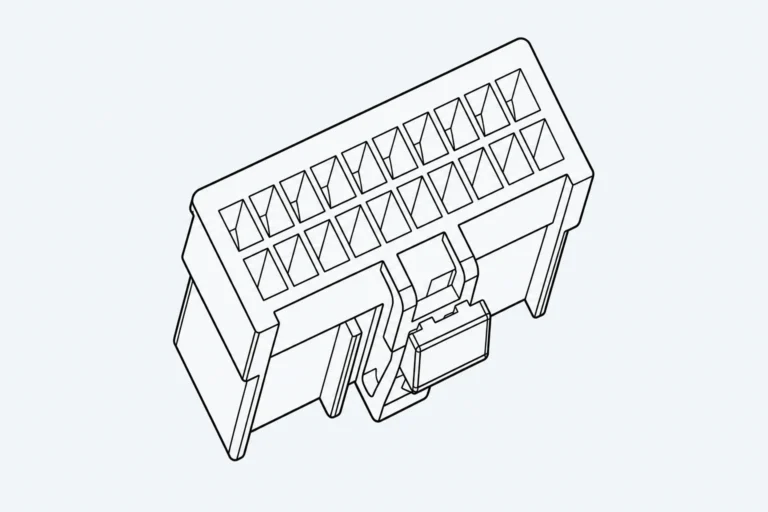
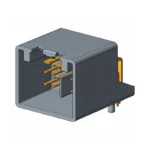
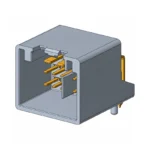
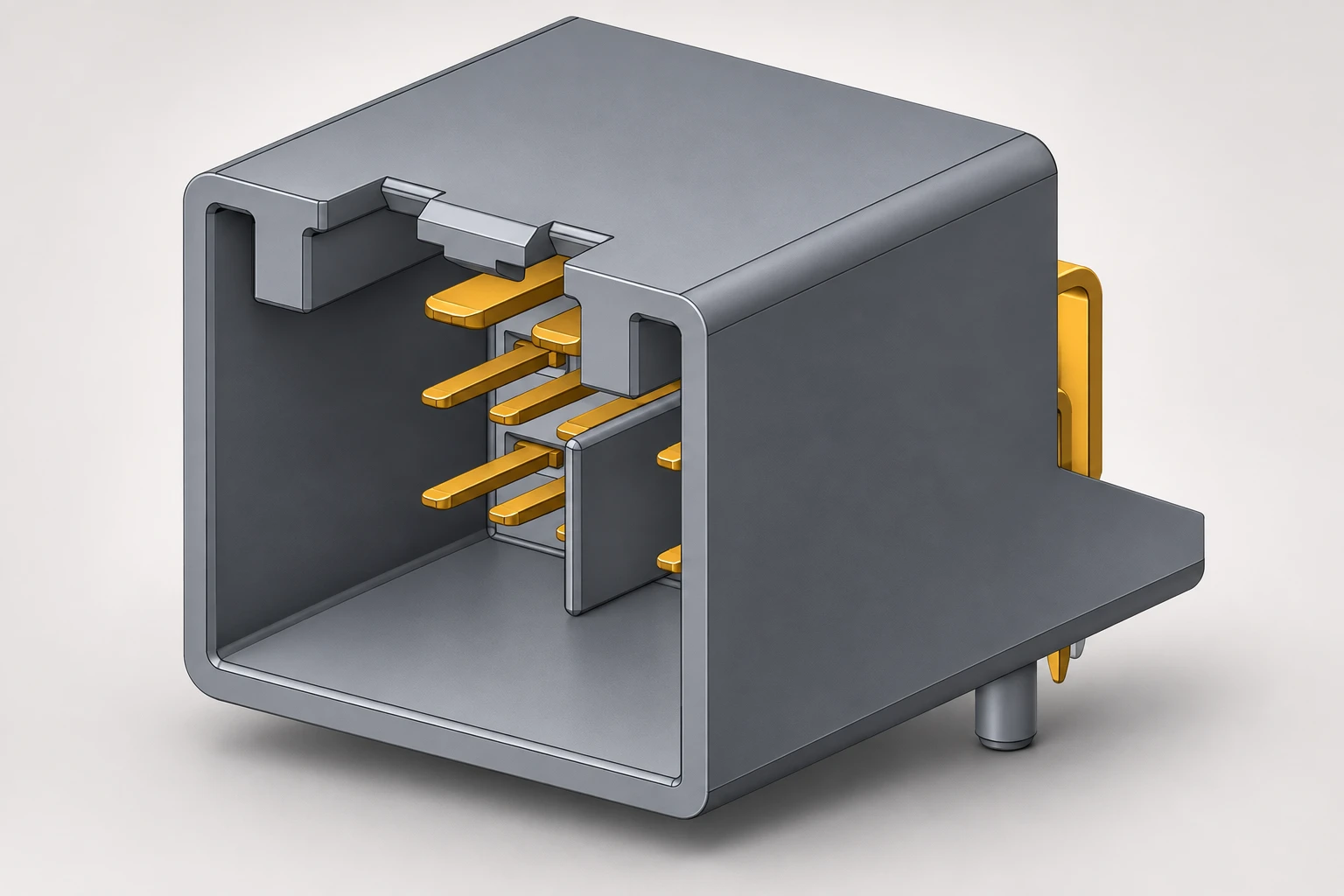
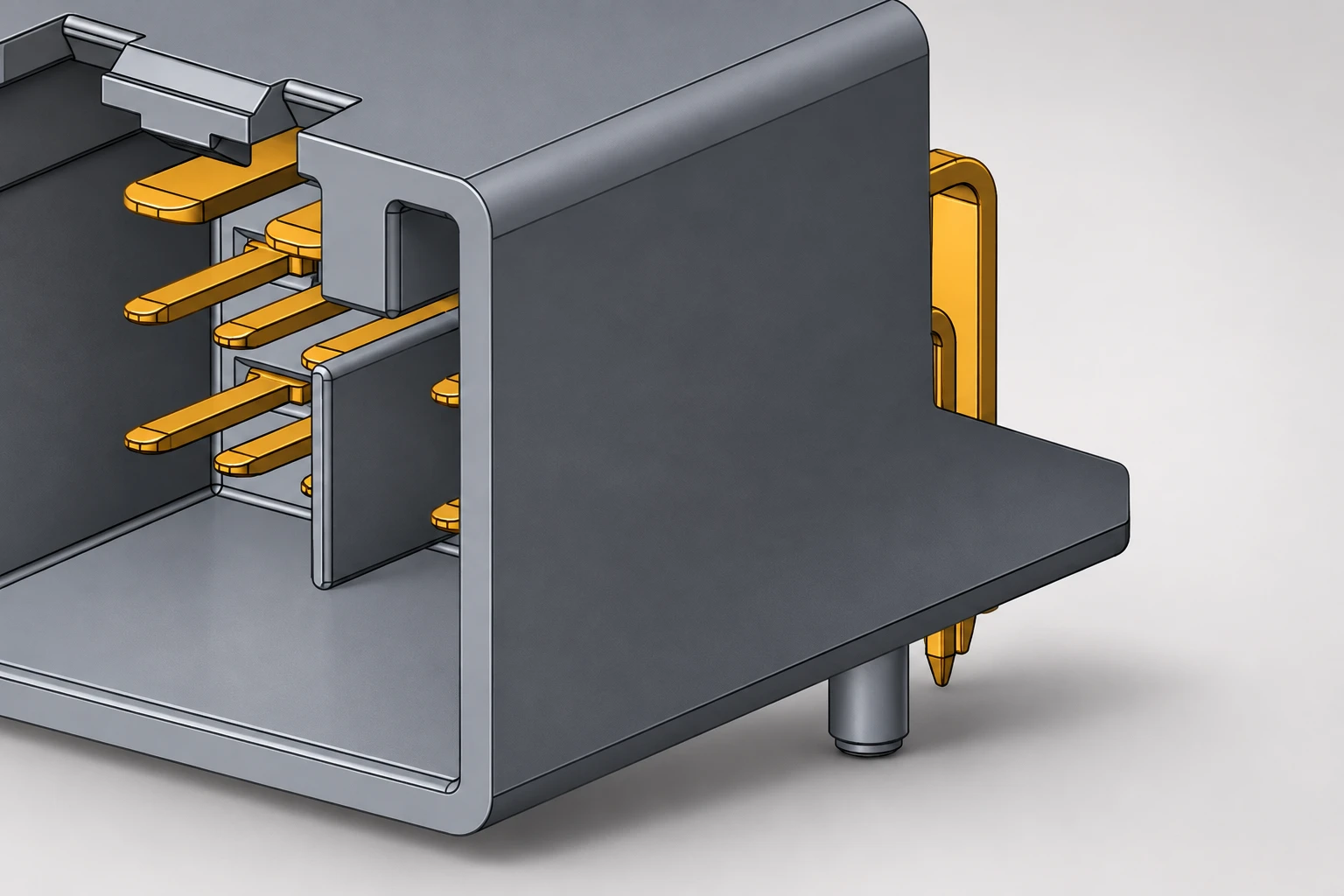
For the 2BK01-161228W-A connector, use the published model information to identify the part under discussion, then request the approved counterpart and sealing documentation. Visible contacts, a latch and a mounting foot help identify geometry; they do not reveal a validated dust or water protection level.
Include service and storage conditions
A machine may operate with the connector mated but be washed or stored while it is unplugged. Those are different requirements. Describe whether the mating face can encounter moisture during transport, maintenance, charging or replacement. Decide how the interface is protected at each stage and who is responsible for fitting a required cap.
Do not assume that an operating-state rating covers the act of mating or disconnecting. Ask the equipment owner to define permitted handling conditions. If a cap is part of the protection strategy, include its part number, installation method and inspection requirements in the maintenance documentation and spare-parts list.
Follow every possible entry path
A useful sealing review follows the complete assembly rather than concentrating only on the front gasket. Start at the mating interface, then review wire entries, cavity plugs, panel seals, housing joints and attached accessories. For each interface, identify the controlled part and the installation condition that makes it effective.
| Boundary | Information to confirm | Common evidence gap |
|---|---|---|
| Mating face | Approved counterpart, lock state and mating procedure | Rating quoted without mating condition |
| Wire entries | Wire construction, outer diameter and seal compatibility | Only conductor area supplied |
| Unused cavities | Required plugs and their installation | Empty cavities omitted from sample definition |
| Panel interface | Panel geometry, gasket and fastening instruction | Tested panel differs from production |
| Service cap | Cap part number, seating and permitted exposure | Unmated claim assumes an unspecified cover |
| Accessories | Backshell, strain relief and cable-entry configuration | Accessories changed after qualification |
This table is a review aid, not proof that any listed feature exists on every connector. Some designs use different sealing arrangements. Ask the supplier to mark the actual sealing boundary on an assembly drawing and identify which parts are included in the claim. Avoid buying extra seals or plugs by visual similarity.
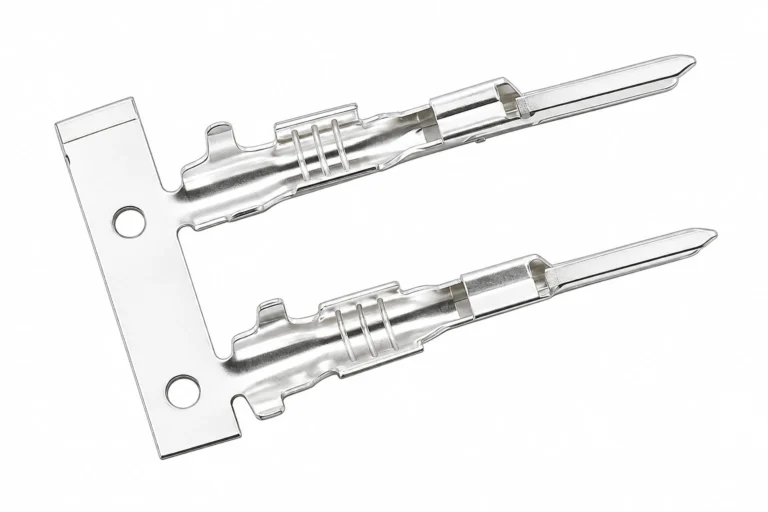
Wire outside diameter deserves attention because the seal interfaces with the insulation, while the electrical termination interfaces with the conductor. Two wires with equal conductor area can differ in insulation dimensions and material. Obtain the allowed combination from the assembly owner instead of treating wire-size compatibility as a complete sealing specification.
Installation loads matter too. A harness pulled sharply away from the connector may disturb a wire entry or prevent full seating. Follow the approved routing and strain-relief instructions. If the proposed enclosure forces a different routing arrangement, include that change in the review rather than assuming the original protection evidence still applies unchanged.
What to look for in a protection test report
Check the report title, method edition, laboratory identity, sample identifiers and test dates. The report should identify the specimen configuration clearly enough to reproduce it. Photographs are helpful, but they should accompany part numbers and assembly details. A picture of a connector submerged in water is not a complete test record.
Read the acceptance criteria as carefully as the exposure conditions. The test purpose, inspection after exposure and any functional or electrical checks should be stated. If a report includes deviations, determine whether the supplier’s public claim still describes the tested condition accurately. An unexplained deviation should remain open until the responsible engineer resolves it.
Do not infer resistance to every environmental agent from an IP classification. Dust and water ingress evidence does not automatically answer compatibility with cleaning chemicals, oils, salt exposure or prolonged outdoor aging. Describe the real environment separately and request the relevant material or environmental evidence. The equipment’s full qualification plan may require several different evaluations.
Evaluate changed or aged assemblies deliberately
A new sample may not represent a connector after repeated service handling or environmental conditioning. If those conditions matter to the equipment, specify how the sample should be prepared and whether protection must be checked afterward. Avoid promising a number of service cycles unless the actual product evidence supports it.
The mating-cycle planning guide helps separate durability requirements from a single ingress test. The keying and polarization guide addresses correct engagement. Both can influence how the approved assembly is reproduced, while neither replaces the specific protection report.
Keep the qualified assembly intact through procurement
Use the broader sealed automotive connector overview to establish the application, then attach the exact configuration to the inquiry. List the counterpart, terminals, wire, seals, plugs, panel and accessories as applicable. Ask the supplier to identify which items are included in its quotation and which must be sourced separately.
Agree how substitutions will be handled. A new wire supplier, altered cap, changed panel thickness or replacement seal can affect the relationship between the delivered assembly and the evidence. Require notice before accepting a change that affects the reviewed configuration. Keep the approved parts list accessible to purchasing and assembly staff.
At incoming inspection, check identity, packaging condition and the presence of required components against the purchase specification. Do not attempt to prove an IP rating with an improvised spray or immersion demonstration. Such a demonstration can damage stock while producing a result that is neither controlled nor representative of the required method.
For electrical checks after an environmental test, coordinate with the insulation-resistance review and the project’s test plan. Specify the assembly state and safe procedure, particularly when electronics are connected. The final release should connect the protection evidence, installation instruction and electrical verification to the same configuration and revision.
Physics background: fluid pressure
This CrashCourse lesson introduces fluid behavior and pressure. It offers background for understanding water exposure, but it does not reproduce an IEC ingress test or establish a protection classification.
Watch Fluids at Rest: Crash Course Physics #14 on YouTube
Frequently asked questions
Does a sealed connector automatically have an IP rating?
No. Request a specific classification supported by evidence for the complete assembly and its stated conditions.
Is a mated rating valid when the connector is unplugged?
Only if the product documentation explicitly supports that unmated configuration. A specified cap may be required.
Can I replace the wire with the same conductor area?
Check the insulation dimensions, material and approved seal combination as well. Conductor area alone is insufficient.
Does an IP rating prove chemical resistance?
No. Review the actual chemicals and exposure conditions using separate compatibility evidence.
What is the most useful supplier document?
A traceable test report linked to the exact assembly drawing, parts list and installation instructions is more useful than an isolated catalogue badge.