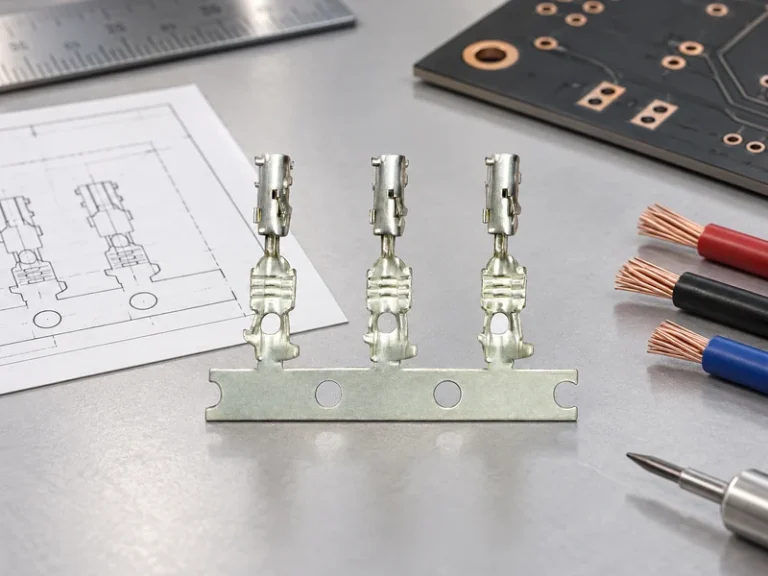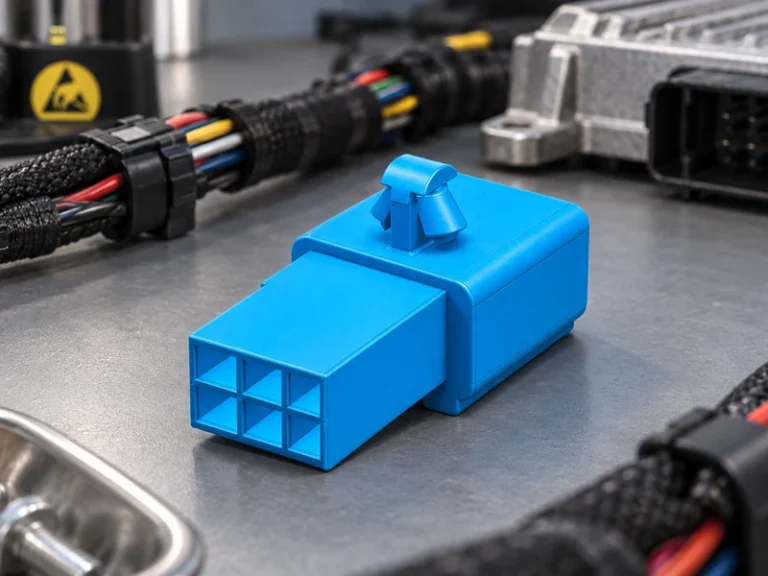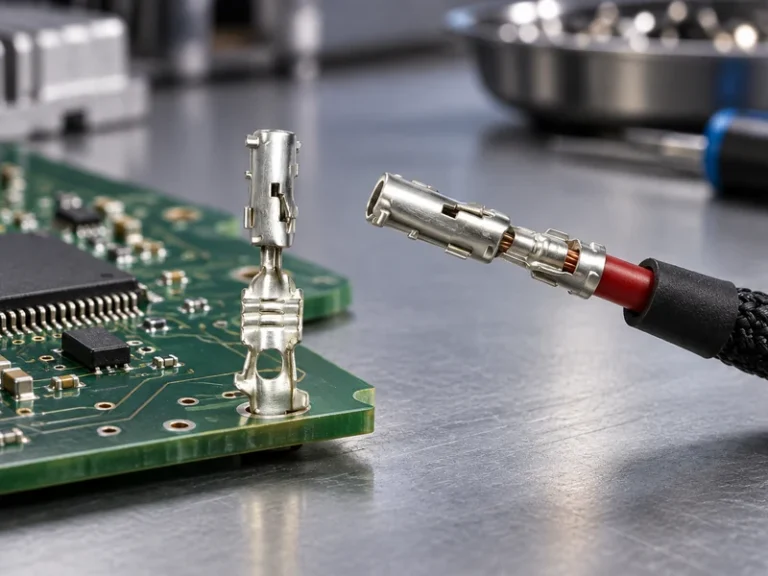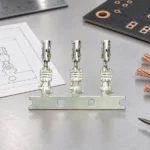


When a harness-validation engineer in Wenzhou connected a prototype pack during an afternoon build, the branch circuit warmed quickly and the locking feature would not seat consistently after rework. The visible failure looked like a defective part, but the composite scenario pointed elsewhere: the selected interface had not been specified for conductor, sealing, branch loading, mating cycle, or assembly-process conditions. Reversing that selection decision—not simply replacing the component—restored a repeatable build.
Summary: A t-connector should be selected as a complete interface—terminal, housing, seal, cable, branch geometry, and validation evidence—not by shape alone. SAE/USCAR-2 and IEC 60512 are connector test/specification references rather than automatic product certifications; use the applicable requirements to define a verification plan before release. For buyers serving new energy vehicles, start with the electrical architecture, environmental exposure, installation window, and documented test scope, then obtain samples built to the intended cable and process.
A T-shaped branch connector can simplify distribution where one circuit must serve a controlled branch, but “T” describes a configuration, not a universal electrical rating. The consequence is commercial as well as technical: an apparently interchangeable substitute can add crimp-tool changes, validation delays, field returns, and traceability work. The right question is whether the full interface suits the application and the released drawing, rather than whether a mating face looks familiar.
Application Scenarios and Installation Discipline
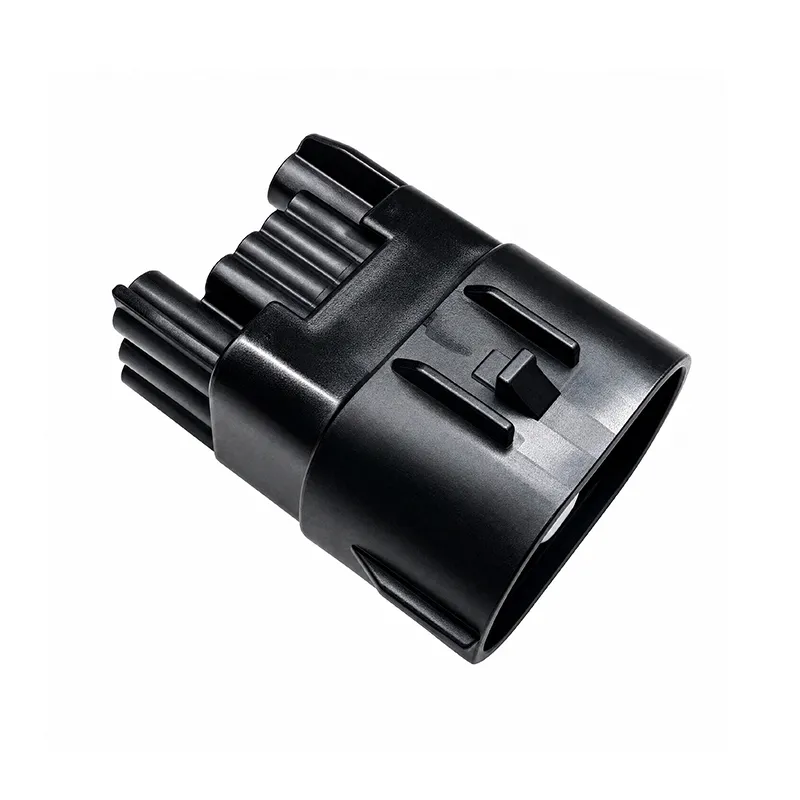
Start with the circuit and service environment
Common scenarios include low-voltage signal and power branches, auxiliary equipment, battery-related harnesses, and serviceable subassemblies. An electric bike battery connector may prioritize compact packaging and protection against splash or vibration, while an automotive branch can add vehicle-level documentation, higher harness complexity, and more formal change control. In either case, record the mating counterpart, wire construction, conductor range, routing, ingress exposure, temperature envelope, vibration profile, service access, and expected mating cycles before requesting a quotation.
The high voltage sheath deserves its own line item where a cable or terminal system includes high-voltage insulation or protective covering. It should be assessed as part of the cable-and-termination system: a housing that fits the terminal does not by itself demonstrate insulation coordination, sealing, strain relief, or safe assembly. IEC 60512 provides a family of electromechanical connector test methods; the relevant part and test condition must be agreed, rather than treating the publication name as a product approval.
Install to a controlled work instruction
Installation begins with the released terminal and wire specification. Confirm the approved crimp tooling, strip length, terminal orientation, insertion force window, secondary-lock position, seal placement, and pull-check method defined by the design or supplier documentation. A visual check is necessary but insufficient; a correctly positioned conductor can still have a damaged strand, incomplete terminal lock, or stressed cable exit. SAE/USCAR-2 is widely used as a performance specification for automotive electrical connector systems, so procurement teams should request the applicable test plan and report scope instead of assuming every listed test applies.
Current, Voltage, and Verification Planning
There is no responsible generic current or voltage rating for every T-shaped interface. Continuous and peak load, system voltage, conductor cross-section, terminal metallurgy, contact resistance, ambient temperature, bundle heating, duty cycle, derating, and number of energized branches all influence the result. A selection record should state the actual electrical requirement and identify whether the supplier’s evidence covers the complete assembled configuration or only a component-level sample.
Build verification around foreseeable failure modes. IEC 60512 methods can address contact resistance, dielectric performance, mechanical operation, vibration, and environmental behavior, while SAE/USCAR-2 can frame automotive connector-system performance expectations. Neither name replaces an application-specific plan. For example, an illustrative—not product-rated—cost comparison is useful: if a lower initial-cost option requires an additional validation loop and a harness rework, the delay and labor can outweigh the unit-cost difference even when the purchase price is unchanged.
Ask whether the test specimen used the intended wire, terminal, seal, cavity plugs, backshell or sheath, and mating half. Also ask for the preconditioning, sample quantity, acceptance criteria, and revision level. These questions turn “tested” into evidence a program team can compare; they also reduce the risk that a drawing revision quietly invalidates earlier results.
Materials, Plating, and New-Energy-Vehicle Context
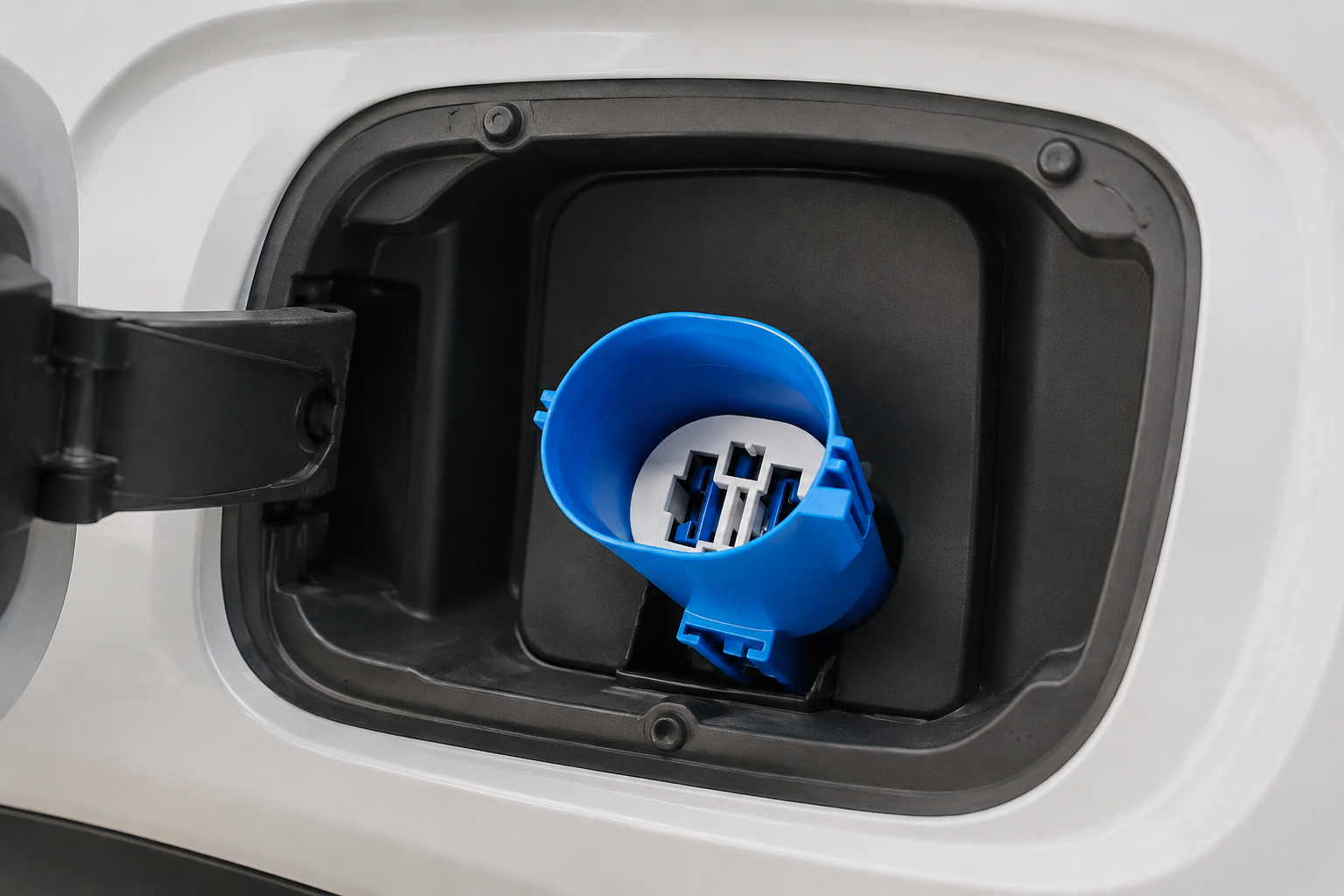
Material selection balances conductivity, spring behavior, corrosion resistance, process compatibility, and cost. Copper-alloy terminals are often paired with coatings selected for the contact system and service conditions; the suitable plating depends on the mating material, current path, exposure, fretting risk, and approved process. Plastic housings likewise require a stated material grade and environmental limits. It is not enough to request “corrosion resistant”; procurement should align the claim with the agreed test method and sample configuration.
For new energy vehicles, the branch decision must sit inside the vehicle electrical architecture. Isolation strategy, shielding or protection approach, interlock requirements where applicable, harness routing, and service procedures may affect the design even when the branch connector is physically small. A high voltage sheath can contribute to the finished harness protection scheme, but it cannot be evaluated separately from termination quality, mating interface, and intended voltage class. Engineering approval should therefore distinguish a high-voltage application requirement from a low-voltage accessory branch.
Material and plating choices also affect total cost. Specifying more performance than the use case needs may complicate sourcing, whereas under-specification can drive corrosion-related troubleshooting and replacement. The defensible middle path is a documented requirement, matched evidence, and controlled substitution process. ISO 14001 concerns an organization’s environmental-management system; it does not certify a connector’s material performance or environmental claim.
Value Comparison, Documentation, and Compliance
| Decision dimension | Specification-led option | Appearance-led substitute | Buyer implication |
|---|---|---|---|
| Electrical fit | Load, conductor, and derating are documented | Compatibility inferred from form factor | Lower risk of late redesign |
| Installation | Approved terminal, tool, and work instruction are defined | Assembly details vary by batch or operator | More predictable labor and yield |
| Durability evidence | Relevant IEC 60512 or SAE/USCAR-2 scope is identified | Generic “tested” statement | Evidence can be reviewed against use conditions |
| Maintenance and returns | Revision and traceability records support root-cause work | Limited configuration history | Faster containment when issues arise |
| TCO tendency | May require upfront engineering review | May appear lower at unit purchase | Compare validation, rework, and return exposure |
| Application dimension | What to specify | Evidence to request | Typical selection emphasis |
|---|---|---|---|
| Automotive branch harness | Wire, seal, vibration, temperature, mating interface | Applicable SAE/USCAR-2 plan and revision control | Process consistency and validation traceability |
| Electrified vehicle system | Architecture, voltage class, protection and service requirements | Configuration-specific test scope and drawing | System integration, not a generic rating |
| Electric bike battery connector | Packaging, cable flexibility, exposure, service use | Assembly instruction and relevant IEC 60512 methods | Fit, retention, and practical maintenance |
| High voltage sheath interface | Cable protection, termination, routing, and inspection | System-level specification and process controls | Insulation and assembly integrity |
Standards and commercial compliance
IATF 16949 is a quality-management-system standard for organizations in the automotive supply chain; it is not a blanket certification of every shipped product. SAE/USCAR-2 and IEC 60512 are performance specifications or test-method references, so a supplier should identify the relevant edition, clauses, conditions, and sample build. Destination market, intended use, and marketing claims determine which regulations and customer requirements apply. Unsupported claims can create approval delays, customer disputes, corrective-action costs, and avoidable liability, particularly when a component is promoted for a safety- or high-voltage-related application.
Selection Guide, FAQ, and Next Steps
- Freeze the application brief: circuit role, electrical architecture, wire, environment, mating half, and service assumptions.
- Request a controlled drawing and a configuration-specific validation matrix before approving samples.
- Qualify the installation process with the actual terminal, cable, tooling, and inspection steps used in production.
- For an electric bike battery connector, include the actual cable flexibility, packaging, and service-use conditions in the review.
- Compare total cost across validation effort, yield, change control, maintenance, and potential return exposure—not unit price alone.
For projects needing configurable automotive connector products, Wenzhou Shenji can be evaluated as a sourcing partner for documentation, sample configuration, and manufacturing support. The company presents IATF 16949, ISO 14001, ISO 45001, ISO 17025 (CNAS-compliant laboratory), National High-Tech Enterprise, Zhejiang Provincial SRDI SME, and Green Low-Carbon Factory as supplied credentials; buyers should verify scope, current status, and project applicability during qualification. Its application information and company background can help frame that review.
What is a battery terminal connector used for?
A battery terminal connector provides a controlled electrical and mechanical interface between a battery-related conductor and its mating circuit. Its use may range from low-voltage auxiliary distribution to a system subject to more demanding safety and validation requirements. Select it against the complete harness and intended service conditions, not the terminal outline alone.
What types of battery terminal connectors are available?
Available types vary by circuit role, terminal style, housing, sealing approach, locking method, wire range, and intended service environment. Branch, inline, board-facing, serviceable, and sealed designs can solve different packaging and maintenance needs. A supplier comparison is meaningful only after the mating interface and application requirements are fixed.
What is the difference between t-connector and new energy vehicles?
A t-connector is a physical branch-interface configuration, while new energy vehicles describe a vehicle category and electrical-system context. The same form factor may be unsuitable across architectures if voltage class, interlock, isolation, protection, or validation requirements differ. Specify the vehicle-system requirement first, then assess the interface and evidence.
How do you choose a battery terminal connector for your application?
Define the electrical load, cable, environment, mating half, assembly process, and evidence required by the customer or destination market. Review drawings, samples, tooling instructions, and relevant test reports together; then control substitutions through revision approval. This sequence is more reliable than selecting from a photograph or nominal family name.
References
- SAE/USCAR-2: Performance Specification for Automotive Electrical Connector Systems
- IEC 60512: Connectors for electrical and electronic equipment—tests and measurements
- IATF 16949
- ISO 14001 environmental management
The dependable connector decision is made before the first crimp: specify the system, prove the configuration, and control the process. When your sourcing team is ready to review a branch-interface requirement, contact Wenzhou Shenji with the drawing, cable details, use conditions, and required documentation.