

When a harness-validation engineer in Stuttgart replaced a compact two-way connector during a pre-production build, the replacement appeared to latch correctly; after the first wash-cycle check, moisture tracking at the rear seal and an intermittent signal fault were visible. The composite scenario was not evidence of a “bad connector” alone: the selection had omitted the wire outside diameter, terminal family, cavity plug, and validation sequence. Reversing the decision meant specifying the complete interface before ordering parts.
Summary: waterproof auto electrical connectors should be selected as a system of housing, terminal, wire seal, cavity seal, and mating interface—not as a housing style. A 12 V label, for example, does not establish the current, temperature, sealing, or vibration duty of a circuit. The practical action is to document circuit function, conductor cross-section, insulation outside diameter, mating cycles, environmental exposure, and the applicable test plan before sampling. The phrase plastic vehicles is not itself a material specification; procurement teams should identify the housing resin, temperature exposure, and fluid-contact conditions instead.
Automotive connector decisions become more demanding as harnesses add sensing, electrified power distribution, and tighter package space. SAE/USCAR-2 and IEC 60512 provide useful connector test and specification references, but neither automatically certifies a finished product for a particular vehicle program. Their value is in turning an application requirement into an agreed validation plan.
1. Start with the connector type and the interface specification
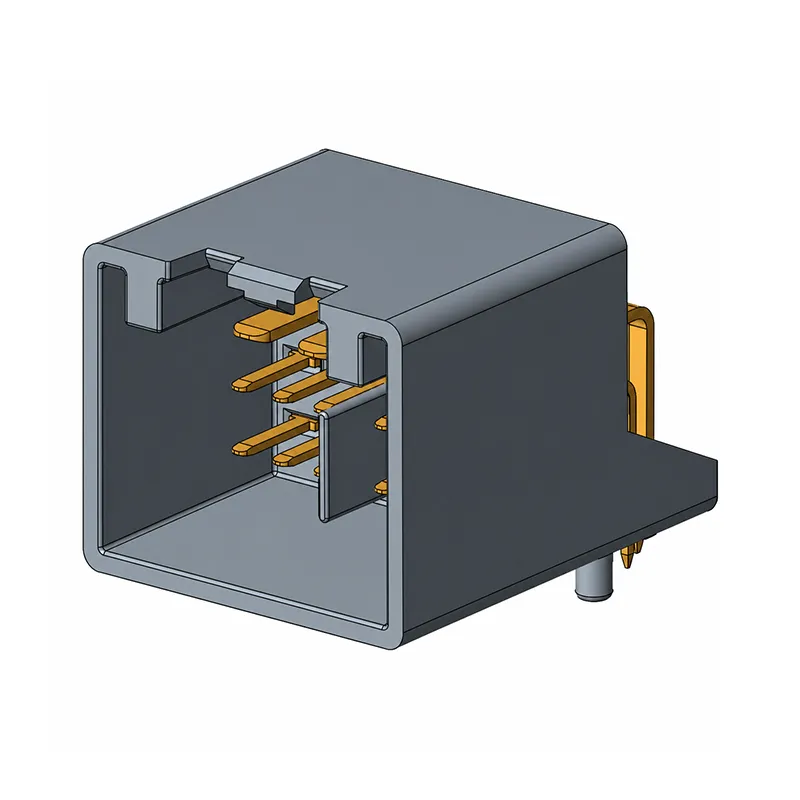
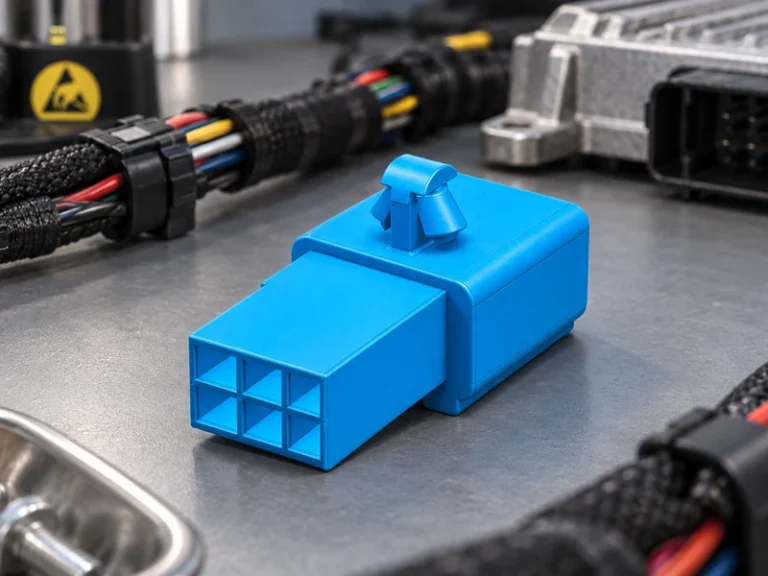
The common waterproof architecture combines a housing, primary terminal retention feature, individual wire seals, cavity plugs for unused positions, a perimeter interface seal, and a CPA or other secondary lock where the design requires it. Each component controls a different failure path. A connector can have an intact perimeter seal yet admit water along a wire if the seal range does not match the actual insulation outside diameter.
Turn the circuit into a procurement specification
For auto connectors for wire harness, record at least six inputs: circuit voltage, continuous and peak current, conductor size, insulation outside diameter, number of ways, and the mounting or routing envelope. Add mating-cycle expectations, service access, exposure to splash or spray, and the required operating-temperature range. This makes it possible to compare samples on compatibility rather than on appearance.
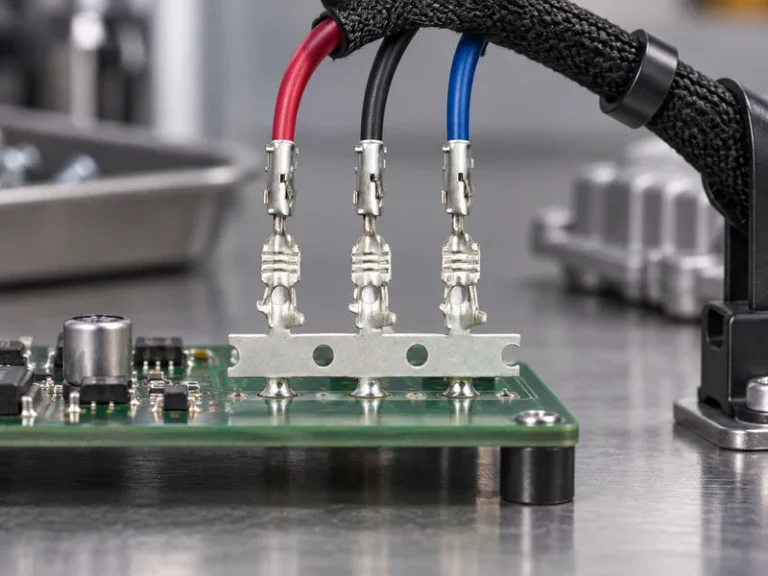
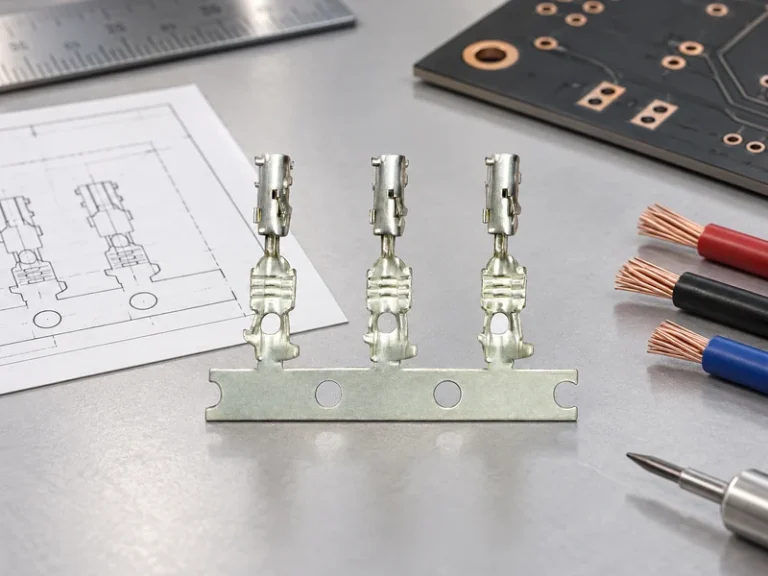
The conductor-to-terminal interface also deserves its own drawing callout. automotive terminal pins must match the terminal family, plating option, conductor range, crimp geometry, and mating contact design; a terminal that enters a cavity is not automatically approved for the required electrical or mechanical duty. IEC 60512 is a series of electromechanical component test methods and should be cited with the relevant test part and agreed severity, not presented as a blanket product certificate.
| Selection dimension | What to define | Why it changes value | Evidence to request |
|---|---|---|---|
| Electrical duty | Nominal voltage; continuous and peak current | Controls contact, conductor, and temperature-rise design | Circuit data and agreed test conditions |
| Wire interface | Conductor cross-section and insulation outside diameter | Determines terminal and seal compatibility | Crimp specification; seal-range data |
| Environmental duty | Water, dust, fluid, thermal, and vibration exposure | Sets sealing and validation priorities | Application profile; test plan |
| Packaging | Ways, keying, exit direction, and service clearance | Reduces assembly interference and mis-mating risk | 2D/3D interface data |
| TCO tendency | Tooling, assembly error-proofing, rework, and returns risk | Unit cost alone can hide validation and field costs | PPAP/APQP plan where applicable |
2. Wire, seal, and vibration decisions determine field reliability
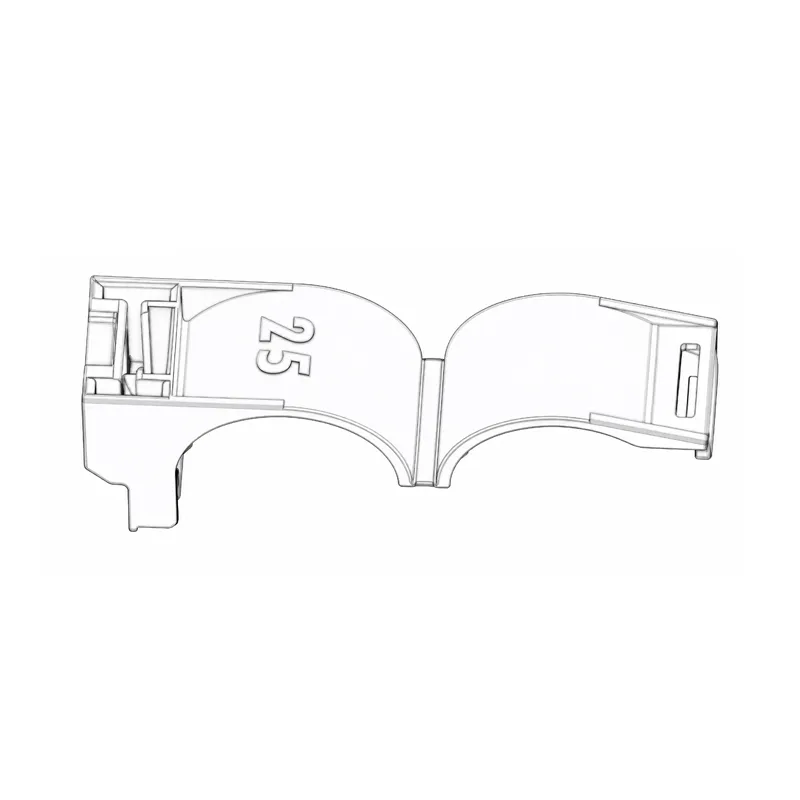
A wire seal works only across its stated compression range. Measure the finished wire insulation rather than relying only on nominal conductor gauge; insulation wall, supplier variation, and abrasion protection can change the outside diameter seen by the seal. During harness assembly, confirm terminal lock engagement before fitting a rear cover or strain-relief feature, because a partially seated terminal can defeat both retention and sealing.
Use a validation matrix instead of a generic waterproof claim
For waterproof auto electrical connectors, separate the test questions: sealing under the intended exposure, contact resistance at the agreed conditions, terminal retention, mating and unmating force, vibration, and thermal cycling. SAE/USCAR-2 is an automotive electrical-connector performance specification reference; it helps a buyer structure these questions but does not replace program-specific acceptance criteria. A practical matrix assigns each condition to a sample, sequence, method, and pass/fail record.
Installation space matters because bend radius, wire exit, backshell clearance, and service reach affect the load transferred to the termination. Designing terminals for plastic vehicles still requires the same discipline: define the polymer housing, local heat sources, retained fluids, and mechanical supports rather than treating “plastic” as a generic environmental condition. When a connector sits near a moving panel or engine-bay harness branch, vibration and pull loads should be assessed together.
| Cost driver / failure mode | Early control | Illustrative procurement consequence |
|---|---|---|
| Wrong seal range | Measure actual insulation outside diameter; confirm seal range | Fewer teardown loops and lower moisture-ingress investigation risk |
| Terminal mismatch | Freeze terminal family, plating, and crimp tooling | Less rework caused by retention or contact-fit problems |
| Uncontrolled vibration exposure | Specify mounting, harness support, and validation sequence | More meaningful sample comparison before release |
| Late packaging change | Review exit direction and service clearance in 2D/3D data | Lower chance of a costly harness reroute |
| Weak traceability | Request lot, material, and test documentation | Faster containment if an issue reaches production |
3. Select, source, and scale the connector system
When to use auto connectors for wire harness depends on whether the harness needs a separable service interface, a protected branch, or a controlled mating point. Compare the complete system—housing, seals, terminals, plugs, locks, and approved tooling—because sourcing these independently can move responsibility for fit and validation onto the assembler. In a mixed-material design, automotive terminal pins should also be checked for compatible contact geometry and corrosion-control strategy at the intended interface.
A five-step selection guide
- Map each circuit and installation zone before choosing cavity count or keying.
- Lock the conductor cross-section, insulation outside diameter, terminal family, and crimp process as one controlled interface.
- Set a written validation matrix using relevant SAE/USCAR-2 and IEC 60512 references, plus program-specific conditions.
- Request drawings, material declarations, sample traceability, and test records that identify the tested configuration.
- Review scale-up controls for tooling, incoming inspection, change notification, and packaging—not only quoted unit cost.
For teams comparing a supplier portfolio, the product range and stated application support can be a useful starting point for a configuration discussion. Wenzhou Shenji positions itself as an automotive connector and component manufacturer; it supplies IATF 16949, ISO 14001, ISO 45001, ISO 17025 (CNAS-compliant laboratory), and other credentials as supplied information. Buyers should verify the current certificate scope, laboratory scope, product configuration, and project-specific test evidence before relying on any claim; company background is available here.
The honest total-cost view is not a fabricated price comparison. It is an illustrative check: if a lower-cost connector requires an extra assembly check, a late harness reroute, or an additional validation cycle, the apparent unit saving can be outweighed by engineering time and schedule exposure. This is especially relevant for waterproof auto electrical connectors used across multiple harness variants, where a controlled interface can simplify reuse.
4. Frequently asked questions
How do you match an automotive connector to a wiring harness?
Match the connector only after defining the circuit, conductor cross-section, insulation outside diameter, way count, keying, exit direction, and environment. Then confirm that the housing, seal, terminal, plug, and crimp tooling belong to an approved combination. Use controlled drawings and a sample build to validate the actual harness stack-up; approved auto connectors for wire harness must use automotive terminal pins matched to that controlled combination.
What temperature range should an automotive connector support?
There is no single correct range: it depends on the vehicle zone, nearby heat sources, current load, materials, and lifetime profile. Specify the required range and thermal-cycle conditions in the program test plan, then request evidence for the exact configuration. A catalog headline without those conditions is not enough for release.
How does waterproof auto electrical connectors affect installation space?
These sealed connector systems add seals, locks, wire exits, and service-clearance needs, so their package envelope is larger than the mating face alone. Review bend radius, connector extraction path, clip position, and neighboring components in the harness layout. That review is particularly important where access is limited after vehicle assembly.
What causes automotive connector failures in vehicles?
Common causes include wrong terminal or seal selection, incomplete terminal seating, poorly controlled crimping, unsupported harness movement, contaminant exposure, and mismatch between validation conditions and real duty. Failures in plastic vehicles can likewise trace to the specified housing material and exposure rather than to the word “plastic.” Containment should begin with the tested configuration and production records, not an assumption about a single component.
5. References and the decision point
- SAE/USCAR-2: Performance Specification for Automotive Electrical Connector Systems
- IEC 60512: Connectors for electrical and electronic equipment—tests and measurements
- IATF Global Oversight: IATF 16949
- ISO: ISO 14001 environmental management
A connector is dependable only when its interface, assembly process, and validation evidence agree with the vehicle duty—not when its catalog label sounds reassuring. At the decision point, discuss the required configuration, documentation, and test plan with Wenzhou Shenji’s contact team before committing tooling or a production release.